
Universities Explore New Mechanisms for Renaming Buildings: From Permanent Naming to Periodic Review
Montana State University Billings initiates a building naming review due to newly discovered historical documents; the University of Minnesota adopts a new policy allowing buildings to be renamed after 75 years or when issues arise. Institutions are establishing more flexible naming evaluation processes.
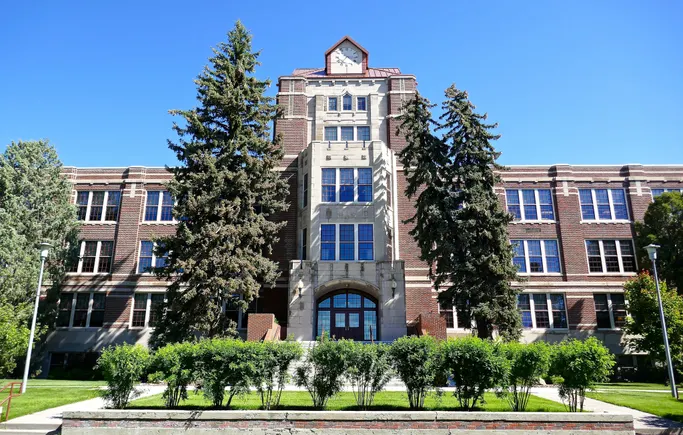
Montana State University Billings recently announced it will review the naming of its main administration building, McMullen Hall. This follows the recent rediscovery of documents showing that the building's namesake publicly supported the eugenics movement.
According to a university announcement on March 3, this move aligns with a trend among universities to reassess the legacies of building namesakes. Higher education administrators face a common challenge: how to handle the historical legacy of namesakes who contributed to the institution's development but also expressed or implemented discriminatory or otherwise harmful statements and actions.
Lynn McMullen served as the first president of Montana State University Billings, which was known as Eastern Montana Normal School during his tenure. In 1935, McMullen publicly stated that Germany would surpass other nations in international competition due to Adolf Hitler's support for eugenics and forced sterilization.
Montana State University Billings Chancellor Stefani Hicswa announced the formation of a task force to investigate the matter thoroughly and submit recommended actions to her. Any decision involving renaming a building requires approval from the Montana University System Board of Regents.
This review in Montana comes less than a month after the University of Minnesota Board of Regents approved a policy change. The policy allows for buildings to be renamed after 75 years, or earlier if the namesake becomes controversial. More than 30 buildings across the University of Minnesota's five campuses would be eligible for renaming. Buildings named after donors are exempt from the 75-year review period because gift contracts vary. The university initially proposed a 100-year review cycle but adjusted it after feedback indicated that period was too long.
"Many in higher education are repeatedly examining: What does it mean to name a building? What does it mean to commemorate a historical figure? And if that figure has a controversial and complex legacy, how should that honor be handled?" said University of Minnesota President Joan Gabel at a board meeting last December.
Under the new process, students and employees can submit renaming requests if they believe a building's namesake conflicts with university values or could harm the institution's reputation.
Adding flexibility to tradition
By setting any time limit, the University of Minnesota has effectively changed the default status of campus building names from "permanent" to "temporary." This flexibility may allow universities to respond and adjust promptly to new information.
"This means each new generation at a university gets a voice and can make new decisions," said Kirt von Daacke, assistant dean of the College of Arts and Sciences at the University of Virginia and executive director of Universities Studying Slavery. The consortium is an international collaboration of 88 universities dedicated to researching and addressing their institutional ties to the slave trade.
"Universities are living, evolving institutions," von Daacke said. "We shouldn't assume that once a building is named, it must remain that way forever."
The University of Virginia's president appointed a naming committee in 2018, which recommended establishing a building naming review process similar to the one ultimately adopted by the University of Minnesota. The recommendation called for honorary namings to be reviewed every 25 years and donor namings every 75 years. According to von Daacke, the recommendation has not yet been formally established as policy.
"Universities are living, evolving institutions. We shouldn't assume that once a building is named, it must remain that way forever."
— Kirt von Daacke, Executive Director, Universities Studying Slavery
The University of Minnesota's approach is slightly more rigid than the University of Virginia's proposal, but it still retains flexibility for long-term naming conversations. The University of Minnesota Board of Regents voted 11-1 on February 11 to establish the final version as policy. At that meeting, Kodi Verhalen, chair of the board's Governance and Policy Committee, reiterated that the plan, like the building namings under discussion, is not set in stone. Verhalen said the board will track the policy's implementation and can make adjustments as needed.
Building a dialogue mechanism
The University of Minnesota has been addressing facility naming issues since 2019. That year, its board of regents, after more than a year of debate and lobbying, voted down proposals to rename four campus buildings. Three of the buildings were named after former university leaders who had worked to maintain racial segregation, and the fourth was named after a former administrator who had targeted Jewish, Black, and communist students.
Regent David McMillan served on the board during the 2019 vote. He said that if a regular process for reviewing building namings had existed at the time, it could have saved considerable time and effort. "The existence of this policy would have been invaluable in that process," McMillan told his colleagues at last month's board meeting. "It's not perfect, but it's quite well-developed, far better than the situation we were in then."
von Daacke believes that establishing a clear, rule-based process is crucial because it allows stakeholders to engage in reconsideration and even renaming. "I'm not advocating that we should immediately and blindly respond to every current criticism," he said. "But we should listen and establish transparent processes that allow community members to challenge a naming."
On the same day Montana State University Billings announced its investigation, the University of Virginia renamed its Navy ROTC building to John W. Warner Hall in honor of former Senator John Warner. The building was previously named Maury Hall, after a Confederate soldier who left the U.S. Navy to fight for the South.
Meanwhile, the University of Minnesota, when designing its policy, looked to naming frameworks at other universities, including the University of Michigan.
The University of Michigan established a process in 2017 through an advisory committee on university history to evaluate building renaming requests. "We observed renaming requests emerging at other universities, so we initiated a process here so that when requests come in the future, we already have the infrastructure in place," said University of Michigan spokesperson Rick Fitzgerald.
Over the past five years, that process has led to the renaming of two facilities. Another—Yost Ice Arena—is currently under consideration. Fielding Yost worked in the University of Michigan athletic department for forty years starting in 1901, first as football coach and later as athletic director. In 1934, when Georgia Tech refused to play unless the Michigan team was all-white, Yost was involved in the decision to bench Willis Ward, the university's only Black football player.
"We observed renaming requests emerging at other universities, so we initiated a process here so that when requests come in the future, we already have the infrastructure in place."
— Rick Fitzgerald, University of Michigan Spokesperson
The naming committee determined that this incident reflected broader racial discrimination under Yost's leadership and has preliminarily recommended removing his name from the ice arena. According to Fitzgerald, when the University of Michigan created its naming evaluation system, it did not discuss the kind of periodic, automatic naming review triggers that the University of Minnesota has implemented or the University of Virginia has proposed.
Different paths to similar problems
Last year in Georgia, two member institutions of Universities Studying Slavery took markedly different approaches when faced with internal renaming recommendations.
Emory University, a private nonprofit institution in Atlanta, renamed multiple buildings at once as part of a broader reflection on its history of racism and dispossession. According to a letter from Emory President Gregory Fenves, these changes were based on recommendations from a university task force focused on marginalized groups. Longstreet-Means Hall, named after Augustus Baldwin Longstreet, a former dean of Emory College, has been renamed Eagle Hall.
"The committee's research shows that Longstreet used his platform as president of Emory to advocate for pro-slavery views," Fenves said in the letter. "He opposed abolition and strongly defended slavery and secession. It is inappropriate for his name to continue to appear on our campus in an honorary capacity."
The university also renamed Language Hall to Horace Johnson Jr. Hall. According to the committee, Johnson was a jurist and Emory alumnus who made significant contributions to Atlanta and the university community.
"If we dare not turn the lens of scholarly inquiry on our built environment, we fail in our mission."
— Kirt von Daacke, Executive Director, Universities Studying Slavery
Unlike Emory, the University System of Georgia Board of Regents in 2021 rejected renaming proposals recommended by an advisory group, renaming none of the 75 buildings under review. "The purpose of history is to teach," the board said in a statement. "History can teach us important lessons that, if understood and applied, will make Georgia and its people stronger."
von Daacke noted that the tension between viewing building namings as "teaching history" versus "glorifying history" lies at the root of most debates on this issue. "Our mission is education," he said. "If we dare not turn the lens of scholarly inquiry on our built environment, we fail in our mission. If we don't do this, we can't set a good example for our students. The end result doesn't have to be removal and recontextualization, but the work must be done in a visible way."
