
Interpretation of Preliminary Fall 2024 Enrollment Data: Decline in New Student Enrollment and FAFSA Impact
The National Student Clearinghouse released preliminary fall 2024 enrollment data, showing a 3% increase in undergraduate enrollment, but a 5% decline in first-time freshman enrollment, the first decline since the pandemic. Experts point to the chaos of the new FAFSA policy as the main cause, and note that the data has limitations, with final results to be released in January.
Editor's note: The National Student Clearinghouse Research Center announced on January 13 that its preliminary fall 2024 enrollment data contained inaccurate first-time student numbers due to a methodological error. Further research by the center shows that first-time student enrollment actually increased.
Higher education news often brings a mix of good and bad, and the latest enrollment report from the National Student Clearinghouse Research Center is no exception.
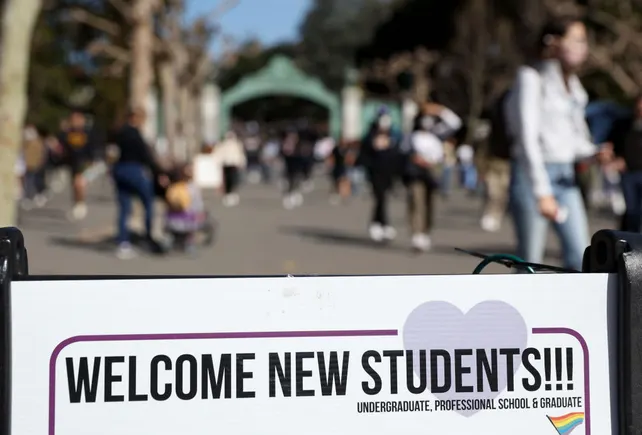
Last week, the center released preliminary fall 2024 data showing that undergraduate enrollment rose by 3% compared with early data from the previous year. On the other hand, first-time student enrollment fell by 5% year over year, marking the first decline since the early pandemic period.
The center said the youngest adults (age 18) drove the decline. Researchers used this group as a proxy for students entering higher education directly after high school.
Higher education experts say early data can offer college administrators insight into potential enrollment trends, and some experts link the first-time student decline to the chaotic rollout of the new Free Application for Federal Student Aid (FAFSA). But the incomplete data has limitations, and the higher education community will need to wait until the final data is released in January to fully understand enrollment for the semester.
By then, the 2025-26 FAFSA cycle will have been underway for several weeks.
Which colleges were most affected?
Fall 2024 marked the first time the center broke down institutions by the proportion of Pell Grant recipients. It found that four-year colleges enrolling high proportions of Pell Grant students saw the steepest declines in first-time student enrollment.
At private nonprofit and public four-year institutions, first-time student numbers fell by more than 10% year over year.
Northern Illinois University attributed its first-time student decline to the chaotic rollout of the new FAFSA. Sol Jensen, the university's vice president for enrollment management, marketing, and communications, said in a statement last month that public institutions saw "low numbers of completed FAFSA forms among prospective students."
Jensen said, "Northern Illinois University may be more affected than other universities because we traditionally enroll many students from underserved groups, such as low-income and/or first-generation college students."
Other data suggests financial concerns may have influenced students' college choices. At private nonprofit and public four-year universities, part-time first-time student enrollment declined less than full-time enrollment.
Doug Shapiro, the research center's executive director, speculated that younger first-time students may have chosen part-time enrollment to increase work hours due to concerns about costs and financial aid.
Shapiro said Tuesday during a webinar hosted by the National College Attainment Network that community colleges were the bright spot in the news. At community colleges with high proportions of Pell Grant undergraduate students, first-time student enrollment rose by 1.2%. Community colleges were also the only institution type to see growth in full-time first-time students.
Although the center's data remains preliminary, Shapiro noted the sample size is large—covering more than half of Title IV institutions reporting to the center, involving nearly 9 million students. Researchers also found no "obvious bias" in the sample, with only for-profit institutions slightly underrepresented.
But when the center's data first circulated earlier this month, a U.S. Department of Education official noted that last year's early data produced different results from the full dataset. In October 2023, center researchers initially estimated a 3.6% decline in first-time student enrollment, but the final January results showed an actual increase of 0.8%.
The ripple effects of FAFSA
Multiple factors in higher education this year may have disrupted the 2023-24 application cycle. But according to Bill DeBaun, senior director of data and strategic initiatives at the National College Attainment Network, the recent decline in enrollment among recent high school graduates correlates most strongly with the delayed and glitch-ridden rollout of the new FAFSA.
Two scathing reports from the U.S. Government Accountability Office (GAO) in September found that the Education Department mishandled key aspects of the FAFSA rollout. For example, the GAO found that 74% of calls to the department's call center went unanswered during the first five months of the FAFSA application cycle.
As of October 18, about 210,000 fewer high school graduates from the class of 2024 had completed the FAFSA compared with the same time last year, a drop of 8.8%. DeBaun said in an interview Wednesday that by the end of June—typically when most students complete the form—the decline was larger, with about 251,000 fewer students, or 11.6%.
When students miss the direct transition from high school to college, their likelihood of later returning to campus and of earning a degree or credential in the long term drops significantly.
—Bill DeBaun, senior director of data and strategic initiatives at the National College Attainment Network
"We're talking about hundreds of thousands of high school graduates—18-year-olds—whom we expected to enroll but who did not," he said.
Katharine Meyer, a governance fellow at the Brookings Institution's Brown Center on Education Policy, said the first-time student decline represents the realization of "the biggest concern from last year's FAFSA rollout." In contrast, forces often discussed in higher education, such as the U.S. Supreme Court's ban on race-conscious admissions and broad debates about the value of college, are unlikely to explain the decline on their own, she said in a report Monday.
DeBaun noted that fluctuations in FAFSA completion rates in recent years have aligned with fall enrollment the following year. He said that if enrollment among 18-year-olds had risen, the center's findings would be more striking.
DeBaun said that whatever the cause of the first-time student decline, the consequences could be far-reaching. "When students miss the direct transition from high school to college, their likelihood of later returning to campus and of earning a degree or credential in the long term drops significantly," he said.
The Education Department's response
Earlier this month, the Education Department released its early financial data alongside the center's report. The agency found that the number of students receiving federal aid this year rose by 3% compared with the same time last year. Based on Pell Grant disbursements—a key step before colleges distribute aid—about 10% of students are expected to receive Pell funding, with a 3% increase among high school graduates.
DeBaun praised any increase in Pell Grant availability. However, he also expressed interest in seeing disbursement rates (not just origination rates), because the fall 2024 semester is well underway and demand is higher.
In a post, the Education Department also said, "Many two-year and four-year colleges are reporting enrollment increases this fall." At the time, a department official said in a statement that warnings of massive enrollment declines would not come to pass.
Higher education experts say the most important priority going forward is to avoid repeating the delays and glitches of the 2025-26 aid cycle. Kim Cook, CEO of the National College Attainment Network, said the FAFSA must launch with full functionality by early December. "While this is still two months late, we believe the difficult trade-off of waiting for full functionality will lead to better outcomes for students, enabling them to receive aid in time to support fall enrollment," Cook said during a panel discussion Tuesday.
Meyer echoed similar sentiments in her Monday report. "Let's hope the Education Department has heeded the GAO's recommendations and will provide a fully functional form after the current testing phase, so this year's enrollment decline does not repeat among the high school class of 2025," she wrote.
