
Why More Colleges Are Seeking Hispanic-Serving Institution Certification
Hispanic-Serving Institution (HSI) certification requires that Hispanic students comprise at least 25% of full-time undergraduate enrollment, and that at least half of all undergraduates qualify for federal need-based financial aid. In recent years, as the Hispanic population in the United States has grown, the number of institutions with this certification has increased from 189 in the 1994-95 academic year to 600 in fall 2023. This article analyzes the specific practices of institutions such as Milwaukee Area Technical College, Montgomery College, and Weber State University in pursuing HSI status, as well as the challenges they face in enrollment, student services, and resource allocation.
Milwaukee Area Technical College is on the verge of joining the growing ranks of Hispanic-serving institutions (HSIs) in the United States—a coveted designation that would open the door to new federal funding.
Under the federal definition, colleges must meet the following conditions to earn HSI status: Hispanic students must make up at least 25% of full-time undergraduate enrollment, and at least half of undergraduates must qualify for need-based financial aid under U.S. Department of Education criteria. When Hispanic enrollment among full-time undergraduates is between 15% and 24%, the institution is considered an "emerging HSI," indicating it is moving toward this coveted designation.
In recent decades, as the U.S. Hispanic population has grown, the number of certified HSIs has also continued to increase. Many colleges are working hard to earn this designation—and the increased federal grant opportunities and enhanced reputation that come with it.
Once a college becomes an HSI, it can access federal funds reserved for such institutions to expand academic programs, improve student services, train faculty, and build or renovate instructional facilities, among other things. Additionally, having HSI status signals that the institution is committed to serving underrepresented groups—which helps enhance its ability to attract a diverse student body, said Lisa Alcorta, senior vice president of programs and operations at the Hispanic Association of Colleges and Universities.
However, for many institutions—especially those located in areas with smaller Hispanic populations—meeting HSI standards can be a long and difficult process.
Milwaukee Area Technical College is an emerging HSI. The college's president, Anthony Cruz, said the college began its full push for HSI certification in 2018, when Hispanic students made up 18% of full-time enrollment. As of this fall, Hispanic full-time students account for about 23% of enrollment—still 2 percentage points short of the 25% threshold.
Cruz said pursuing HSI status "reflects our commitment to Hispanic students and shows that this is one of our priorities as an institution." The two-year college has launched several initiatives to improve outreach to the Hispanic community, including establishing a dedicated committee and adding scholarship programs.
"I'm very optimistic that we can reach the 25% goal by next year—by October 2025," Cruz said.
The surge in HSI numbers
The U.S. Hispanic population reached 62.1 million in 2020—an increase of more than 11.6 million over the previous decade, according to U.S. Census Bureau data. The U.S. Department of Labor projects that by 2030, Hispanic workers will make up more than 21% of the U.S. workforce.
Hispanic college enrollment has also grown in recent decades. According to a recent report from the American Council on Education, the share of undergraduates who are Hispanic or Latino rose from 11.3% in the 1999-2000 academic year to 20.5% in 2019-20.
These demographic trends are reflected in the surge in HSI numbers over the past three decades. According to the Postsecondary National Policy Institute, HSIs were formally recognized in 1992 through Title III of the Higher Education Act. Federal funding first flowed to HSIs in 1995 through the Strengthening Institutions Program—and three years later through Title V of the Higher Education Act.
Alcorta said the government first recognized 189 HSIs in the 1994-95 academic year. By fall 2014, that number had surged to 435. By fall 2023, the number had jumped again to 600. She added that in 2022, more than 350 four-year universities were HSIs, while two-year colleges numbered just over 240. The number of emerging HSIs also grew over the past decade, from 310 in 2014 to 412 in 2023.
Demographic shifts in communities like Montgomery County, Maryland, have helped some colleges reach the 25% enrollment threshold. According to the local planning board, Montgomery County's Hispanic population has grown significantly over the past four decades—from less than 4% of the county's population in 1980 to more than 20% by 2021, with more than 211,000 residents identifying as Hispanic.
Against this backdrop of population growth, Montgomery College, a community college in Rockville, Maryland, earned HSI status in 2021. Since then, its Hispanic student share has continued to rise, from 26% in fall 2021 to 29% in fall 2023. The college said in a report this year that it plans to apply for federal grants designated for HSIs. College spokesperson Marcus Rosano said the college also established an HSI task force in 2022 to study how to better serve its growing student population, improve student success rates for that group, and collect data for developing grant proposals. He added that the college has also expanded services and programs for the Hispanic community—such as translation services for Spanish speakers and workforce development and continuing education courses offered in Spanish.
Efforts to reflect community demographics
As expected, HSIs are concentrated in states with large Hispanic populations, such as California, Texas, Florida, and New York, Alcorta said. But "as Hispanic communities expand across the country, more and more institutions are earning HSI status," she said.
Milwaukee is experiencing these trends. U.S. Census Bureau data shows the city's population shrank to about 561,000 residents in 2023, a decline of 6.3%. But its Hispanic population grew 18.1% over the same period, to about 124,000 residents.
"Our students are reflecting this trend," Cruz said. He wants to ensure that Hispanic individuals in the Milwaukee area can access the training they need to succeed in the workforce and earn wages sufficient to support their families. "We're working to meet the needs of the community," he said.
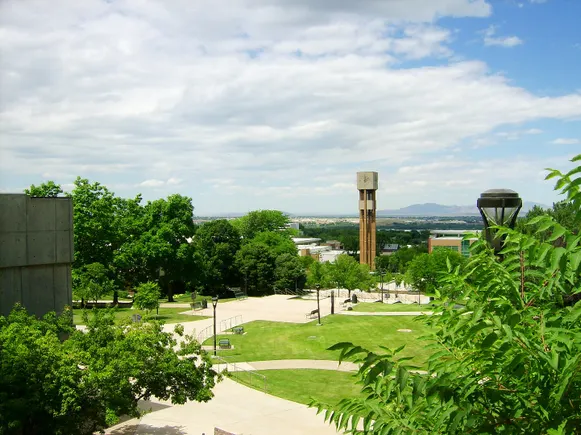
Weber State University in Utah is also working toward becoming an HSI, as the university seeks to better align its student demographics with the composition of its surrounding community, university spokesperson Bryan Magaña said in an email. The public university's largest campus is in Ogden, north of Salt Lake City, where Latino and Hispanic residents make up about 30% of the population. However, that group represents only about 13% of the university's full-time undergraduates, Magaña added.
"We see an opportunity to better serve this community, which has been on our radar for years," Magaña said. "It would demonstrate that Weber State University is a true reflection of its community."
Overcoming challenges
Over the past few years, MATC in Wisconsin has been trying to design more effective strategies to improve outreach to the Hispanic community by forming committees led by faculty and staff, Cruz said. The college has also hired bilingual recruiters and strengthened its English as a Second Language programs, he added.
One challenge MATC faces in becoming an HSI is that most of its students attend part-time—rather than full-time as required for the designation. These students often face family and work obligations that make full-time study difficult, Cruz said. "We've been trying to get students to take more credits so they can finish faster, but we also recognize that students have other things going on in their lives," Cruz said. "That's probably the biggest challenge."
The college is also "working to remove barriers to success that aren't necessarily related to the classroom," he added. For example, some students face food insecurity, so the college has established food pantries at each of its four campuses. The college also provides bus passes and tutoring services, and has hired campus social workers to help students meet other non-academic needs.
Alcorta noted that many potential Hispanic students are first-generation college students, face financial barriers to attending college, and many initially do not fully understand their college options. She said colleges can overcome these challenges by partnering with high schools, offering bilingual outreach, establishing scholarships, and engaging with different subgroups at local events. Alcorta added that institutions can also improve retention and graduation rates for this group by offering academic advising, mentoring, tutoring, and "culturally relevant" programs. Hiring diverse faculty and supporting Hispanic student associations are also key to creating an inclusive campus environment, she said. Alcorta said colleges can potentially defuse internal resistance to these efforts by clearly communicating the benefits of earning HSI status, such as access to additional funding and achieving diversity goals.
The long road to HSI status
After Weber State University began its formal push toward the 25% threshold in 2020, it failed to make the emerging HSI list for the 2022-23 academic year, Magaña said. University leaders consulted experts and developed a five-year strategic plan launched in 2021, with a goal of reaching the 15% emerging HSI threshold by fall 2025.
The university is making slow progress. This fall, Weber State has more than 4,043 full-time Hispanic and Latino students, representing about 13.2% of its full-time undergraduate population. That marks the fourth consecutive year of record highs. In fall 2019, the university had only 3,357 full-time Hispanic students, representing 11.9% of enrollment, he said.
"Although we've made progress in serving more Hispanic and Latino students, the percentage counted toward HSI eligibility has grown a bit more slowly," Magaña said. He noted that Weber State's biggest challenge in reaching the threshold is limited funding and staffing, which are critical to building the infrastructure needed to sustain HSI efforts and retain students through graduation.
But the university is trying to use resources more proactively. It has hired several staff members focused on connecting with the college's Spanish-speaking community and achieving HSI certification, including a full-time translator and an executive director of HSI initiatives.
"There's always room for improvement, and it takes a multi-pronged effort, but the core of HSI is collaboration," Magaña said. If Weber State ever succeeds, it will unlock federal grants that could "help strengthen the entire institution," Magaña added. "These funds can help elevate our school and the entire community, so we're not shy about our ultimate vision of pursuing HSI status," he said. "Given where we are and the community we serve, it makes perfect sense."