
Impact of Trump's Second Term First Year on Higher Education: Eight Key Figures
In the first year of Trump's second term, the federal government intervened in higher education through unprecedented means, prompting difficult choices for universities between independence and financial pressure. This article uses eight figures as a thread to review major changes, including the number of investigations, settlement agreements, research funding cuts, Education Department layoffs, and revocation of international student visas.
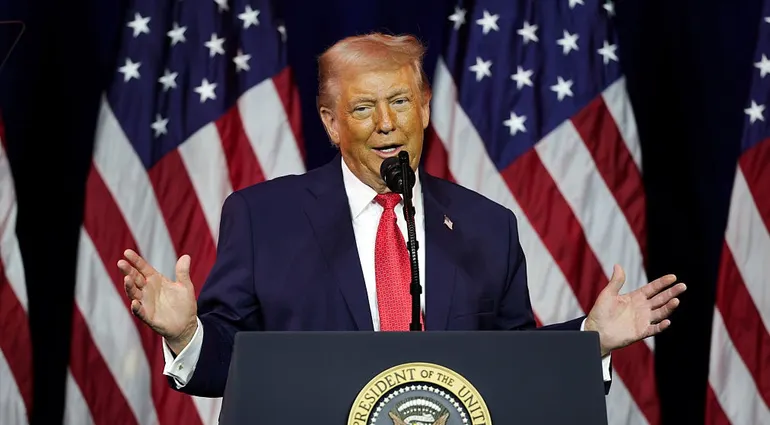
This Monday marks the end of the first year of President Donald Trump's second term, while higher education continues to struggle through months of federal policy upheaval.
The Trump administration has used broad and unprecedented strategies to try to influence academia and advance its policy goals. Accordingly, some university leaders have been forced to choose between defending institutional independence and policies, or conceding to the federal government due to financial pressure.
Below, we trace some of the major impacts of Trump's second term first year on higher education through numbers.
150+: Number of investigations
The number of investigations into universities launched or cited by the Trump administration, involving warnings of potential loss of federal funding.
In March, the U.S. Department of Education sent notices to 60 universities regarding ongoing Title VI investigations, alleging they had not adequately protected Jewish students from discrimination or harassment. Title VI prohibits institutions receiving federal funding from discriminating based on race, color, or national origin.
U.S. Secretary of Education Linda McMahon warned these universities (many of which had investigations initiated before Trump's second term) that federal funding "is a privilege" that "depends on strict compliance with federal anti-discrimination laws."
Less than a week later, the Department of Education launched additional investigations into more than 50 universities, involving programs or scholarships with race-based participation or eligibility restrictions. The agency again cited potential Title VI violations, referencing a February guidance letter aimed at eliminating diversity, equity, and inclusion (DEI) efforts. That guidance was ultimately overturned by a federal court in August.
Several prominent universities, including Yale University, Cornell University, Tulane University, and Arizona State University, appeared on both rounds of investigation lists.
Since March of last year, the Trump administration has also launched additional investigations into university policies that conflict with the president's higher education agenda, such as allowing transgender students to participate on sports teams matching their gender identity.
6: Public settlement agreements
The number of universities that have publicly reached settlements with the Trump administration to resolve allegations of civil rights violations.
Most of these institutions—Brown University, Columbia University, Cornell University, Northwestern University, and the University of Pennsylvania—each faced hundreds of millions of dollars in frozen or canceled federal funds. By settling with the Trump administration, university leaders sought to restore funding and remove political targets against their institutions.
The remaining institution, the University of Virginia, although its funding was not affected, faced five federal investigations that could threaten funding access. The U.S. Department of Justice paused these investigations and promised to drop them if the university "completes its planned reforms to prohibit DEI" by 2028.
But many higher education experts condemn such agreements as infringing on academic freedom and fueling the Trump administration's attacks on the higher education sector.
In one agreement, Columbia University agreed to pay the federal government $221 million—the highest amount among all universities so far—and implement comprehensive policy reforms, including reporting detailed admissions data to the Trump administration, "educating all students about campus norms and values" through training, and allowing independent monitors to oversee compliance with the agreement.
The settlement also creates barriers between international students and the university by requiring Columbia to reduce its financial dependence on international student tuition and requiring applicants to state why they wish to study in the United States.
In contrast, Harvard University has sued over the Trump administration's attempts to exert influence. So far, courts have largely sided with Harvard. A federal judge blocked the administration's effort to revoke the university's ability to enroll international students and ruled its decision to withhold $2.2 billion in funds from Harvard invalid.
15%: Indirect research cost cap
The cap the Trump administration attempted to unilaterally impose on the reimbursement rate for universities' indirect research costs.
Four federal agencies—the National Institutes of Health, the National Science Foundation, the Department of Energy, and the Department of Defense—rapidly introduced nearly identical 15% cap policies in the first half of 2025.
Research universities, higher education groups, and multiple states sued over these changes, and federal courts have so far blocked all four policies. Earlier this month, a federal appeals court upheld a lower court's ruling permanently blocking the NIH policy, which was the first such measure implemented by the Trump administration. NIH declined to comment earlier this month on whether it plans to appeal.
21%: Reduction in research funding
The percentage reduction in federal research funding the Trump administration sought in its fiscal year 2026 budget. Some agencies would face particularly large cuts. Under Trump, NSF requested a budget of $3.9 billion—less than half of what it received in fiscal year 2025. Similarly, the NIH director requested $27.9 billion, nearly 40% less than the previous year.
Members of Congress instead passed their own bipartisan funding proposals, rejecting these broad cuts. Congress must pass a full fiscal year 2026 budget before the temporary funding measure expires on January 30.
7: Department function transfer agreements
The number of agreements the Department of Education has publicly reached with other federal agencies to transfer some of its responsibilities.
This stems from an executive order Trump signed in March directing McMahon to "take all necessary measures" to facilitate the closure of the Department of Education. Full closure of the department requires congressional approval, but the Trump administration has sought to hollow out the department "to the maximum extent permitted by law."
In November, the Department of Education announced interagency agreements with the Department of State, the Department of the Interior, and the Department of Health and Human Services. The Department of Labor will also gain oversight of additional education programs after earlier taking over the department's key federal workforce development programs.
Under the November agreements, the Department of State plans to take over management of the Fulbright-Hays grant program, which funds overseas research and training for educators in non-Western foreign languages and area studies. The Department of Education has canceled the program for fiscal year 2025.
Additionally, the Department of Labor plans to oversee most federal postsecondary education grant programs. The Trump administration said in December that the department had completed its takeover of federal workforce development programs under the Workforce Innovation and Opportunity Act.
Starting this Tuesday, employees in the higher education programs division of the Department of Education's Office of Postsecondary Education will be assigned to the Department of Labor.
1,300+: Number of layoffs
The number of Department of Education employees the Trump administration fired in a mass layoff in March. Combined with buyout programs, the department's total staff was reduced from just over 4,100 to approximately 2,800.
In October, the Trump administration fired another 466 Department of Education employees during the longest government shutdown in U.S. history.
Both rounds of layoffs have sparked lawsuits that are still ongoing. However, the U.S. Supreme Court in July allowed the Department of Education to proceed with the first round of layoffs while lower courts consider their legality.
In early December, the department recalled some Office for Civil Rights employees who had been on leave for nearly nine months. These employees were paid during their leave while the Trump administration defended the March layoffs in court.
Earlier this month, the administration stopped defending the October layoffs in court, appearing to abandon efforts to proceed with the firings.
8,000+: Number of visa revocations
The approximate number of student visas revoked under the Trump administration, according to a January State Department social media post. An agency representative said in August that at least 200 to 300 of these visas involved terrorism-related allegations.
In the first half of 2025, the administration canceled the legal status of hundreds of international students in federal databases, often without formal notice or explanation. Lawsuits began to pile up, and the federal government announced in April it would temporarily reverse these cancellations until a formal policy was issued.
The administration never publicly disclosed the number of affected students. But shortly afterward, court filings revealed a proposed policy that would significantly expand U.S. Immigration and Customs Enforcement's authority to terminate students' legal status.
The Trump administration also made headlines for high-profile detentions and attempts to deport international and non-citizen students who criticized Israel's war in Gaza and related U.S. foreign policy.
Tufts University international student Rumeysa Öztürk became one of the representative figures of this trend when plainclothes immigration officers detained her in March. The Trump administration revoked her visa earlier that month, and Öztürk argued the decision was not communicated to her and stemmed from a pro-Palestinian opinion piece she co-authored in 2024.
Within 24 hours of her detention, the federal government transferred her from Massachusetts to a notorious ICE facility in Louisiana, with the American Civil Liberties Union stating at the time that no criminal charges had been filed against her.
After Öztürk was detained for six weeks, a federal judge ordered her release on bail in May. Her case is still ongoing.
The Trump administration also detained Columbia University former graduate student Mahmoud Khalil under similar circumstances. However, Khalil is a lawful permanent resident of the United States.
In 2024, he served as the chief negotiator for Columbia University's Columbia University Apartheid Divest Coalition, a coalition of student organizations that helped organize pro-Palestinian encampments on campus.
Like Öztürk, Khalil was detained by plainclothes ICE agents in March 2025 and transferred to a detention facility in Louisiana, hundreds of miles away.
Khalil was detained for three and a half months, missing the birth of his child and Columbia's graduation ceremony, until a federal judge ordered his release in June. He has sued the administration, alleging he was wrongly imprisoned and illegally targeted for his free speech.
However, on Thursday, a panel of federal appellate judges dealt a blow to Khalil's case, ruling that the lower court that ordered his release lacked jurisdiction.
Stanford University's independent student newspaper, with assistance from the Foundation for Individual Rights and Expression, also sued senior Trump administration officials, alleging that attempts to deport student visa holders based on speech violated free speech and due process rights.
A federal judge hearing a similar case said Thursday he would limit the administration's ability to deport members of the American Association of University Professors and the Middle East Studies Association. These two professional nonprofit organizations sued last year, alleging the Trump administration sought to deport faculty and students based on protected speech.
7: Number of state lawsuits
The number of states the Department of Justice has sued over laws or policies allowing some undocumented students to attend public colleges at in-state tuition rates.
Eligibility requirements vary by state, but DOJ leaders have argued in each case that these laws illegally provide undocumented students with benefits not available to all U.S. citizens.
The agency filed its first such lawsuit against Texas in June.