
Northwestern University reaches $75 million agreement with Trump administration, experts question its stance on free speech
The $75 million agreement between Northwestern University and the Trump administration has sparked controversy over free speech. The agreement restricts racial considerations in admissions, campus displays, and overnight protests, and cancels agreements with pro-Palestinian protesters. Experts believe the agreement may violate the First Amendment.
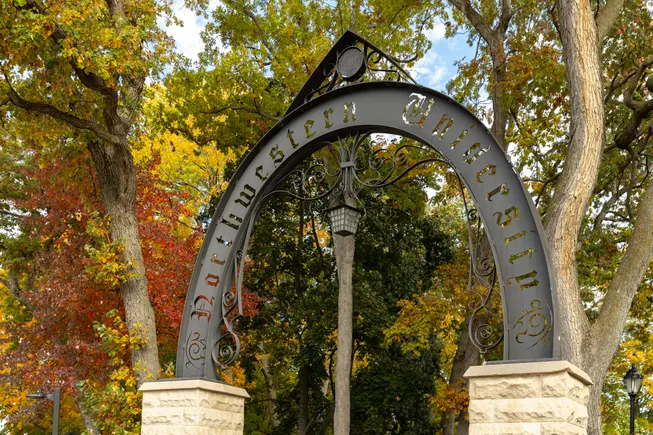
Northwestern University's 'Black Friday' agreement with the Trump administration raises free speech concerns. The agreement, which pays $75 million in exchange for restoring approximately $790 million in federal research funding, contains provisions experts believe may infringe on academic freedom and free speech.
According to the agreement announced on November 28, Northwestern University 'may not use personal statements, diversity narratives, or any applicant's reference to racial identity' to 'justify discrimination' in the admissions process. The agreement also prohibits banners, flyers, and chalk graffiti displays outside designated areas on campus, and prohibits overnight demonstrations at any campus location.
Additionally, the agreement rescinds last year's agreement with pro-Palestinian protesters and revokes all policies implemented as part of that agreement, including the commitment to create dedicated spaces for Muslim and North African students. Under the terms, Northwestern officials also agreed to certify the university's continued compliance with the agreement to the Trump administration.
'Northwestern's institutional judgment regarding academic freedom, student speech, and admissions standards has been overridden by federal government demands, raising serious First Amendment concerns,' said Heidi Kitrosser, a Northwestern law professor and constitutional law expert. In early December, Kitrosser co-signed a statement arguing that the government cannot micromanage recipients' speech by withholding federal funds.
Northwestern interim president Henry Bienen denied in a statement announcing the agreement that the university had surrendered academic freedom or autonomy. 'I would not sign any document that gives the federal government a say in who we hire, what we teach, who we admit, or what we research. Simply put, Northwestern is governed by Northwestern,' he said.
But Stephen Rohde, a longtime constitutional litigator and Northwestern alumnus, strongly disagreed. He called the agreement 'a sad day for higher education,' arguing the university had surrendered its independence. 'This is shocking interference. They have tied their own hands regarding students and cannot modify their own policies,' Rohde said.
Kevin Goldberg, vice president of the nonpartisan organization Freedom Forum, said Northwestern's agreement is not precise enough in its wording to withstand First Amendment scrutiny. Citing recent federal court rulings, he noted: 'We saw in Indiana University that restrictions on overnight demonstrations were struck down as violating the First Amendment. So these do raise issues.' Goldberg noted similar restrictions in Northwestern's agreement.
'Under the Gun'
Goldberg pointed out that whether individuals can in the future bring First Amendment challenges against the university or only against the government remains an open question. Although Northwestern is a private institution not directly bound by the First Amendment, Goldberg believes that because the federal government coerced Northwestern into the agreement to restore federal research funding, the university is not acting in a private capacity.
Kitrosser expressed a similar view: 'Even if the agreement were entirely the result of Northwestern's private choice, it would raise troubling free speech issues from a policy perspective. But what is more concerning is that Northwestern clearly reached the agreement under the gun.'
When Northwestern reached the agreement, Assistant Attorney General Harmit Dhillon issued a statement saying that universities receiving federal funds have a responsibility to prevent discrimination and antisemitism, and that the government 'is pleased to have reached an agreement that protects the rights of all applicants, students, and employees.'
Ironically, the Supreme Court's 2024 ruling in the gun rights case NRA v. Vullo may provide the strongest support for future First Amendment challenges to the agreement, Kitrosser believes. In that case, the NRA sued the former head of the New York Department of Financial Services, accusing her of pressuring insurance companies and financial institutions to stop working with the advocacy organization.
'A state official tried to urge people to end their associations with the NRA because they disliked its political activities,' Kitrosser said. The justices unanimously ruled that government officials cannot coerce private parties to selectively punish or suppress disfavored speech on their behalf. Kitrosser added that the case demonstrated that speech restrictions cross ideological lines. 'No political affiliation has a monopoly on immunity from government coercion.'
Similarly, she said, the government, 'by threatening to withhold funds,' forced Northwestern to restrict students' ability to protest, limit faculty speech, and even restrict the types of speech that may be considered in the admissions process.
But Adam White, a senior fellow at the American Enterprise Institute and attorney, said another ruling issued by the Supreme Court weeks after the NRA decision may point in a different direction. In Murthy v. Missouri, the justices ruled that Missouri and Louisiana, along with a few individuals, could not continue to argue that the Biden administration illegally pressured social media companies to remove certain speech.
White noted that in that case, intervening third parties complicated the issue, as it was difficult to distinguish between social media companies' independent actions and the results of government pressure. 'This is a problem Northwestern students or faculty might face if they claim government coercion, because was Northwestern coerced? And if so, did that actually coerce the speech of campus protesters or others?' The Supreme Court avoided the broader question of when government persuasion of platforms to remove content constitutes unconstitutional censorship.
White made clear he was not specifically referring to the Northwestern agreement, but he is cautious about the government imposing policy judgments through threats of funding cuts. However, he noted this is not a new strategy. 'The Obama administration would casually say that under Title IX, you must adopt certain policies related to sexual orientation and gender. Universities typically complied, sometimes against campus opposition. There is a complex relationship between universities and their regulatory or funding agencies.'
'Rife with Viewpoint-Based Conditions'
Although it remains to be seen whether Northwestern's agreement with the Trump administration will trigger a wave of lawsuits, Rohde said his alma mater will face trouble from students, faculty, and alumni. 'This is not a time, place, manner restriction or content-neutral,' Rohde said. 'It is rife with viewpoint-based conditions, which is a classic First Amendment violation.'
He noted that although Northwestern must conduct mandatory antisemitism training, the agreement explicitly rescinds the previous agreement with pro-Palestinian protesters, which had committed to supporting visiting Palestinian students and faculty. At the time, the university stated that 'antisemitism, anti-Muslim/Arab racism, and hateful conduct will not be tolerated.' The rescinded agreement also recommended that employers not revoke job offers due to students' participation in First Amendment-protected speech.
'As a Jew, I do not take antisemitism allegations lightly. I certainly want campuses free of antisemitism, but I also want all students protected from harassment. When you over-index toward one viewpoint, it creates problems,' said Goldberg of the Freedom Forum.
Some experts also believe the agreement's admissions restrictions go beyond the limits set by the Supreme Court in the 2023 case Students for Fair Admissions v. Harvard. Kitrosser noted that although the justices struck down race-conscious admissions in that case, 'they specifically said there is no reason a student cannot write, and an admissions committee cannot consider, how race affected them in their personal development.' But the broad wording of Northwestern's agreement states the university cannot consider 'proxies for race, including in the form of admissions statements or essays,' which Kitrosser believes exceeds the Supreme Court's intent and may suppress speech.
Beyond admissions, another free speech concern involves how the agreement might affect faculty and students in the classroom, given the Department of Justice's ongoing reporting and monitoring requirements. For example, one provision requires the university to show the DOJ all complaints received by its civil rights office. 'With more attention on complaints, professors will experience a chilling effect when covering certain topics in class,' Goldberg said. 'This does not necessarily mean a First Amendment violation, but actions based on these complaints could be.'
Despite these complexities, Rohde said Northwestern has a clear blueprint to follow: Harvard's lawsuit against the government's withholding of federal funds. A federal judge ruled in September that the Trump administration's freeze on Harvard's funds violated the university's First Amendment rights. 'This is exactly what Northwestern should do,' Rohde said. 'They should photocopy Harvard's complaint and adapt it to Northwestern's circumstances.'
