
Foreign Donation Reporting Rules Remain Unresolved, U.S. Universities in Policy Fog
Since the U.S. Department of Education released a report in October 2020 accusing universities of failing to disclose billions of dollars in foreign-source funds, compliance disputes over Section 117 of the Higher Education Act have continued to escalate. More than a year into the Biden administration, although it has not continued the Trump administration's tough rhetoric, it has not explicitly closed related investigations or revised policies. University groups point out that the lack of precise guidance leaves institutions in a difficult position, while both chambers of Congress are advancing legislation to lower reporting thresholds and expand disclosure scope.
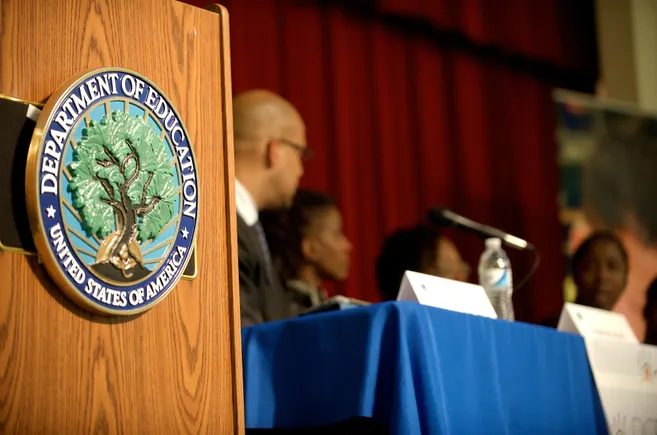
In October 2020, the U.S. Department of Education, then led by the Trump administration, held an event and released a report accusing multiple universities of failing to disclose billions of dollars in foreign funding as required by law. Under federal law, these institutions were obligated to make such disclosures.
Officials painted a grim picture: foreign influence had permeated American universities, potentially threatening academic integrity, national security, and human rights.
As evidence, a then-student at the University of Washington spoke, claiming that the institution did not intervene when she was detained by the Chinese government in late 2017 and forced into a "re-education camp." Without providing evidence, she stated that the university was reluctant to get involved for fear of affecting a "multi-million dollar deal" being negotiated with Chinese parties. The university subsequently denied the allegation.
This striking statement was not the first time the Trump administration intervened in universities' foreign funding matters.
By the time the Department of Education released the report, it had already begun investigations into the reporting practices of over a dozen prominent universities and launched more investigations in the following year. The Department also threatened to revoke federal funding if universities failed to adequately comply with Section 117—a provision of the Higher Education Act requiring institutions to report foreign gifts and contracts totaling $250,000 or more per year.
Now, more than a year into President Joe Biden's term, the Department of Education no longer echoes the aggressive rhetoric of the Trump White House on these issues. However, lawmakers' concerns about foreign forces—especially from China—penetrating higher education have not eased.
Susan Thompson, a Federal Bureau of Investigation official, said at the annual meeting of the American Council on Education (the most important lobbying group in U.S. higher education) last month that there has been little change in strategy between the two administrations in addressing foreign threats.
The Department of Education has not publicly concluded most of the investigations launched by the Trump administration, nor has it clarified or rescinded policies enacted by the previous administration, including a complex checklist for foreign funding disclosures.
Higher education leaders say the Department's lack of precise guidance has left universities struggling to clarify their legal obligations. This challenge persists even as Congress debates legislation that could make Section 117 requirements more stringent.
ACE has expressed willingness to negotiate rules under Section 117 that universities could follow, but the Department has not yet acted on this request.
History of Section 117
Section 117 has been part of the Higher Education Act for decades, but Steven Bloom, assistant vice president for government relations at ACE, said in an interview that the provision has been largely ignored by the Department of Education and, "regrettably," by some universities.
The law firm Crowell & Moring attributed this oversight to the Department's failure to initiate formal rulemaking for Section 117. The firm noted that the agency has never provided "significant interpretive guidance."
Bloom said that during the Trump era, there was an "unusually rapid" bipartisan shift in policymakers' attitudes toward China. Public criticism from Congress and the White House became sharp, and scrutiny of China's ties to higher education intensified.
These concerns are not entirely unfounded. American institutions have inadvertently facilitated malicious actions by the Chinese government, such as when a Yale University scholar shared genetic data that enabled Chinese scientists to surveil and oppress the predominantly Muslim ethnic minority Uyghurs.
Universities' legal obligation to report foreign financial relationships to the federal government came into focus in February 2019, when lawmakers questioned then-Deputy Secretary of Education Mick Zais at a Senate committee hearing.
Zais testified at the time that fewer than 3% of U.S. universities reported receiving foreign gifts or contracts.
A Senate subcommittee investigation also found that among institutions receiving $250,000 or more from Hanban, an affiliate of China's Ministry of Education, nearly 70% did not properly report these payments to the federal government.
The subcommittee's report stated: "Foreign government spending at American schools is effectively a black hole, due to the lack of reports detailing the various sources of foreign government funding."
Senator Rob Portman, a Republican from Ohio, asked Zais at the February 2019 hearing whether the Department planned to revise its guidance on Section 117. Zais indicated there were no plans to do so.
According to the hearing transcript, Portman said: "We would be happy to work with you on any clarifications to the regulations, but the regulations are clear enough that you must report."
Bloom described it as a "catalytic event" for the Department. He said: "There were a lot of tough questions at the time, and the Department didn't have good answers."
Universities Seek Clear Guidance
ACE sent multiple letters to the Department in 2019 seeking clarification on Section 117. For example, the organization wanted to know when it was sufficient to disclose only the country of origin of a gift, and how to amend previously submitted Section 117 reports.
ACE leaders said the Department stalled them, failing to answer their questions while intensifying efforts to crack down on reporting omissions.
Bloom said: "This caught us off guard. We had a fairly good working relationship with the Department under DeVos on other issues, even when we disagreed. We have a history of good relations with the Department across administrations, which is the norm when dealing with federal agencies. But this time was truly surprising."
In November 2019, ACE argued that a Department proposal requiring unnecessary details about universities' foreign gifts and contracts exceeded the authority of the Higher Education Act.
This reporting system was finalized and remains in use today. It requires information such as conditions attached to gifts and the addresses of the individuals or entities making them.
"This caught us off guard. We had a fairly good working relationship with the Department under DeVos on other issues, even when we disagreed."
— Steven Bloom, Assistant Vice President for Government Relations, American Council on Education
The Department stated that noncompliance with its policies could lead to revocation of federal funding, but higher education groups rejected this legal interpretation.
Congress also began to intervene in foreign gift reporting matters.
A broad legislative effort aimed at enhancing U.S. national security and competitiveness against other countries would impose new reporting requirements.
Legislation proposed in both the House and Senate would require faculty to disclose payments or gifts received from foreign sources. The House version stipulates that reporting is triggered only when a foreign entity provides $50,000 or more to an individual faculty or staff member; the Senate version sets no minimum threshold.
ACE wrote in a September letter to congressional leaders: "This means that when a visiting foreign scholar buys lunch for faculty or staff on campus, or gives small gifts (such as a coffee mug bearing the visiting scholar's alma mater logo), faculty and staff would have to report it."
Both bills would also amend Section 117, lowering the threshold at which universities must report foreign gifts and contracts.
The Senate version would lower the threshold from $250,000 to $50,000, while the House provision is more tiered. Universities would need to report gifts or contracts valued at $100,000 or more individually, as well as cases where foreign sources give a total of $250,000 or more over a three-year period.
ACE wrote to Congress last month opposing these measures, arguing they would place exponential new pressure on the Department, which "is already unable to effectively manage existing Section 117 requirements."
Terry Hartle, senior vice president for government relations and public affairs at ACE, said in an interview that Congress would be expanding the haystack containing the needle. Hartle noted that no problematic gifts or contracts have ever been found through Section 117 reporting.
A Department spokesperson did not answer a series of detailed questions, including whether Education Secretary Miguel Cardona supports strengthening reporting requirements and how the agency currently reviews universities' Section 117 submissions.
The spokesperson said in an email that the Department "is aware of the legislative proposals and is monitoring congressional deliberations on possible changes to Section 117."
The spokesperson said: "If legislation becomes law, the Department will review the revised statutory text and assess any new legal requirements, including those related to issuing regulations."
Unresolved Issues Linger
The spokesperson also declined to comment on the status of investigations into over a dozen institutions launched by the Trump administration between 2019 and 2021.
Higher education experts say these well-known schools (such as Harvard and Yale) were deliberately chosen. Their prominence was intended to draw public attention to the government's efforts to pressure universities into complying with Section 117.
Bloom said such investigations typically "proceed quietly." He said the public announcement of investigations was "somewhat shocking."
Of the 19 investigations listed on the Department's website, only four have been publicly concluded. Higher Ed Dive contacted the remaining 15 institutions for comment on the investigations.
As of press time, four universities had issued statements. All stated that they had not communicated with the Department about the investigations since providing the requested information.
Case Western Reserve University in Ohio, Florida State University, and Stanford University said in statements that they continue to comply with federal guidelines.
In the case of Florida State University, spokesperson Dennis Schnittker said in an email that the school had asked whether its interpretation of Section 117 was correct but received no response.
Cornell University spokesperson Rebecca Valli said in an email that the university fully cooperated with the investigation launched by the Department in July 2019. The university had reported approximately $150 million in foreign gifts and contracts under Section 117 since 2012, but later discovered that the law may also have required reporting approximately $150 million more.
Valli said the university amended its Section 117 reports in 2019 and significantly changed how it oversees international operations. Specific changes included hiring a new chief compliance officer and implementing processes designed to capture data from multiple systems containing foreign gift and contract information.
Valli said: "Although the investigation status remains open, Cornell has not received further communication from the Department since submitting its filings."
Meanwhile, lawmakers—especially Republicans—continue to keep foreign gift reporting requirements for universities in the spotlight.
Representative Mike Gallagher, a Republican from Wisconsin, wrote to Cardona in November questioning why the Biden administration appeared not to have initiated additional Section 117 investigations.
He also claimed that under Biden, universities had disclosed only $4.3 million in foreign funds—whereas from July 2020 to the end of January 2021, the Department recorded $1.6 billion in foreign funds reported by universities.
Gallagher wrote that the Department "may have relaxed its enforcement standards and, in doing so, thrown the Chinese Communist Party a critical lifeline at Beijing's request." He also gave an interview on the matter to Fox News.
The issue has also spread to the state level. Last year, Florida passed a law requiring public and private universities to report gifts valued at $50,000 or more from foreign entities to the state government.

