
Women's Colleges Turn Coed to Survive: Does Their Mission Face Challenges?
Since the 19th century, the number of women's colleges in the United States has plummeted from hundreds to 35 in 2021. To address enrollment crises, some colleges have turned coeducational, such as Mills College merging into Northeastern University and Notre Dame of Maryland University announcing the admission of male students in 2024. Supporters argue this brings financial improvements and curriculum expansion, while opponents worry about mission dilution. Through case studies and expert opinions, this article analyzes the pros and cons of this transformation.
In the 19th century, there were hundreds of women's colleges in the United States. According to federal data, by 2014 only 42 remained, and by 2021 that number had dropped to 35. Some of these colleges closed entirely, while others became coeducational following the decline of single-sex higher education since the 1960s.
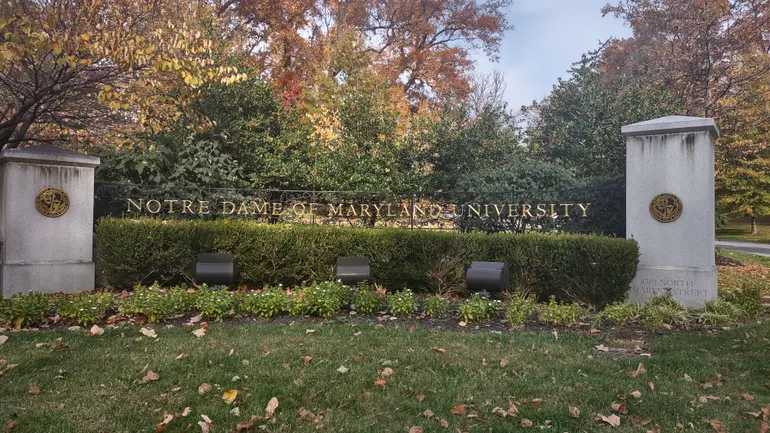
Since the beginning of 2021, two more institutions have chosen to leave the ranks of women's colleges. Mills College, a private institution in California, merged with Northeastern University last year and became a coeducational campus after declaring a state of financial emergency in 2017. Notre Dame of Maryland University, meanwhile, announced in September that it would become coeducational and admit male undergraduates starting next year.
Many women's colleges considering coeducation are driven by declining enrollment and the resulting financial difficulties. Adjusting admissions policies may help address these challenges, but this choice is not without drawbacks. Going coeducational often means a fundamental change in the college's mission, and not everyone welcomes it.
Some believe this cost is worth the benefits. "The results have met our expectations, and may even be better," said Rhona Free, president of the University of Saint Joseph, a private institution in Connecticut. The university announced in 2017 that it would admit coeducational undergraduates the following year. Although the administration expected about 50 men to enroll in the first semester, about 100 actually did. Enrollment and retention rates for female students also rose, and dormitory occupancy increased from 61% to 94%.
"We have had surpluses over the past few years and have used them to renovate the campus to meet the needs of expanded enrollment," Free said. She noted that the university had faced a potential enrollment decline due to a drop in the number of high school graduates in the region. To effectively recruit men, the university added programs such as computer science and exercise science, which also attracted more female students.
Free added, "The whole process went smoothly because we spent a lot of time communicating with alumni, current students, and faculty before making the decision. We worked hard to help everyone understand the reasons behind our decision to go coeducational, if we chose to do so."
She said the transition has also brought more opportunities for female students at the University of Saint Joseph. With a larger enrollment, the university has been able to offer academic programs and extracurricular activities that were previously unavailable.
Are the steadfast facing a new reality, or are survivors finding ways to adapt?
Despite the long-term decline of single-sex education, representatives of women's colleges argue that recent changes are not challenges unique to them. Emerald Archer, executive director of the Women's College Coalition, founded in 1972, said the enrollment declines experienced by institutions like the University of Saint Joseph are part of a broader downturn in American higher education, not specific to women's colleges. "This is part of a broader challenge facing higher education. Not all of us are under-enrolled," she said.
Archer noted that some women's colleges have higher enrollment than ever. She believes that going coeducational is a difficult decision made as a last resort. College leaders want to preserve tradition, but they also have to weigh whether expanding enrollment can sustain their survival. Due to the trend of college closures and transitions, the Women's College Coalition has been lobbying the federal government for dedicated support for the sector.
Archer said, "The impact of women's colleges on student life may not be seen at coeducational institutions. Most women's colleges were founded by women for women; we focus on advancing women and ensuring they can pursue the fields they aspire to."
Even without going coeducational, some degree of change may be necessary for survival. For example, Trinity Washington College, a women's college in Washington, D.C., faced enrollment declines in the 1980s, said President Patricia McGuire, when the predominantly white and middle-class female student body stopped enrolling. But in the 1990s and 2000s, the college decided to focus on women in the surrounding city, which significantly changed the student composition. Now renamed Trinity Washington University, its undergraduate population is 55% African American and 33% Hispanic or Latina, with white students making up only 2%, according to federal data.
McGuire said, "Women of color who come to Trinity don't mind that it's a women's college—in fact, they like it. But they come because we have programs like nursing, business, and psychology that directly help them pursue career paths after graduation." She believes that women's colleges that choose to go coeducational may weaken their mission. At a time when some state legislatures are trying to restrict women's rights and other signs indicate that women's status has not advanced, these colleges still provide empowering spaces for young women.
Difficult transitions
Colleges pursuing coeducation may also face backlash, though the extent varies by circumstance. In 1990, Mills College's first attempt to go coeducational sparked strong opposition, including a student strike. It became the first women's college to reverse its commitment to admitting men.
A group of alumni at Notre Dame of Maryland University is trying to make it the second college to reverse such a decision. Alumna Kristi Halford, a communications and public relations consultant who served as chair of the alumni executive committee for two years and remains involved in university affairs, said alumni and donors were caught off guard by the transition decision, which she believes is wrong for the college.
Halford said, "Not only alumni and students were kept in the dark, but faculty as well. I don't think coeducation is the right decision, but if due diligence and research had been done and it was logically clear that this was the solution, we might all have been willing to do our best for Notre Dame because it means so much to us."
The campaign has published multiple letters in The Baltimore Sun. The university's chapter of the American Association of University Professors, tenured professors, and individual alumni have also sent letters opposing the decision. Alumna and former board chair Patricia J. Mitchell called coeducation "a solution in search of a problem" in her letter. She wrote that since 2015, the university's enrollment has fallen by more than 20%, and retention rates, graduation rates, and positions in popular college rankings have also suffered.
Mitchell wrote in her letter, "If the underlying issues and lack of competitiveness (rankings, retention/persistence rates, graduation rates) are not examined or addressed, why would any outcomes or key performance indicators differ after admitting men?"
Halford believes Notre Dame of Maryland University has the ability to cultivate young women as leaders. She predicts the university will suffer from this decision and its process. "From a fundraising perspective, this will seriously hurt them. Donors and alumni have been giving because they believe in the women's college experience and want to pass that experience on to future generations," she said.
A spokesperson for Notre Dame of Maryland University responded by referring to public statements and an FAQ document. In the FAQ, the university wrote, "Each year, fewer than 2% of female first-year students enter private women's colleges. For NDMU to thrive in the future, we need to expand our mission to admit men and women who want a coeducational experience."
