
University of Pennsylvania Eliminates Enrollment Deposit: Equity Considerations at Ivy League Schools
The University of Pennsylvania announced that it will eliminate the enrollment deposit starting with the fall 2023 admission cycle to reduce the financial burden on students from low-income families. This move aligns with practices at Ivy League institutions such as Brown, Harvard, and Yale, reflecting a re-examination of economic barriers in the admissions process within higher education.
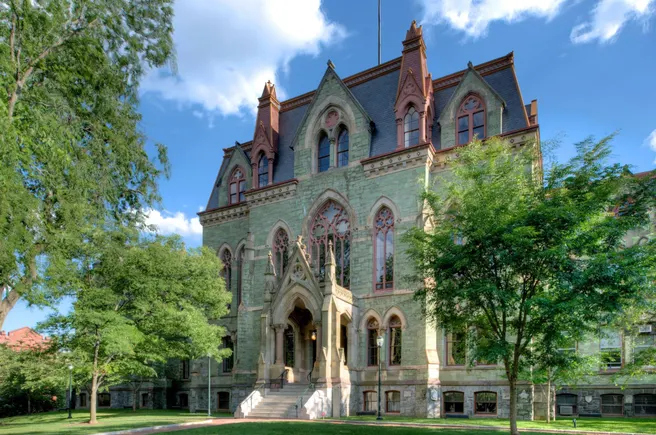
This summer, Whitney Soule, the vice provost and dean of admissions at the University of Pennsylvania, began discussions with colleagues about how the Ivy League school manages student enrollment deposits.
The enrollment deposit is a traditional step in the college selection process, requiring admitted students to pay a few hundred dollars or less to indicate their intent to enroll and secure a spot for the fall semester. This money is then credited toward their tuition bill.
Requiring a deposit helps colleges plan their incoming class size and corresponding budget because, in theory, once students have paid cash, they are less likely to change their minds. However, some students do drop out, sometimes because theypaid deposits to multiple schools。
Soule recalled that her summer discussions gradually evolved into several questions: Why is Penn still charging a deposit? Do we really need it?
The answer to the second question is clearly no.
Starting with the incoming class in the fall of 2023, Penn will no longer require students to pay an enrollment deposit. Instead of paying a $400 deposit in advance, students will wait until the first semester bill arrives to pay tuition. Additionally, students will not need to pay a housing deposit. This move aligns Penn's practices with several other Ivy League schools.
Soule stated that this decision was driven by equity considerations. Most incoming Penn students can easily afford this initial payment, but for some admitted students, the deposit could create financial strain, and some even need to request a waiver.
Soule hopes this initiative will ease the transition pressure for these students coming to Penn.
Of course, a wealthy Ivy League school faces much lower financial risk when dealing with students who commit to enroll but ultimately do not show up—the so-calledsummer meltphenomenon. As of the end of June, Penn's endowment totaled nearly $21 billion.
Although Penn students no longer need to pay an enrollment deposit, the low-income students who would benefit most from this policy make up a relatively small portion of Penn's student body. According to the latest federal data, in the 2020-21 academic year, fewer than 20% of first-time full-time undergraduates received Federal Pell Grants, and another 11% of students took out federal student loans.
Nevertheless, Soule believes this change serves as a reminder to continually examine practices that might be seen as inherent to the admissions process but can actually be eliminated. She said in a recent phone interview that this shift can greatly benefit some students.
"I hope they won't even realize this burden has been removed," Soule said. "If they never have to worry about it, that's the best goal. It's not about crossing something off a list; it's that it shouldn't have been on the list in the first place."
A new focus on barriers
Most colleges and universities say they want to support disadvantaged students and help them on a path to social mobility.
However, the national reckoning on race following the murder of George Floyd by police in 2020 intensified these concerns and spurred higher education to vigorously dismantle barriers in admissions and enrollment.
In January, two major higher education associationsreleased a reporturging simplification of the admissions process. They argued that the fewer steps in applying and enrolling, the fairer the process.
In the report, the National Association of Student Financial Aid Administrators and the National Association for College Admission Counseling alsosupported eliminating various feessuch as those related to applications. Colleges can waive these fees for some students, and they often do. But the report noted that even the act of students "proving their financial need" can disproportionately burden students from minority backgrounds.
Nikki Chun, vice provost for enrollment management at the University of Hawaiʻi at Mānoa, said eliminating enrollment deposits is "just like eliminating application fees." She previously led undergraduate admissions at the California Institute of Technology, a highly selective university.
She said such initiatives are part of higher education's mission to advance diversity, equity, inclusion, and justice.
"Families who cannot easily access these funds fall further behind in the admissions process," Chun said in an email. "This runs counter to the DEIJ work many of us are committed to advancing."
Soule said Penn's admissions policy change stemmed from "intentional conversations" among staff in her office. They have been working to identify and eliminate friction points applicants encounter during their admissions journey.
In the case of eliminating the deposit, this meant communicating with other departments on campus, such as those related to finance, to understand the potential impact of the change, Soule said.
She said she understands the logic behind requiring a deposit—Penn has "always done it this way"—and that it might incentivize students who have committed to enroll to ultimately show up.
"But we have no evidence that it actually works," she said.
Soule noted that some students still chose other universities after paying the deposit. Penn wants to build connections with students, and that doesn't require them to make this specific payment.
Soule revealed that about 20% of enrolling students at Penn use a deposit waiver, and about 30% of applicants receive an application fee waiver. Pennenrolled 2,417 first-year students in fall 2022。
The situation at other colleges
Brown University is also among the institutions that do not require an enrollment deposit, spokesperson Brian Clark said in an email. He said the school does not want this financial burden to hinder students and their families from choosing Brown.
"Except for cases like gap years, we lose very few students between May 1 and the start of the fall semester," Clark said. May 1 has traditionally been the national deadline for many students to choose a college.
Spokespeople for Harvard University and Yale University also confirmed via email that both schools do not require an upfront enrollment payment. However, they did not specify when each school eliminated its deposit requirement.
Meanwhile, Cornell University spokesperson Rebecca Valli said in an email that the school still charges a $400 deposit. The remaining Ivy League schools did not respond to requests for comment.
Nathan Mueller, president and managing director of analytics services at the consulting firm EAB, said in an email that some public institutions have also eliminated enrollment deposits. But Mueller noted that these institutions, some of which are EAB clients, have seen "less reliability" in confirming the number of enrolling students.
"Perhaps Penn is confident enough in its process to know who will show up even without a deposit," he said.
Estimates of the proportion of high school graduates who give up enrollment during the summer melt vary across differentstudiesbutdatasuggestestimatesare at least 10%.
But like Brown, Penn is not too worried about student attrition. Soule said that each year, about 25 students who have committed to enroll ultimately do not show up.
This is precisely the financial challenge most institutions face. Chun noted that only a few well-funded colleges believe their enrollment numbers are stable enough to remove this barrier to entry. Caltech, where she previously worked, is among that group.
"These decisions require a delicate balance between being student-centered and meeting operational needs," Chun said. "I think that's why we don't see more of these initiatives; they are highly complex and require weighing many priorities. Perhaps when more institutions take similar actions, we'll have better models to follow."
Looking ahead
David Hawkins, chief education and policy officer at the National Association for College Admission Counseling, said that people across the country who work with low-income students and their families frequently discuss enrollment deposits. He noted in an email that the deposit amount can be "orders of magnitude higher than application fees."
In addition to the flexibility many institutions offer on deposits, NACAC alsoestablished its own programa few years ago to provide funding for waivers.
Aaron Ray, director of the Opportunity Program at Hamilton College, a private liberal arts college in New York, said institutions that cannot fully eliminate enrollment deposits should communicate with students one-on-one to ensure they are aware of possible waiver or reduction options.
Ray acknowledged that many institutions, especially those dependent on tuition revenue, rely on enrollment deposits to predict class size and budget. But he said he has seen firsthand how enrollment deposit waivers and reductions have had a huge impact on certain students.
He recalled a student he mentored while at Union College in New York. The student's deposit was reduced to $50, and she broke down in tears in front of him because she no longer had to pass that cost on to her family.
"For those who grew up in poverty and feel that college is out of reach because it's too expensive, this absolutely makes a difference," Ray said.
Clarification: This article has been updated to clarify that the student Aaron Ray mentored who received an enrollment deposit reduction attended Union College in New York.