
Can the Farm Bill Alleviate Funding Woes for Historically Black Colleges?
The Farm Bill is reauthorized every five years, covering food, agriculture, and funding for land-grant universities. Among them, the 19 historically Black colleges and universities (HBCUs) established under the 1890 Act serve over 117,000 students but have long been underfunded, with a significant gap compared to predominantly white land-grant institutions. Advocates are calling for increased funding shares and waivers of matching requirements, hoping the 2023 Farm Bill can improve the situation.
Every five years, the U.S. Congress must reauthorize the massive spending plan commonly known as the farm bill, which covers food and agriculture. In addition to provisions on federal nutrition benefits, crop insurance, and wool production, it is also a major source of funding for land-grant universities.
"People don't realize that while the farm bill is highly focused on supporting the nation's food supply, it also provides critical funding for some of the largest universities in the country," said Denise Smith, a senior fellow at the Century Foundation, a left-leaning think tank.
This includes 19 historically Black colleges and universities (HBCUs), often referred to as "1890 institutions," named after the legislation that led to their establishment.
Today, these institutions serve more than 117,000 students. According to Smith's recent report, three-quarters of these students are Black, and 57% receive Pell Grants. Smith believes these institutions make important research contributions to the nation, educate disadvantaged student populations, and generate an economic impact of $5.5 billion annually.
However, compared to predominantly white land-grant universities, 1890 institutions have long faced underfunding. Advocates hope the upcoming farm bill can begin to correct some of these funding inequities.
"Look at white land-grant universities—Rutgers, UMass Amherst, the University of Tennessee, Clemson, etc.—they are well-funded and hold a much higher status than Black land-grant universities in the country," Smith said.
Why are 1890 institutions underfunded?
In 1862, Congress established the original 57 land-grant institutions focused on agriculture and mechanics, but these institutions excluded Black students. In 1890, Congress passed legislation aimed at providing similar educational opportunities for Black students, giving rise to today's Black land-grant colleges.
But they were underfunded from the start. The 1862 land-grant institutions received permanent funding for "endowment, maintenance, and support," while Black institutions never did. Smith's analysis found that today, 1862 institutions in the same states as 1890 institutions have more than six times the average endowment assets per student than their Black counterparts.
Additionally, 1890 colleges spend less than one-third of what 1862 land-grant institutions spend on research per student, and the latter have an average Black student population of only 6%.
Part of the problem lies in how 1890 institutions are funded. Nineteenth-century legislators established a regular research funding formula for predominantly white land-grant institutions, but Black land-grant institutions did not receive such appropriations until the 1960s, 80 years later.
Today, the federal government's total research appropriations to Black land-grant universities must be at least 30% of what it authorizes to the original land-grant institutions. Universities must match federal funds, typically with state funds. But 1890 institutions can apply for waivers of up to 50% of the funding requirement if they cannot secure the match.
Although this arrangement allows 1890 institutions to retain federal funds, advocates argue it lets state governments evade fully funding Black land-grant institutions. According to a report by the Center for American Progress, a liberal think tank, up to half of state legislatures each year refuse to fully match federal funds for 1890 institutions. Over the past five years, the value of missed funds totals approximately $90 million.
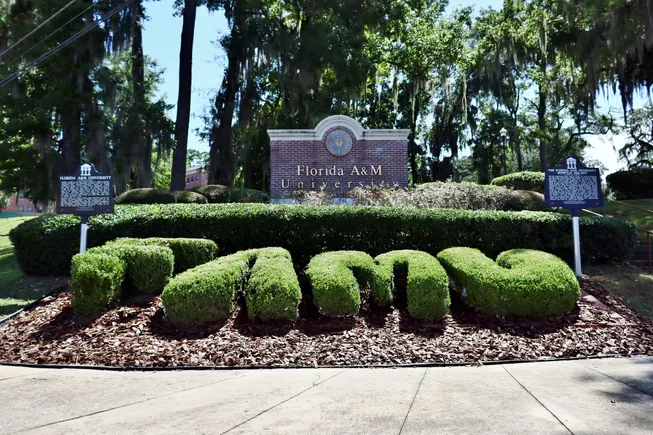
For example, in 2022, Florida refused to match $2.2 million in federal funds for its Black land-grant institution, Florida A&M University, forcing the institution to apply for a special waiver. That same year, the state provided a 14-to-1 state-to-federal funding match for the 1862 land-grant institution, the University of Florida.
"1890 institutions do excellent work. They are often located in underserved communities, serve small-scale and resource-limited farmers, and provide nutrition education," said Sarah Partridge, senior policy analyst at the Center for American Progress and author of the report. "There is broad bipartisan support for HBCUs, and Congress should turn words into action."
What do advocates want from the farm bill?
The 2023 farm bill has the ability to correct some existing inequities. Some advocates are calling on Congress to increase the funding ratio for 1890 universities relative to their white counterparts. For example, both the Association of 1890 Research Directors and the 1890 Universities Foundation are calling for HBCUs to receive at least 40% of the authorized funding of 1862 land-grant universities.
"Of course, a higher percentage would be more ideal, but 40% would at least allow us to make progress on equity," said Alton Thompson, executive director of the Association of 1890 Research Directors. The organization is also seeking approval to use research funds to waive tuition and fees for graduate students.
The issue of waivers for state matching of federal funds is equally prominent for advocates, who are seeking ways to force states to fully match federal funds for 1890 institutions. Smith proposes eliminating the waivers entirely. Meanwhile, she suggests shifting the responsibility for applying for waivers from the institutions to the governors. The Association of 1890 Research Directors also supports this strategy.
"For us, eliminating the waiver is important to ensure that legislatures or governors are held accountable, or to encourage other entities to provide the waiver," Smith said.
Partridge of the Center for American Progress proposes requiring 1890 institutions and their same-state 1862 institutions to jointly certify receipt of matching funds, jointly apply for waivers, and proportionally share the loss of waived amounts. "1890 and 1862 institutions already collaborate extensively," she said. "This would increase transparency about resource challenges within state university systems and incentivize more equitable resource allocation between the two."
Advocates are also seeking reauthorization of millions of dollars in scholarship, capacity, and infrastructure funding, as well as expansion of 1890 Centers of Excellence focused on activities like research and teaching. Smith suggests establishing a new mandatory funding stream for 1890 institutions totaling $600 million over five years to address past inequities.
The 1890 Universities Foundation and the Association of 1890 Research Directors are also asking Congress to provide $5 million annually to sustain the foundation's operations. The foundation helps 1890 universities collaborate and award grants.
"This is not a typical request, but we believe there is precedent," said Mortimer Newell, president and CEO of the 1890 Universities Foundation. For example, the Foundation for Food and Agriculture Research is a public-private partnership established by Congress in the 2014 farm bill. "We believe we play a similar role, and providing capacity building for the foundation would be significant," Newell said.
What can be expected from Congress?
The current version of the farm bill expires on September 30. If Congress cannot approve an update by then, lawmakers will need to extend the previous bill to avoid funding disruptions. According to a July report from Roll Call, the House and Senate Agriculture Committees have begun drafting the bill, but full drafts are not expected until September, leaving little time for the two chambers to reach an agreement.
Smith and other advocates, some of whom have met with committee members, say they are optimistic about the process. Many of the controversies accompanying the farm bill may involve other provisions, such as the Supplemental Nutrition Assistance Program and other welfare programs, or funding for conservation and climate efforts. The debt ceiling agreement between the White House and congressional Republicans added work requirements for SNAP, but it is unlikely to affect funding for Black land-grant institutions.
Newell of the 1890 Universities Foundation said he expects the authorization process to yield positive results. But even after authorization, the work is not done. "For me, the question is whether appropriations will match authorizations? That's where we struggle," he said. For example, after the 2018 farm bill, Newell said it took three years for Centers of Excellence to begin receiving the amounts authorized by Congress. "To go back to the old saying, doing more with less, we've lived that way for the past century and will continue to do so," Newell said. "We do hope that one day we can say, 'Oh, we finally made it.'"