
Algorithmic Intervention in Financial Aid Allocation: How U.S. Universities Balance Fairness and Revenue
U.S. universities are increasingly using algorithms to determine the amount of financial aid awarded to admitted students, aiming to optimize resource allocation and net tuition revenue. Proponents say algorithms help balance enrollment and income, but critics worry that algorithms may perpetuate human bias and lack sufficient oversight. Experts suggest that universities should use them cautiously and employ data talent for supervision.
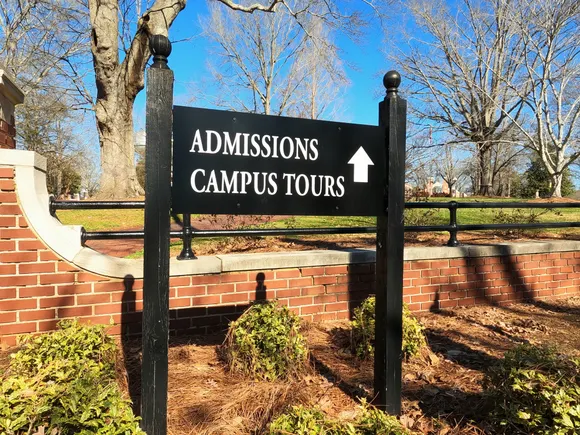
As technology becomes increasingly mature, algorithms have quietly permeated many operational aspects of American university campuses. In admissions, some institutions have begun using artificial intelligence to assist in deciding whether to admit students, though this practice remains in the minority. However, four-year colleges more commonly use algorithms to assist with another admissions decision—determining financial aid award amounts for admitted students.
Education experts point out that when institutional resources are limited, algorithms can help optimize the distribution of financial aid. However, some argue that this practice may cause difficulties for students and even expose institutions to potential legal risks. Nevertheless, both skeptics and supporters agree that the success and fair use of algorithms depend on whether institutions and vendors are sufficiently prudent.
What is an admissions algorithm?
Enrollment management and financial aid algorithms are essentially tools that predict the likelihood of a student enrolling at a particular institution after being admitted. Admissions teams can influence this probability by offering scholarships and other financial aid packages. Nathan Mueller, head of the education consulting firm EAB, said: "The core idea is to award financial aid in a way that maximizes net tuition revenue for the institution." He is also the designer of the company's financial aid optimization efforts.
As institutions offer more scholarships, enrollment rises, but per-student revenue declines. Mueller explained: "The balance point we help institutions find is how to use the optimal financial aid mix to raise enrollment to a tipping point—where if one more dollar were awarded, enrollment would still increase, but the institution's net revenue would begin to decline." At the individual institutional level, this process involves assessing admitted students' likelihood of enrolling and their sensitivity to tuition changes.
The input variables of different algorithms may vary depending on institutional goals. For example, algorithms may consider applicants' grades, test scores, geographic location, and financial data, and may also focus on indicators of applicant interest in the institution—such as whether they visited campus, interacted with admissions officers, or answered optional essay questions. EAB advises its clients not to use these interest indicators in financial aid decisions. Mueller said: "We do look at some of these factors to understand student engagement and price sensitivity. They have predictive value, but from our perspective, they are not suitable as a basis for determining how much financial aid a student receives."
Mueller mentioned that in the past, many institutions promised to meet 100% of students' demonstrated financial need. But in the early 1990s, the U.S. Congress changed the needs analysis methodology, making many families appear to have greater need while also cutting Pell Grant funding. Therefore, he believes, fewer and fewer institutions can afford this commitment. Although some institutions do not use algorithms to determine financial aid, their goals are often similar to those that do. Currently, EAB works with about 200 clients (mostly private institutions) on financial aid optimization.
Careful consideration
Vendors emphasize that the algorithms they provide are not simple mathematical models that directly output results requiring strict execution. Instead, they allow admissions teams to experiment with different financial aid strategies and observe how these strategies might change the diversity, gender balance, and academic composition of the incoming class. Mueller said: "Criticism of algorithms or artificial intelligence often focuses on the fact that they seem to operate on their own, lacking regulatory guardrails that reference institutional philosophy or strategic goals. We absolutely do not want anyone to act solely on mathematical calculations without considering other key strategic factors."
But Alex Engler, senior fellow at the Brookings Institution, said he is skeptical about whether institutions are properly reflecting on how these tools are used. Since algorithms are typically trained on data generated by human decisions, they often reflect human biases and lead to different outcomes for different subgroups. In the financial aid field, this could have significant implications. Engler is not sure whether university officials who use algorithms on a daily basis have sufficient technical and data expertise to confidently question the algorithms. He said: "Sometimes universities are unable or fail to adequately evaluate and adjust algorithms, truly engaging in self-criticism about their impact."
For example, some students may choose to enroll after receiving a specific financial aid package, even if it is not the best financial choice for them. And students burdened with high costs often struggle to persist to graduation, which has negative consequences for both students and institutions.
"Sometimes universities are unable or fail to adequately evaluate and adjust algorithms, truly engaging in self-criticism about their impact."
—Alex Engler, Senior Fellow at the Brookings Institution
Wes Butterfield, senior vice president for enrollment at the education consulting firm Ruffalo Noel Levitz, said algorithms and aid strategies can take retention and graduation rates into account. He said: "What campuses are trying to figure out is how to provide equitable aid so that students not only enroll, but I think more and more campuses are also considering retention—how much aid gets students to ultimately walk across the graduation stage." Ideally, he hopes institutions can offer similar aid packages. "Students should enroll because of mission fit, choice of major, or liking extracurricular activities," Butterfield said. "I'm trying to neutralize the financial aid factor."
Human involvement
From a legal standpoint, these algorithms do not require human intervention. In the European Union, citizens have the right to request human review of decisions with significant consequences, such as loan terms. But this right does not exist in the United States, noted Salil Mehra, a law professor at Temple University. Mehra said that misuse of financial aid algorithms could expose institutions to antitrust liability. In August, the University of Chicago settled an antitrust lawsuit alleging that 17 universities engaged in price fixing through illegally coordinated financial aid policies. Mehra also noted that institutions could theoretically collude without explicit intent, for example by using the same consulting firm that applies very similar formulas to each client. He said: "The result could resemble the effect of an explicit agreement, namely reducing financial aid for students in need. This could actually be concerning because if it happens, it would be very difficult to detect."
Overall, higher education is facing legal scrutiny that did not exist before the 2019 "Varsity Blues" scandal. Mehra advises institutions to pay close attention to ways they might face antitrust liability. EAB's Mueller said the company's algorithms are unique to each institution. He wrote in an email: "The models used by each institution have substantial differences, and even when factors are similar, they are driven by the competitive environment rather than inherent similarities in the models themselves."
Complex tools
In practical application, institutions and admissions offices may not view financial aid algorithms as standalone technology, but rather as part of a comprehensive tool for predicting enrollment rates. Othot, a company providing analytics and artificial intelligence products to institutions, published data on the results achieved by the New Jersey Institute of Technology (NJIT) using its algorithmic tools. In fall 2018, when NJIT began using the technology, the institution enrolled 173 additional first-year students and saw increased net revenue. But NJIT officials said they do not view the technology as a dedicated financial aid tool, but rather as a tool for predicting enrollment rates, helping them allocate limited resources—including financial aid, but also admissions staff time and effort. They noted that the technology does not make decisions on its own.
Susan Gross, vice provost for enrollment management, said: "It doesn't tell us what to do." Engler of the Brookings Institution suggests that universities and admissions offices should hire personnel with data expertise to work alongside algorithms, while closely monitoring the long-term performance of enrollment strategies and how students fare after enrollment. He said: "There is much work to be done to improve practice and ensure that there are at least some checks in algorithmic systems, such as 'Are we systematically disadvantaging our own students or harming their interests?'"
