
Why Are Some Historically Black Colleges and Universities Experiencing an Enrollment Surge?
In recent years, enrollment at some Historically Black Colleges and Universities (HBCUs) has grown significantly, contrasting with the overall downward trend in higher education nationwide. This article analyzes multiple factors, including adjustments in admissions strategies, changes in the sociopolitical environment, and historical opportunities.
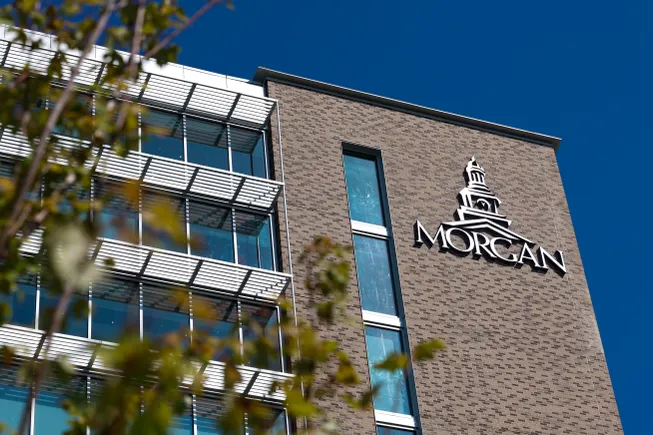
Morgan State University, a historically Black college and university (HBCU) in Baltimore, has seen a surge in applications in recent years. Enrollment at this public university has grown by 27% since 2018, reaching 9,808 students in the fall 2023 semester. The university has set a clear goal of reaching 10,000 students by 2030, according to Khala Granville, the university's director of undergraduate admissions and recruitment.
Granville attributes the growth to the university's recent addition to the Common Application system, which aggregates online application forms for over 1,000 member institutions, as well as proactive retention policies and its location as a mid-sized institution near Washington, D.C., which has also attracted many out-of-state students, she added.
However, other HBCUs have shown similar growth trends, contrasting sharply with the overall decline in college enrollment seen nationwide in recent years.
According to data from the National Student Clearinghouse Research Center, enrollment at HBCUs nationwide grew in both fall 2021 and fall 2022, even as total national student numbers declined during the same period. In fall 2023, overall HBCU enrollment dipped, but the center's executive director noted that some institutions failed to submit data before the final reporting deadline, which may have affected the overall figures.
At North Carolina A&T State University, the largest HBCU in the nation, fall 2023 enrollment reached 13,883 students, an increase of nearly 3% over the previous academic year. Other institutions with notable growth include Howard University, Delaware State University, North Carolina Central University, Wilberforce University, and the University of Maryland Eastern Shore.
Facing rising enrollment, HBCU leaders attribute it to multiple factors. Many emphasize the role of internal policies and practices, such as new retention and recruitment initiatives and academic support for incoming students. Some presidents also cite new sources of philanthropic and government funding as supporting growth. But Granville believes the enrollment increases at Morgan State and many HBCUs are also driven by the political climate.
Students witnessed racial disparities in health outcomes during the COVID-19 pandemic and saw protests erupt after the killings of George Floyd and Breonna Taylor. Now, students are also grappling with changes in how colleges evaluate applications following the Supreme Court's ruling last year that barred institutions from considering race in admissions, Granville said.
It is these developments that are prompting students to seek institutions where they can present their full selves in terms of race and ethnicity—and HBCUs have historically supported students in this regard while offering academic benefits, Granville said.
"Students are looking for spaces where they are seen, welcomed, and affirmed," Granville said. "That helps them succeed because they can build important connections with faculty and staff who are genuinely invested in their success."
Racial tensions drive enrollment growth
Overall, the enrollment increases stem from HBCUs' ability to absorb "students who are diverse in their academic backgrounds, worldviews, and college aspirations," Nadrea Njoku, assistant vice president at the Frederick D. Patterson Research Institute of the United Negro College Fund (UNCF), wrote in an email. The institute focuses on improving educational opportunities for African Americans.
"When students are looking for higher education institutions that fit their needs, HBCUs stand out as welcoming places," Njoku said.
Interest in HBCUs surged after waves of protests swept the nation in 2020 following the police killings of Floyd and Taylor. These events heightened racial tensions in the U.S. and also cast a spotlight on the importance of HBCUs—which have historically been major drivers of the African American middle class, said Harry Williams, president and CEO of the Thurgood Marshall College Fund.
Since then, tens of millions of dollars in new funding have flowed to HBCUs through the HBCU Transformation Project. Launched in 2022, the project aims to help institutions expand enrollment and improve graduation rates, and is co-led by several organizations supporting HBCUs, including UNCF and the Thurgood Marshall College Fund.
Institutions have also received pandemic relief funds distributed by the federal government, as well as donations from celebrities, corporations, and billionaire philanthropists, including author MacKenzie Scott, former Netflix CEO Reed Hastings, and his wife, producer Patty Quillin.
"The enthusiasm for HBCUs right now is at an all-time high, and interest is at an all-time high," Williams said.
Strategic decisions behind the growth
Not all institutions attribute enrollment growth to racial awakening or tensions. Wilberforce University's fall 2023 enrollment was 617 students, an increase of nearly 28% over the previous academic year and nearly 13% above pre-pandemic levels, according to data provided by the university.
But Wilberforce University President Vann Newkirk credits the enrollment growth to its strong brand—it is the oldest private HBCU in the nation owned and operated by African Americans. The university leverages its history and location to recruit students from the Midwest, Mid-Atlantic, and overseas, Newkirk said. It is Ohio's only private HBCU and one of only three private HBCUs located in non-Confederate states.
The university has also adopted "aggressive retention strategies" in recent years, using advanced data analytics and "more intrusive advising and counseling," Newkirk said. Through this approach, first-year student retention rose from below 60% to 73% in less than two years. The university expects retention to improve further next fall.
Total enrollment at the University of Maryland Eastern Shore grew by 19% between fall 2021 and fall 2023, reaching 2,840 students. With this growth, the public university has largely returned to pre-pandemic enrollment levels.
University leaders credit the growth to strategic planning and on-the-ground decisions by management. For example, the university has launched programs aimed at attracting prospective students locally and nationally, said Darryl Isom, director of admissions and recruitment.
The university has also worked to remove enrollment barriers, involved faculty more in ensuring student academic progress, and leveraged alumni and current students to assist with recruitment efforts, said Latoya Jenkins, vice president for enrollment management and student experience.
"We are certainly benefiting from the enrollment growth," Jenkins said, "but it's the culmination of years of work."
"The enthusiasm for HBCUs right now is at an all-time high."
— Harry Williams, president and CEO of the Thurgood Marshall College Fund
Still, the HBCU identity does play a role. Isom pointed to several prominent HBCU graduates in recent years, including Vice President Kamala Harris, who attended Howard University.
"She really can advocate for the benefits of HBCUs, helping students understand that coming to an HBCU doesn't mean compromising anything—they will receive a quality education that can help them get anywhere they want to go," Isom said.
HBCU officials also say their institutions are equipped to meet the needs of students from underserved communities. For example, the University of Maryland Eastern Shore frequently provides assistance to students who struggle with math and reading. The university has strengthened its summer learning programs to help incoming students prepare for college, Jenkins said.
"Because we are good at listening to students and often helping underserved and marginalized groups, we are able to anticipate the needs of students and their communities and meet those needs," Jenkins said.
Impact of the Supreme Court ruling
The U.S. Supreme Court's 2023 ruling effectively ending race-conscious admissions may prompt more Black students to choose HBCUs, Williams said. Some HBCUs, including Morehouse College, Howard University, and Clark Atlanta University, have reportedly prepared for a potential surge in applications resulting from the ruling.
The ruling could lead Black students to turn to HBCUs if their admission rates at predominantly white institutions decline, or if they believe they may face racial discrimination or danger on those campuses, said Njoku of UNCF.
Williams believes that after the Supreme Court ruling, some top universities will see fewer African American applicants—similar to the decline in applications at top public institutions after California decided in 1996 to stop considering race in admissions. Instead, these students will choose top HBCUs, Williams said.
"African American students may hesitate about whether to apply because the signal is that we may not be welcome," Williams said. "So, you might want to go somewhere where you feel welcomed."
But the ruling is "fairly specifically focused on elite schools, like Harvard," Williams added. It is too early to determine how the ruling will ultimately affect applications, he added.
Morgan State's Granville said she does not subscribe to the assumption that HBCUs will see a flood of applicants following the Supreme Court ruling. She said students choose large public institutions and selective universities because they value attending those schools, regardless of their background. As an African American woman, Granville said she would not give up applying to Harvard because the admissions office cannot consider her race.
"I want to go to Harvard because I want to go to Harvard," Granville said. "If students have specific aspirations for themselves, they will move forward because that's what fundamentally drives their interest."
Nevertheless, students still recognize the impact and benefits HBCUs bring to their communities. They "realize that by attending our institutions, you can receive an education of equal quality and access to opportunities on par with so-called Ivy League schools," Williams said.
The need for more resources
Some HBCUs have had to adjust campus capacity to accommodate enrollment growth, including adding courses, housing, staff, and services. At the University of Maryland Eastern Shore, for example, administrators believe they have laid the groundwork for sustained enrollment growth, Isom said. But growth has also created a need to expand housing. Morgan State University, Wilberforce University, and the University of Maryland Eastern Shore are all planning or undergoing projects to renovate or build new dormitories.
Wilberforce University has also increased its faculty since fall 2022 and developed a comprehensive plan that calls for additional retail space and athletic facilities, Newkirk said. Morgan State has also added faculty, course sections, dining space, and counseling resources, Granville said.
"Everything has to scale up," Granville said.
But these efforts require funding—a need that can be challenging given that HBCUs have historically been underfunded. Despite recent funding gains, the Biden administration recently reported that 16 states have collectively underfunded their land-grant HBCUs by more than $12 billion over the past three decades.
Some HBCUs have relied on UNCF to raise funds and advocate for more financial resources to support expansion, Njoku said. The Thurgood Marshall College Fund has also assisted with these fundraising efforts, Williams said.
"We expect (the growth) to continue in a very positive way, but we still have to work extremely hard to secure resources for our schools," Williams said. "No matter how many applications they receive, students are still looking for quality facilities, quality programs, and quality outcomes."
