
Five Major Litigation Cases to Watch in Higher Education in 2025
In 2025, the U.S. higher education sector may undergo significant changes due to court rulings. This article outlines five notable cases to watch, including DACA, borrower defense, academic publishing antitrust, gainful employment regulations, and the FTC lawsuit against Grand Canyon Education.
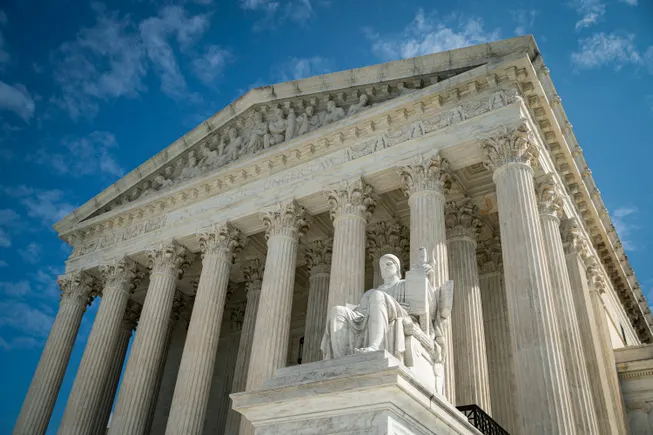
In 2025, the landscape of American higher education may undergo significant changes due to court rulings. Several policies of the Biden administration are facing legal challenges, but it remains unclear how the Trump administration will handle these cases. Meanwhile, major academic publishers are facing a class-action lawsuit accusing them of violating antitrust laws, and the Deferred Action for Childhood Arrivals (DACA) program—which aims to prevent the deportation of immigrants who entered the U.S. illegally as children—may ultimately reach the U.S. Supreme Court.
Here are the five major lawsuits we are following this year.
The future of DACA remains uncertain
Since its establishment by executive order in 2012, DACA has faced numerous legal challenges, with the most recent appellate court ruling declaring the program illegal but allowing current beneficiaries to maintain their status. This latest ruling has left DACA in legal limbo, as its legal status has been unresolved since the Trump administration attempted to terminate the program in 2017. However, in 2020, the Supreme Court ruled that the Trump administration's reasons for ending the program were insufficient but did not rule on the program's legality itself, leaving room for subsequent legal challenges.
In 2022, the Biden administration issued a 453-page rule attempting to solidify DACA's legal foundation. But the following year, a Texas court ruled the regulation illegal, though it did not require the immediate termination of the program. This month's (January 2025) ruling also deemed DACA illegal but, given its importance to current beneficiaries, did not terminate the program either. This means DACA can continue to operate as it has in recent years—beneficiaries can renew their authorizations, but U.S. Citizenship and Immigration Services will no longer process initial applications.
The program's ultimate fate may depend on the Supreme Court, as well as on how the second Trump administration decides to proceed. Unlike his first term, President Trump has recently expressed a desire to find a path to protect undocumented immigrants covered by DACA.
Trump administration signals new approach to borrower defense rule
The Biden administration's borrower defense repayment rule was temporarily blocked by an appellate court in April and was scheduled to go to the Supreme Court. However, earlier this month, the Trump administration asked the Supreme Court to pause the case so it could review the U.S. Department of Education's regulations. Acting Solicitor General Sarah Harris stated in court filings: "Following the change in administration, the Acting Secretary of Education determined that the Department should reassess the basis and reasonableness of its borrower defense regulations."
The borrower defense program allows students to obtain loan forgiveness if they were misled or defrauded by their colleges. The Biden administration's rule aimed to make it easier for students to obtain debt relief, including allowing the Department of Education to process claims collectively and expanding the types of institutional misconduct that could justify loan forgiveness. The rule was issued in 2022, following the first Trump administration's own borrower defense rule, which raised the bar for students to obtain debt relief, such as requiring students to prove they were unable to find employment due to being misled by their colleges.
The alleged academic publishing cartel
In September of last year, UCLA neuroscience professor Lucina Uddin filed an antitrust lawsuit against six major academic publishers, launching a comprehensive challenge to the academic publishing system. The lawsuit alleges that these publishers—including Elsevier, Wolters Kluwer, Wiley, SAGE Publishing, Taylor & Francis, and Springer Nature—have implemented a three-pronged scheme against researchers who write and review papers.
First, the publishers conspired to set peer review compensation at zero dollars. The lawsuit claims that by not paying for review work, the publishers "coerce scholars into providing free labor, explicitly tying their uncompensated work to whether their papers are published in major journals." The lawsuit also notes that the publishers do not compete for individual manuscripts through a so-called "single submission rule," which requires authors to submit a paper to only one journal at a time. Additionally, the lawsuit criticizes the publishers for prohibiting scholars from publicly discussing research findings during the manuscript review process, which can take over a year.
The lawsuit states: "From the moment scholars submit their manuscripts, the defendant publishers act as if the scientific advances in the manuscripts are their property, which can only be shared with the publishers' permission." The lawsuit argues that these long-standing practices violate the Sherman Antitrust Act, enacted in 1890, which aims to prevent unfair monopolies and collusion among economic actors. Uddin accuses the publishers of forming a "cartel" through the "International Association of Scientific, Technical and Medical Publishers," which sets policies that all members must follow, effectively slowing down the pace of scientific research.
This case is still in its early stages. Court documents show that the defendants plan to oppose the case and seek dismissal. A spokesperson for one of the defendants, Wiley, told Higher Ed Dive in September of last year that the allegations are baseless but declined to comment further.
The "gainful employment" rule challenged
In September 2023, the Biden administration's Department of Education issued its long-awaited "gainful employment" rule, requiring career programs to demonstrate that graduates earn enough to repay their loans and that at least half of graduates earn more than high school graduates in their state without a higher education degree. The agency predicted at the time that the rule would prevent approximately 700,000 students nationwide from enrolling in low-performing programs.
In December of that year, the American Association of Cosmetology Schools, an industry association for beauty schools, sued the Department of Education, arguing that the rule was arbitrary, that the department exceeded its authority, and that the key metric used in the rule—the debt-to-income ratio—failed to fully capture the income of those who earn tips. The reporting deadlines for this rule and the financial value transparency rule have been postponed multiple times by the Department of Education. Higher education groups requested another extension in December of last year. On January 17, the department said institutions would have an additional month (until February 18) to report certain data under the rule.
Last year's Supreme Court ruling overturning the "Chevron doctrine" significantly shifted power to interpret regulatory authority from government agencies to the courts. Moody's Investors Service analysts believe this ruling could further impact the "gainful employment" rule. Analysts wrote in July: "The Department of Education's 'gainful employment' rule, designed to protect students from predatory programs, may be harder to enforce, affecting educational quality and student debt levels." Another question naturally arises: how will the Department of Education under Trump handle this case and the broader "gainful employment" rule? During Trump's first term, the department repealed the "gainful employment" rule established by the Obama administration and delayed implementation of the borrower defense rule targeting the for-profit college industry, a move that prompted lawsuits against the department from at least 18 states.
FTC's lawsuit against Grand Canyon Education
In 2023, the U.S. Federal Trade Commission (FTC) sued Grand Canyon University and Grand Canyon Education (GCE), launching a legal challenge to the arrangement between the two entities. These entities were once a for-profit organization that split in 2018, with the latter continuing to provide marketing, enrollment, consulting, and other services to the former, which converted to nonprofit status after the split. But the FTC noted that GCE received most of the Christian university's revenue, and that Brian Mueller simultaneously served as both the company's CEO and the university's president. The FTC stated in its complaint: "Despite operating the school for profit to benefit GCE and its investors, the defendants deceptively marketed Grand Canyon University as a nonprofit institution." The FTC also accused GCE employees of making "millions of abusive telemarketing calls" to consumers on the "Do Not Call Registry," and that the university's marketing falsely advertised the time required to complete its "accelerated" doctoral programs.
When the lawsuit was filed, GCE said it "believes the allegations are baseless and without legal merit." Last year, a judge dismissed the claims against Grand Canyon University, ruling that the higher education institution was not within the FTC's enforcement authority because GCU was established as a nonprofit and did not list GCE—the alleged beneficiary of its profits—as a member or owner. The FTC continues to pursue its claims against GCE on essentially the same arguments.
Separately, Grand Canyon University had been in a dispute with the Department of Education over its nonprofit status, with the department deciding in 2019 to continue treating it as a for-profit institution for federal financial aid purposes. But the university achieved a victory in November of last year when a federal appellate court ruled that the department applied the wrong legal standard in treating Grand Canyon University as a for-profit institution. The day after Trump's election victory, Mueller expressed general optimism about operating under the Trump administration. He told analysts in November: "I believe that in the next administration, we will have a voice in the future of higher education."
Correction: A previous version of this article incorrectly described how DACA was established. The program was established through a Department of Homeland Security memorandum.
Disclosure: Informa holds a controlling stake in Informa TechTarget, which is the publisher of Higher Ed Dive, and Informa also owns Taylor & Francis. Informa has no influence over Higher Ed Dive's coverage.