
Trump's Four New Policies May Reshape the Landscape of U.S. Higher Education in 2025
After returning to the White House, Trump quickly signed multiple executive orders, from combating campus antisemitism, tightening immigration enforcement, abolishing DEI programs, to redefining gender. These policies are bringing unprecedented compliance pressure and uncertainty to U.S. colleges and universities. Based on public documents and expert opinions, this article analyzes the specific impacts of four core actions on higher education in 2025.
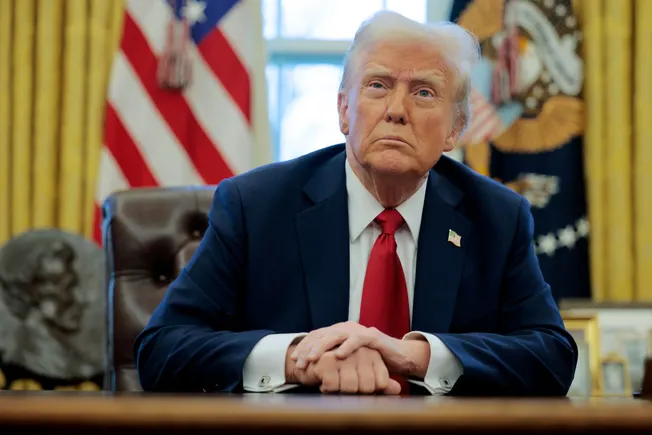
At the start of President Donald Trump's second term, he moved quickly to advance his policy agenda by signing executive orders at a rapid pace. According to information released by the White House, Trump signed more than 36 executive orders within less than two weeks of taking office, and the number continues to grow.
These directives aim to fulfill several of his campaign promises, including tightening immigration policies, cracking down on student protests, and eliminating diversity, equity, and inclusion (DEI) initiatives. Several of these early executive orders could have a profound impact on colleges and universities, which are now facing compliance challenges from these often vaguely defined policy directives.
The following outlines four key executive actions from the early days of Trump's term and analyzes their potential impact on the higher education sector over the coming year.
Campus unrest faces greater scrutiny
Trump signed an executive order on January 29 aimed at combating antisemitism, particularly on college campuses. The directive requires all federal agencies to identify within 60 days measures they can take to curb antisemitism, citing an "unprecedented wave of vile antisemitic discrimination, vandalism, and violence" as the backdrop.
The executive order cites a report released by House Republicans late last year. The report accused colleges and universities of failing to protect students from antisemitism and of making "stunning concessions" to protesters who set up encampments. It also called for increased federal oversight of higher education institutions.
In a fact sheet accompanying the executive order, Trump pledged to deport noncitizen students involved in what he called "pro-Hamas sympathizer" activities. The document stated: "To all resident aliens who joined in the pro-jihadist protests, we put you on notice: come 2025, we will find you, and we will deport you."
However, according to Reuters, free speech scholars and civil rights groups expressed concern that the executive order conflates criticism of Israel with antisemitism and that deporting noncitizens based on political speech could be unconstitutional.
The directive also requires the Attorney General to list and analyze lawsuits involving antisemitic civil rights claims against or involving colleges and universities since the October 7, 2023, Hamas attack on Israel. It also requires the Secretary of Education to report all Title VI complaints involving antisemitism against educational institutions, including resolved complaints. Title VI prohibits discrimination based on race, color, or national origin.
Immigration policy continues to tighten
Within less than two weeks of taking office, Trump took action on immigration in ways that could affect campus communities and daily operations, with further measures expected to follow.
On the day after his January 20 inauguration, his administration issued directives allowing Immigration and Customs Enforcement (ICE) or Customs and Border Protection (CBP) agents to enter college campuses, as well as other "sensitive" areas such as K-12 schools, hospitals, and churches, for enforcement purposes. This reversed the Biden administration's approach of avoiding these locations whenever possible.
On January 29, Trump signed the first bill of his second term—the Laken Riley Act. The law requires federal law enforcement to detain any undocumented immigrant charged with certain crimes, including shoplifting and theft. Critics argue the law strips due process protections from those targeted.
Facing executive branch immigration enforcement actions, colleges and universities may have few legal options other than to comply. Jon Fansmith, senior vice president of government relations at the American Council on Education (ACE), said: "Nobody wants to hear this, but if a federal agency shows up on campus with a warrant or subpoena, you don't have a special right to refuse because you think it's unethical." He added: "We have to comply with federal and state law, and if we don't, the consequences for the campus will be very severe." Fansmith made these remarks on January 29 at the annual meeting of the Council for Higher Education Accreditation (CHEA) in Washington, D.C.
Meanwhile, Luis Maldonado, vice president of government relations and policy analysis at the American Association of State Colleges and Universities (AASCU), told attendees at the CHEA event that colleges have no legal obligation to provide authorities with the names of undocumented students. "They are not obligated to collect that information. Many institutions choose not to collect it."
Beyond potential disruptions to campus life and harm to immigrant students, the Trump administration's actions could also pose challenges to the recruitment and enrollment of international students. During his first term, Trump signed executive orders banning entry for people from several Muslim-majority countries—widely known as the "Muslim ban"—which left some international students stranded outside the U.S. His administration also tightened restrictions on high-skilled worker visas and attempted to deport international students enrolled only in online courses during the COVID-19 pandemic, a policy that was rescinded after strong backlash.
During the 2024 campaign, Trump expressed support for implementing another, stricter travel ban. ACE's Fansmith noted that even without new laws or major policy changes, the Trump administration could create logistical barriers to obtaining visas by requiring lengthy reviews and extended processing times. Additionally, rhetoric and overall posture around immigration, if it makes international students feel unwelcome, could also affect enrollment.
"You look at countries that welcome your participation, that encourage you to be part of the research system, and you look for a place that is warm and friendly to you, where you feel comfortable," Fansmith said.
DEI outlook faces uncertainty
In recent years, diversity, equity, and inclusion (DEI) initiatives at colleges and universities have faced sustained attacks from conservative-led legislation and policies. In 2025, with Trump back in the White House, these challenges are expected to intensify.
On the first full working day of his second term, Trump signed an executive order directing federal agencies to "combat illegal private-sector DEI preferences, mandates, policies, programs, and activities," characterizing diversity initiatives, including those at colleges and universities, as potentially violating civil rights laws.
Jeremy Young, director of state and higher education policy at the free expression organization PEN America, told Higher Ed Dive at the time that the executive order infringes on universities' educational mission and exposes them to litigation risk. "It initiates a series of investigations into universities simply because they have a DEI office or promote DEI and diversity work on campus," he said. "In our view, this directly infringes on the academic freedom of universities to promote a wide range of ideas on campus."
Tyler Coward, lead counsel for government affairs at the Foundation for Individual Rights and Expression (FIRE), said the executive order does not directly affect speech protected by the First Amendment or academic teaching. "The executive order in some ways avoids the constitutional pitfalls we worry about in other executive orders and legislation." He contrasted it with a recent anti-DEI executive order signed by West Virginia Governor Patrick Morrisey, which critics say restricts what educators can teach. However, Coward said Trump's wording may not be entirely clear, and FIRE will continue to monitor the order and its implementation.
To fulfill a campaign promise, Trump ordered the dismantling of all federal DEI programs on his first day in office. The U.S. Department of Education confirmed on January 23 that it would eliminate its DEI initiatives and remove all DEI-related content from its guidance documents and communications. The agency said at the time that employees responsible for DEI programs had been placed on paid administrative leave.
Trump also ordered the Secretaries of Defense and Homeland Security to review the curricula and instructors at military academies under their jurisdiction to eliminate DEI initiatives. The affected institutions include West Point, the U.S. Naval Academy, the U.S. Air Force Academy, and the U.S. Coast Guard Academy. The order comes as the first three institutions face lawsuits over their consideration of race in admissions.
The new tone at the federal level could have ripple effects across states. Coward said FIRE expects increased attention to DEI at the state level, in the form of legislation and gubernatorial executive orders. "Republicans are certainly pushing to reform how DEI operates," he said. "This will be a common theme during this Congress and state legislative sessions."
The broadest and most confusing executive action so far was a two-page memorandum issued by the Office of Management and Budget (OMB). On January 27, OMB issued a memo freezing federal grants, loans, and other funds until agencies could verify through a "comprehensive analysis" that recipients comply with Trump's series of executive orders—including those targeting DEI.
OMB subsequently said the memo would not affect student aid, but the lack of details still caused significant anxiety among colleges and universities—institutions that rely heavily on federal funding and often have DEI programs. However, a federal judge issued a temporary stay just minutes before the freeze was set to take effect, and the Trump administration rescinded the memo the next day. But White House Press Secretary Karoline Leavitt insisted the withdrawal was merely to circumvent the judge's ruling.
Leavitt wrote on social media: "This is NOT a rescission of the federal funding freeze. It is simply a rescission of the OMB memo. Why? To eliminate any confusion created by the court's injunction. The President's executive orders on federal funding remain in full force and effect and will be rigorously implemented."
The rapid changes and reversals leave the short-term impact of the executive order unclear, but the chaos itself reflects the uncertainty that colleges and universities will inevitably face in 2025.
Title IX interpretation path shifts
On his first day in office, Trump signed an executive order declaring that the federal government will recognize only two sexes—male and female—based on an individual's reproductive cells. The directive requires federal agencies to apply this definition in enforcement, including enforcement of Title IX—the law prohibiting sex-based discrimination in federally funded colleges, universities, and K-12 schools.
The executive order stands in stark contrast to the previous administration's policies. The Biden administration's Department of Education, in its final Title IX regulations issued last year, included protections for LGBTQI+ students by prohibiting discrimination based on sexual orientation and gender identity. However, the rule became mired in litigation, and a federal judge struck it down nationwide earlier this month.
Trump's executive order states that "sex" is not synonymous with, nor does it encompass, the concept of "gender identity." It also says federal funds should not be used to promote the idea that individuals can self-identify their gender or that gender exists outside the binary related to biological sex.
The executive order aligns with the goals of Project 2025, a policy blueprint developed by a coalition of conservative groups for Trump's second term. Kathleen Oakley, senior legal policy director at the Human Rights Campaign (HRC), said groups supporting Project 2025 have opposed LGBTQ+ equality for decades and promote Christian nationalist ideology. "They believe there is only one right way to be a man and only one right way to be a woman," Oakley said, adding that the executive order's definition of the two sexes is scientifically and culturally wrong. "The failure of this definition is precisely the failure of this ideology—that you cannot fit all of humanity into two clear categories without exception."
The executive order also conflicts with some existing case law. In 2020, a federal appeals court upheld a lower court's ruling in Grimm v. Gloucester County School Board, finding that the school board's policy barring a transgender student from using the boys' restroom and forcing him to use separate facilities violated Title IX. In a similar case, Whitaker v. Kenosha Unified School District, a federal appeals court ruled in 2017 that "a policy requiring an individual to use a restroom inconsistent with their gender identity punishes them for their gender nonconformity, which in turn violates Title IX."
Oakley believes Trump has exceeded his authority in certain aspects of the executive order and predicts it will face legal challenges. "I absolutely encourage people to be cautious, because trying to comply with these orders that actually exceed the scope of the law could put you on the wrong side of case law," Oakley said.
Jennifer Smith, co-chair of the higher education practice at the law firm Franczek P.C., noted that the executive order also conflicts with some state laws. For example, the Illinois Human Rights Act prohibits discrimination based on gender identity. "Some of these things are irreconcilable, and at this point, it's more about weighing risks than having a clear path to compliance," Smith said.