
Risk-Sharing: A 'Well-Intentioned' Disaster for Higher Education?
House Republicans are advancing a higher education bill through the budget reconciliation process that includes 'risk-sharing' provisions, requiring colleges to pay the government for federal loans not repaid by their graduates. Supporters say this will incentivize institutions to control costs and boost student employment outcomes. However, an analysis by the American Council on Education shows that 98% of colleges would incur costs under this measure, and even with the offset of 'promise grants,' 75% of institutions would still face net losses, with historically Black colleges and universities and institutions primarily serving low-income students hit especially hard. Experts worry the policy could discourage colleges from enrolling disadvantaged students and pose significant data and administrative challenges.
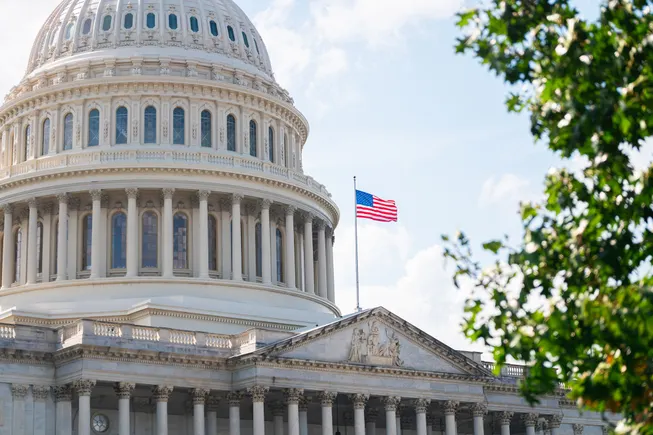
In early 2024, Republicans introduced the College Cost Reduction Act (CCRA), which aims in part to ensure colleges have "skin in the game," meaning "holding institutions financially accountable when they charge too much for degrees that leave students with unpayable debt." That language comes from a fact sheet issued by the House Education and the Workforce Committee, then led by North Carolina Republican Virginia Foxx. At the heart of the CCRA's approach to giving colleges "skin in the game" is a risk-sharing measure that would require institutions to make payments to the federal government if too many of their former students' federal loans go unpaid.
Although the CCRA had virtually no chance of passing under the Biden administration, Republicans have revived several of its key proposals. In April, the House Education and the Workforce Committee advanced a wide-ranging higher education bill as part of the budget reconciliation process, incorporating the CCRA's risk-sharing provisions. Lawmakers are using that process to push through Republican spending priorities, such as extending the tax cuts enacted in 2017.
Supporters of the risk-sharing plan argue that the policy would incentivize colleges to keep costs down for students while working harder to ensure graduates land good jobs. Critics, however, worry that institutions, to hedge their own risk, might reduce enrollment of students from low-income and historically marginalized backgrounds—students who already face systemic challenges in higher education and the job market.
"Risk-sharing is an example of a policy that could be well-intentioned, because we all want to make sure colleges are reducing costs for students," said Jordan Nailums, senior policy analyst at the Century Foundation, a left-leaning think tank. However, Nailums added, "in terms of how it's implemented, it would be devastating for institutions that take on the responsibility of enrolling students from communities that are already underrepresented."
A 'misalignment' of incentives?
The idea of making colleges bear some risk for student loans has been around for years. When the Brookings Institution's Hamilton Project proposed a risk-sharing plan in 2017, it pointed to what the authors called a "misalignment between the incentives of schools and those of students and taxpayers." The authors suggested that colleges should compensate the government based on the repayment rates of their student loan cohorts. The proposal also called for using some of the revenue to incentivize institutions that successfully serve low-income students—students who, the authors noted, "disproportionately attend low-repayment-rate institutions, rely more on loans to finance their education, and are less able to rely on family help to repay them."
The House committee's higher education package includes a version of such offsets, called "Promise grants." A bill summary says these grants would reward institutions that enroll and graduate low-income students, but institutions would also have to demonstrate relatively high graduate earnings and low tuition levels to qualify for funding. The grants would be funded by institutions' risk-sharing payments, which would also be used to cover a portion of their former students' unpaid loans. Institutions that delay payments would face penalties, including the eventual loss of federal student aid eligibility.
"The proposal authorizes the federal government to extract funds from some institutions and redistribute them to other institutions deemed 'winners' based on a complex formula, and its reach is staggering."

Ted Mitchell
President of the American Council on Education
In an April 29 letter to Education and Workforce Committee Chairman Tim Walberg, American Council on Education President Ted Mitchell was scathing about the risk-sharing proposal approved by the committee. "The proposal authorizes the federal government to extract funds from some institutions and redistribute them to other institutions deemed 'winners' based on a complex formula, and its reach is staggering," Mitchell wrote.
Net losses for institutions
The risk-sharing plan could hit many institutions focused on serving disadvantaged student populations hard. Even with "Promise grants" or similar offsets, the financial burden could be heavy. Using the Education and Workforce Committee's dataset of about 3,750 institutions, the American Council on Education found last fall that 3,681 institutions—98%—would incur payments under the Republican risk-sharing system, with median payments of about $153,000.
Even with "Promise grants," 75% of institutions would still face net losses. The American Council on Education calculated a median net loss of nearly $169,000. For institutions serving large numbers of low-income and historically marginalized students, the numbers are starker. The American Council on Education found that among the hundreds of institutions where Pell Grant recipients make up 70% or more of the student body, 96% would incur payments under the risk-sharing policy, and 91% would face net losses. The median net loss for this group is about $107,000.
Many Historically Black Colleges and Universities (HBCUs) fare even worse. In the American Council on Education's analysis of the House committee's data, 77% of HBCUs would be liable for payments to the government. More than half—63%—would still run deficits even after accounting for "Promise grants," with a median net loss of just over $300,000.
Those figures assume "Promise grants" would ease the burden. However, the reconciliation process is complex, involving significant political and fiscal maneuvering, and the Senate's role in the final bill's passage adds further uncertainty. At minimum, there is a possibility that all of this could threaten the offsets provided in the risk-sharing proposal, thereby increasing the burden on institutions.
"We're concerned that institutions enrolling more low-income students, more first-generation students, could lose the incentive to enroll those students because of this policy."
Liz Clark
Vice President of Policy and Research at the National Association of College and University Business Officers
The reconciliation process allows the Senate to pass spending-related policies by a simple majority, avoiding the filibuster that requires 60 votes to break. The process requires that bills not increase deficits over a specific window, typically 10 years, meaning new spending or tax cuts must be offset by savings or other revenue.
"If they simply eliminate the 'Promise grants,' that increases savings overall—we know they'll be looking for ways to find savings," said Jon Fansmith, senior vice president of government relations and national engagement at the American Council on Education, in an interview earlier this year. That means risk-sharing payments might not even be partially offset for institutions that control costs and enroll large numbers of students from groups that have historically been disadvantaged in the post-graduation job market. "In a carrot-and-stick approach, this is a small carrot with a big stick," Fansmith said, "but they could also discard that small carrot entirely."
'Shackling' institutions
Higher education experts worry that risk-sharing would effectively penalize institutions that serve groups historically lacking access to higher education and unable to access the same labor market opportunities as wealthier or white peers. Risk-sharing proposals "are not designed to address issues like systemic discrimination in the labor market," Fansmith said. "They're not designed to address the disparities that have a significant impact on earnings, outcomes, and employment."
Because students from these groups face more obstacles in repaying loans, institutions could pay a price for enrolling them under a risk-sharing policy. "We're concerned that institutions enrolling more low-income students, more first-generation students, could lose the incentive to enroll those students because of this policy, so we think there are some inherent problems with the plan," said Liz Clark, vice president of policy and research at the National Association of College and University Business Officers, in a February interview.
Many HBCUs and other minority-serving institutions already face financial difficulties before taking on the added cost of payments to the government. "There may be some wealthier institutions that are fine, but that's not the case for HBCUs, predominantly Black institutions, and community colleges," said Denise Smith, deputy director of higher education policy and senior fellow at the Century Foundation, in a March interview. She added that if institutions cannot make payments to the government, they could lose access to federal Title IV loan and grant programs—"further hindering and shackling institutions' ability to operate."
Data and administrative challenges
Additionally, implementing risk-sharing faces difficulties in data collection and administration, for both colleges and the government. Fansmith, speaking in February about the CCRA risk-sharing plan adopted in the reconciliation bill, noted that the plan requires complex payment calculations based on multiple data streams scattered across different government agencies. "Income data is held by the IRS, borrowing data is held by the Department of Education, and program participation data is held by institutions and reported to the department," he said.
In Fansmith's view, these calculations are problematic because they are based on student populations that are not representative of all college students. Such risk-sharing proposals only examine outcomes of students within the federal financial aid system to determine whether institutions must pay. "Then you're only covering two-thirds of students," Fansmith said, "and that two-thirds are precisely the students with the greatest financial need, which means their outcomes—given how our society operates—are likely to be worse than those of students who don't demonstrate financial need."
Successful implementation of risk-sharing also presupposes a functioning bureaucracy. Experts say that mass layoffs at the U.S. Department of Education and President Donald Trump's pledge to dismantle the agency could jeopardize that. "This is a very complex payment structure, and I think it's really ironic," said Jason Delisle, senior nonresident fellow at the Urban Institute and former Republican congressional staffer, during an American Council on Education panel discussion in Washington, D.C., in February. "Half the Republicans in this town are talking about abolishing the Department of Education," Delisle added, "and at the same time, lawmakers are creating significant new plans for the Department to operate this risk-sharing system. I mean, who's going to implement it?"
But the burden doesn't fall only on the government. Risk-sharing also imposes administrative costs on institutions. Smith noted that the CCRA version largely shifts the responsibility onto institutions to track outstanding debt obligations and accurately report to the Department of Education to calculate risk-sharing payments. "It's placing the burden on those institutions that are already understaffed or under-resourced to figure these things out," Smith said.