
What Does Trump's Executive Order on Foreign Donation Disclosure Mean for Universities?
Since Trump returned to office, the U.S. Department of Education has investigated several prominent universities under Section 117 of the Higher Education Act. This law requires federally funded universities to disclose annual contracts and donations from foreign sources valued at over $250,000. In late April 2025, Trump signed an executive order directing Education Secretary Linda McMahon, in coordination with the Department of Justice and other agencies, to enforce Section 117 and link compliance to federal funding eligibility. Experts note that the compliance process is cumbersome and time-consuming, requiring universities to designate dedicated personnel, or they risk funding interruptions. The executive order also invokes the False Claims Act, increasing potential legal liability. Meanwhile, the DETERRENT Act passed by the House proposes lowering the disclosure threshold to $50,000 and adding contract restrictions on "countries of concern," drawing widespread opposition from the higher education community.
Since Donald Trump returned to the U.S. presidency, the U.S. Department of Education has launched compliance investigations into several prominent universities under Section 117 of the Higher Education Act. This provision, enacted in 1986, requires universities receiving federal financial assistance to disclose to the Department of Education any contracts and gifts from foreign sources valued at or exceeding $250,000 in a single year. The law was not effectively enforced for a long period before 2018.
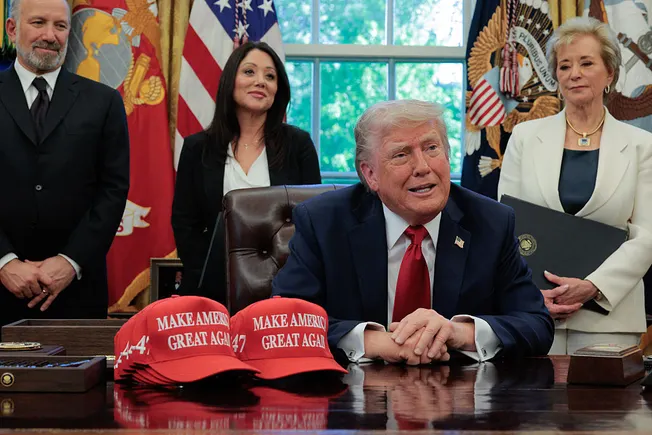
In late April 2025, Trump signed an executive order directing Education Secretary Linda McMahon, along with the Department of Justice and other federal agencies, to launch investigations and enforce Section 117. The executive order explicitly ties compliance to eligibility for federal grants and instructs McMahon to require universities to disclose more detailed information about foreign gifts and contracts.
Higher education experts point out that compliance is both difficult and time-consuming because universities face numerous challenges in collecting data and uploading it to the Department of Education's systems. Therefore, universities must take practical measures, such as designating specific personnel to meet legal requirements. If universities fail to comply properly, they could become a primary target of the Trump administration and even lose federal funding. Experts speculate that the executive order could be used as another policy tool targeting university funding.
"The Trump administration is targeting American higher education, especially those institutions it labels as 'elite institutions,'" said Jeremy Bauer-Wolf, investigative manager of the higher education program at New America, a left-leaning think tank. "Section 117 has become another club in their hands."
The history of Section 117
Section 117 was enacted nearly 40 years ago due to concerns about foreign gifts to universities, but the U.S. Department of Education never truly enforced it, and the provision was long ignored. Sarah Spreitzer, vice president for government relations and chief of staff at the American Council on Education, said people gradually stopped paying attention to the matter and did not take it seriously.
However, concerns in Congress intensified in 2018. Then-FBI Director Christopher Wray testified before a Senate panel that China was exploiting America's open research and development environment, and that universities were not sufficiently aware of this threat. A Congressional Research Service report released in February noted that actively monitoring Section 117 and investigating disclosures at the time was seen as a way to "mitigate malicious and improper foreign influence."
Bauer-Wolf said that after the hearings, the first Trump administration "began to showcase Section 117 enforcement in a high-profile manner." Between 2019 and 2021, the Trump administration launched investigations into prominent institutions including Harvard University, Georgetown University, Cornell University, the Massachusetts Institute of Technology, and Yale University. Spreitzer noted that the administration focused more on forcing compliance through investigations rather than helping universities understand legal requirements.
This created a "chilling effect" on universities. Spreitzer said universities had many questions about Section 117 filings but these questions went unanswered because they "feared that calling the Department of Education would trigger an investigation." The Trump executive order stated that these investigations prompted universities to report $6.5 billion in "previously undisclosed foreign funds."
After the Biden administration took over, the Department of Education moved the enforcement responsibility for Section 117 from the Office of General Counsel to the Federal Student Aid division. The Biden administration also closed several investigations initiated during the Trump era and did not open new ones. Trump accused the Biden administration in his executive order of "undermining" the investigative work of his first term. However, Spreitzer said the investigations had been ongoing for years and it was unclear whether they should have been closed.
The current enforcement environment
After returning to power, the Trump administration has launched Section 117 investigations into several universities, including the University of Pennsylvania and the University of California, Berkeley, and has reopened an investigation into Harvard University. The Department of Education said it needs to verify whether Harvard is complying with the law and with an agreement reached in December 2024 — an agreement that ended an investigation initiated in February 2020 during Trump's first term.
Under the agreement, Harvard committed to submitting amended disclosure reports for gifts and contracts received between 2014 and 2019. But when reopening the investigation, the Department of Education said it believed Harvard's disclosures, including the amended reports, contained inaccuracies. When announcing the latest investigation in April 2025, Education Secretary Linda McMahon said: "Unfortunately, our review indicates that Harvard's disclosures have not been fully transparent or complete, which is both unacceptable and unlawful."
As part of the new investigation, the government has required Harvard to provide information about expelled foreign students (including their research topics), as well as information about "all temporary researchers, scholars, students, and faculty affiliated with or from foreign governments." The Department of Education has also required Penn to provide all tax records since 2017, as well as lists of contractors or employees who assist international students or participate in compliance work for the federal Foreign Government Talent Recruitment Programs — a term referring to initiatives by foreign governments to recruit science and technology students and professionals.
Spreitzer noted: "The scope of the questions they are asking goes beyond Section 117."
Meanwhile, the threat of penalties is real for universities. The Trump administration has already attempted to force universities to dismantle diversity, equity, and inclusion initiatives, and has suspended or terminated federal funding for institutions such as Harvard, Princeton, Northwestern, and Cornell while investigating antisemitism and campus civil rights complaints. Bauer-Wolf worries that the Section 117 executive order will be used as another "political tool, almost a shortcut to cutting university funding." He said: "This will become another way for the government to claim universities are not following the law, when in reality, I think almost no one knew about or complied with this law before."
Bauer-Wolf added: "I do believe Section 117 has legitimate uses, but unfortunately, the Trump administration and Republicans have chosen to politicize it rather than genuinely seek policies that would protect American interests and campuses."
The new executive order also links Section 117 compliance to the False Claims Act — a federal law that penalizes those who knowingly submit false claims to the government. Matthew Kennison, a partner at Kelley Drye & Warren LLP, which represents clients in government investigations and enforcement matters, said it remains unclear how the Department of Education will use the False Claims Act to enforce Section 117 against university officials or individual professors. Anne Pifer, managing director at the consulting firm Heron Research, noted that linking False Claims Act liability to Section 117 filings "creates risk for universities due to its ambiguity and potentially broad impact." Pifer said: "Although the details of enforcement are highly uncertain, universities should expect stricter oversight and scrutiny."
Navigating the current situation
Kennison said that to comply with Section 117 requirements, universities should follow the guidance and other resources issued by the Department of Education and seek more specific advice from the Department when necessary. But Spreitzer noted that reporting foreign gifts and contracts to the federal government is both difficult and time-consuming. The Federal Student Aid portal allows universities to upload Section 117 disclosures, but Spreitzer said universities cannot upload spreadsheets containing all gifts and contracts. "They have to enter each gift or contract individually," Spreitzer said. "For large universities, this can take days."
Furthermore, if universities make mistakes, there is no phone number at the Department of Education to call for help. Spreitzer said the Biden administration established an email address, but it is unclear whether that mailbox is closely monitored or promptly responded to. A Department of Education official disputed Spreitzer's claim, stating that multiple full-time career employees continuously monitor the mailbox and respond to university inquiries about Section 117 reporting and filing questions. Department of Education spokesperson Julie Hartman added in an email that the first Trump administration created the reporting portal in 2020, after years of "inadequate disclosure" problems. She said the Biden administration did not open any new Section 117 investigations or update the reporting website features. Hartman said: "The Trump-McMahon Department of Education is committed to revitalizing Section 117 enforcement, including improving the reporting portal in the coming months."
Spreitzer said many large research universities have carefully considered how to make Section 117 filings, but this requires "campus-wide awareness of the requirement and ensuring that relevant information is reported twice a year." She is concerned about smaller, less well-resourced universities. Pifer advises that these smaller universities should designate a single point of contact responsible for conducting the necessary due diligence and determining which foreign sources should be reported. At the same time, someone should be responsible for consolidating data sources and compiling and verifying the university's report. Pifer said: "Designating a single point of contact reduces the need for complex review training across multiple offices and helps ensure data integrity."
Pifer added that such gifts or contracts are typically found in university development and alumni relations, research, administrative, procurement, finance, and global affairs offices. Universities should establish standard operating procedures or policies to identify and verify the sources of such gifts and contracts, and regularly review their gift acceptance and naming policies. She said: "Universities must establish robust practices and methods that can withstand audits or investigations."
Compliance through investigation?
The Section 117 compliance environment may only become more stringent. The House of Representatives recently passed a bill called the DETERRENT Act, which would add new reporting requirements to Section 117 and lower the reporting threshold for foreign gifts and contracts from $250,000 to $50,000. The bill would also require universities to obtain waivers before entering into contracts with "countries of concern" such as China and Russia, and to report all gifts from these countries. The bill, now before the Senate education committee, also proposes introducing penalties for noncompliance, including fines of $50,000 and loss of federal financial aid.
Numerous higher education organizations, including the American Council on Education, oppose the measure, arguing that it would severely hinder critical research activities and create duplication of work across institutions. In a March 25 letter to House leadership, these organizations said the Department of Education's expanded data collection is "problematic" and cannot ensure that it addresses "actual national security or malicious foreign influence threats."
Brandi Shufutinsky, director of the Education and National Security Program at the conservative research institution Foundation for Defense of Democracies, has suggested considering non-monetary penalties for universities that do not comply with Section 117, such as prohibiting them from granting degrees, reviewing their accreditation status, or revoking their nonprofit status.
