
What Does the End of Grad PLUS Loans Mean for Higher Education?
The U.S. Grad PLUS graduate loan program will end for new applicants after July 1, 2026, with a new lifetime borrowing cap. The program previously provided graduate students with uncapped federal loans covering the full cost of attendance. Experts warn that ending the program may make graduate education unaffordable for some students or force them into the private loan market with higher interest rates, potentially affecting graduate enrollment and institutional finances.
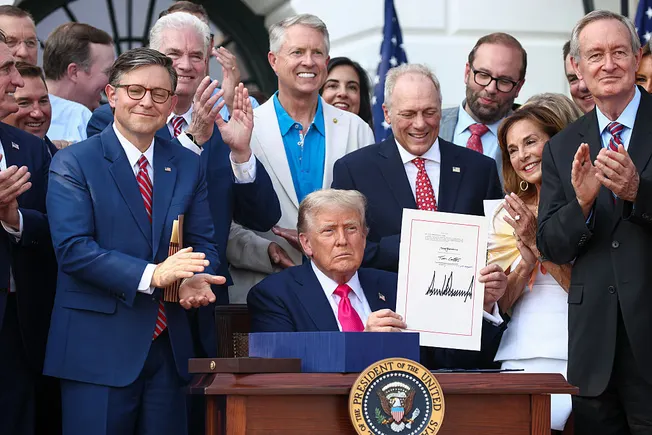
Twenty years ago, when lawmakers created the Grad PLUS loan program, it was the largest new student aid initiative in decades. This year, Republican lawmakers pushed to end the program as part of their sweeping spending and tax bill, which passed and was signed into law in July. The program's phase-out will begin next year.
Similar to the legislation that ultimately ended it, the Grad PLUS program originated in a comprehensive budget bill that narrowly passed Congress and reached a Republican president's desk.
Grad PLUS loans provide graduate students with additional borrowing capacity that can reach tens of thousands of dollars, covering the full cost of attendance including room, board, and other expenses. By creating the program, lawmakers effectively removed limits on federal borrowing for graduate students.
For many, Grad PLUS loans served as a new bridge, filling funding gaps that previously had to be covered through private loans, savings, or work income. At the same time, these loans significantly increased the debt burden of borrowing students and brought more revenue to colleges and universities.
However, the termination of the Grad PLUS program and the new lifetime caps on graduate borrowing have raised concerns among some experts: graduate education may become out of reach for many, while others may face higher interest rates and ultimately take on more debt due to the private loan market.
If this leads to a decline in graduate enrollment, it would further exacerbate the financial pressures many colleges and universities are already facing.
"Will there be institutions that close certain programs? Absolutely. Will there be students who decide it's not worth it? Absolutely," said Antoinette Flores, director of higher education accountability and quality at the left-leaning think tank New America. "But there will also be other institutions that find a viable way forward."
The history of Grad PLUS: more federal student debt, higher tuition
Not every graduate student uses Grad PLUS loans. In fact, according to a 2024 report from Georgetown University's Center on Education and the Workforce, only 16% of graduate students rely on the program to fund their studies. However, Grad PLUS loans account for a disproportionately large 32% of total federal loan disbursements, and that share was previously expected to grow.
Students who use Grad PLUS loans typically enroll in the most expensive programs. Georgetown's research shows that among programs with tuition between $25,000 and $70,000, 23% of graduates had taken out Grad PLUS loans; for programs with tuition above $70,000, that figure was 30%.
In 2023, the left-leaning Century Foundation and the right-leaning American Enterprise Institute, together with an education consulting firm, released a report calling for "reasonable" caps on Grad PLUS loans. Currently, the loan has no borrowing limit other than not exceeding the full cost of attendance as determined by the institution.
The report found that the median total debt at graduation for Grad PLUS borrowers more than doubled, rising from $21,800 at the program's inception to $57,800 in the 2019-20 academic year. Over the same period, the median total debt of these graduates soared from $22,400 in 1995-96 to $70,300 in 2019-20.
The report ultimately questioned whether the growing number of graduate programs "are worth the federal funding they receive, and whether these programs were created to chase federal dollars."
Despite the large volume of borrowing through Grad PLUS loans and the growing national discussion about student debt, researchers have only recently begun to analyze how the program affects students and institutions.
In a 2023 working paper for the National Bureau of Economic Research, academic researchers analyzed two decades of higher education data from Texas and found that Grad PLUS loans had no significant effect on enrollment—whether overall enrollment or enrollment among disadvantaged students.
One reason may be that, as the authors found, borrowers simply substituted Grad PLUS loans for private loans and other forms of financing.
These loans also did not significantly affect student outcomes. After the additional federal loans became available, credit-constrained students were no more likely to persist in their studies. Lesley Turner, a professor of public policy at the University of Chicago and one of the paper's authors, speculated that this may be because graduate students are older and have longer credit histories, making it easier for them to obtain private loans than undergraduates.
However, the Grad PLUS program did have a significant impact on program costs. For every additional dollar of federal loans per student, net tuition prices rose by 64 cents. The paper's authors view this as evidence that colleges raised tuition in response to increased federal funding.
Tracking how colleges use the additional revenue is a much more difficult task for researchers, if not impossible.
"Is this money being used for productive purposes, or, as critics of higher education suggest, to pad administrative salaries?" Turner asked. "Tuition is set at the program level, so it's hard to know how much of that money flows back to the program or its corresponding undergraduate programs, and how much goes to the central administration."
Opponents of the program hope that ending Grad PLUS loans will address the problem of rising student debt. Rep. Tim Walberg, a Michigan Republican who chairs the House Education and Workforce Committee, said in a statement when the spending package passed that the new law and loan reforms would help ensure "students do not take on excessive debt they can never repay."
Ellen Keast, a spokesperson for the U.S. Department of Education, also said in an emailed statement last week that the new law would make "higher education more affordable" by "eliminating and capping inflationary loan programs like Grad PLUS" and "preventing students from taking on unmanageable levels of debt."
However, all the data about Grad PLUS's past may not fully tell us what the future without these loans will look like.
"It's tempting to extrapolate these results directly and assume that the impact of eliminating Grad PLUS is symmetric to the impact of creating it—that enrollment stays flat and tuition falls," Turner said. "For several reasons, I think that requires very strong assumptions, and I'm not sure those assumptions are realistic. I would be reluctant to make that extrapolation."
The post-Grad PLUS era
One reason the post-Grad PLUS era differs from the pre-Grad PLUS era is the borrowing caps. Turner noted that the new aggregate borrowing caps introduced in the budget bill—$100,000 for graduate programs and $200,000 for professional programs—are similar to the government loan limits that existed before the Grad PLUS program was created. But that was before inflation eroded their value. After accounting for two decades of price increases, these caps are actually smaller.
"Once you account for inflation, the amount students can borrow annually and over their lifetime will be significantly lower relative to the pre-Grad PLUS situation," Turner said.
"Once you account for inflation, the amount students can borrow annually and over their lifetime will be significantly lower relative to the pre-Grad PLUS situation."
Lesley Turner
Professor at the University of Chicago
Some higher education experts have expressed concern that the graduate loan caps and the phase-out of Grad PLUS could reduce student access. (The program's termination applies to students applying for new loans after July 1, 2026. The law provides an exception for students already enrolled with no more than three years remaining in their graduate program, allowing them to complete their studies.)
"Not allowing graduate students to access the additional borrowing they may need will affect their ability to continue their education," said Emmanual Guillory, senior director of government relations at the American Council on Education. Citing federal student aid data, Guillory noted that more than 440,000 students applied for Grad PLUS loans in the 2023-24 academic year.
"This tells us that those 440,000-plus students will have to find other ways to finance their higher education, or they may not continue their studies at all."
The lending market has also changed since the pre-Grad PLUS era. As Turner and her co-authors found, Grad PLUS largely replaced private student loans at the graduate level. But shortly after the program launched in 2006, the world experienced the worst financial crisis since the Great Depression, which transformed the private credit market, typically manifesting as tighter underwriting standards and reduced loan supply. Additionally, although Grad PLUS carries more credit checks and reviews than direct loans, it does not require a minimum credit score or have other similar credit restrictions like private loans.
"Unlike other types of consumer credit, the private student loan market has not actually recovered to its levels from the early 2000s," Turner said. "With the elimination of Grad PLUS, private lenders may increase their product offerings or re-enter the student loan market to fill that gap. But whether that will happen remains a big question mark in my view."
Institutional choices
Looking ahead to the post-Grad PLUS landscape, much will depend on the choices of colleges, the government, and private lenders. A key decision is how graduate programs will be classified—whether as professional programs or general graduate programs. The borrowing caps set in the new spending bill differ depending on the classification. This distinction is significant: the federal borrowing cap for professional programs will be twice that of general graduate programs.
"We don't really know what will count as a professional program," said Sarah Sattelmeyer, director of the education, opportunity, and mobility program at New America. "The definition of professional programs in the law is open-ended," she added. "This is a very important upcoming discussion, and how schools position their programs will be crucial."
The Department of Education is currently drafting regulations to address issues such as which programs will be considered professional degrees.
Additionally, if loan changes alter student demand, colleges may cut some graduate programs because not enough students can secure financing to complete their studies.
"If institutions see a sharp decline in graduate enrollment, they will face pressure to think: 'How do we reverse this trend? What difficult decisions must we make to do so?'" Guillory said. "This could manifest as closing certain programs to concentrate resources on programs that generate more revenue."
Although lawmakers may hope or expect colleges to lower tuition in response to reduced loan supply, this may be easier said than done. "Schools are unlikely to lower tuition," Turner said, adding that if there is any change, colleges are more likely to raise tuition modestly or keep it flat, effectively reducing the inflation-adjusted price while keeping the sticker price unchanged.
"Another possibility is that schools will choose to eliminate programs that cannot be sustained at the price they can charge without Grad PLUS," she added. This is because colleges may not be able to reduce their own costs, especially in degree programs with high operating costs such as medicine or dentistry, Flores said.
Private lenders: the unknown variable
As for private loans, even if they can meet demand, they are not a perfect substitute for government loans. "Relying on the private market does not necessarily solve any of the problems the legislation aims to address regarding the cost of attendance," Flores said. She noted that the private market may offer higher interest rates and added, "It could also make programs more expensive and riskier for students because they have to take on that debt."
Sattelmeyer expressed concern about private financing products themselves, which can vary more in terms and costs than government loans. According to financial publisher Bankrate, interest rates can be as high as 18% depending on a student's credit score, compared to 8.9% for Grad PLUS loans.
"Relying on the private market does not necessarily solve all the problems the legislation aims to address. It could also make programs more expensive and riskier for students because they have to take on that debt."
Antoinette Flores
Director of Higher Education Accountability and Quality at New America
The shift toward private loans comes as the Trump administration has effectively weakened the Consumer Financial Protection Bureau, the agency responsible for overseeing these markets. "Who oversees these products?" she asked. "There is a huge opportunity for traditional and private financial products, with much less oversight in the system."
Colleges may play a role in private financing, either by lending directly or partnering with financial companies. In the for-profit university sector, at least one institution has begun partnering with private lenders to fill the gap left by Grad PLUS loans. Adtalem Global Education, a healthcare education operator that owns institutions such as Walden University and Chamberlain University, announced in August that it had signed a letter of intent with student loan giant Sallie Mae to "explore alternative financing solutions for healthcare students" during the Grad PLUS phase-out.
The for-profit education operator and Sallie Mae have revealed little about the specific form of the partnership and loan products. They only said in a press release that they are seeking to "establish a framework to develop customized financing solutions designed specifically for healthcare education, expected to include deferred repayment options and degree-specific terms." The companies said they expect to reach a final agreement in the coming months.
"We are confident we can reassure students that they will not experience any disruption in financing their education," Adtalem CEO Stephen Beard told analysts shortly after the announcement. "As of today," he added, "we do not view the elimination of Grad PLUS or any borrowing caps as an obstacle to attracting students, helping them complete their programs, and growing these programs."
That may be the case, but interest rates and loan terms will ultimately determine the financial impact on students who replace public loan programs with private debt.
