
Trump administration's crackdown on universities under Title VI of the Civil Rights Act sparks legal controversy
Harvard University won its lawsuit in September, restoring approximately $2.2 billion in federal funding and temporarily thwarting the Trump administration's approach of using civil rights investigations to pressure universities. However, the administration has filed similar allegations against multiple universities, including seeking a $1.2 billion settlement from UCLA. Legal experts are engaged in heated debate over whether the administration is abusing Title VI of the Civil Rights Act.
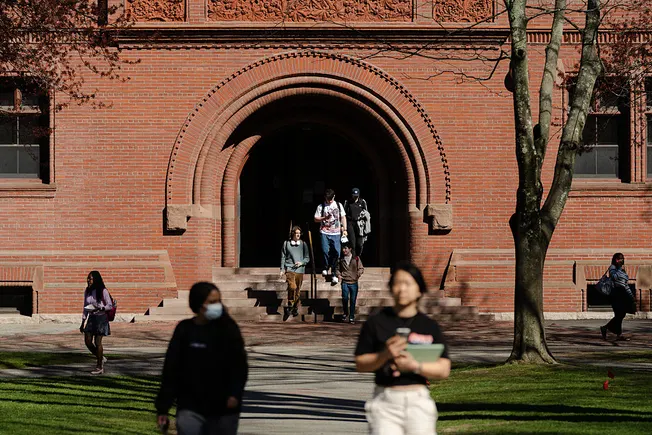
In September, Harvard University won a lawsuit, restoring approximately $2.2 billion in federal funding, delivering a short-term blow to the Trump administration's approach of pressuring universities through civil rights investigations. Previously, after Harvard refused a series of broad demands, the administration suspended the funding in April, claiming the university failed to adequately protect students from antisemitism.
In June, the U.S. Department of Health and Human Services' Office for Civil Rights formally accused Harvard University of violating Title VI of the Civil Rights Act, which prohibits discrimination based on race, color, or national origin in programs or activities receiving federal funding.
However, in an 84-page ruling, U.S. District Judge Allison Burroughs determined that none of the federal government's funding termination letters specified how Harvard failed to address any antisemitic conduct that violated Title VI. Burroughs wrote: "A review of the administrative record makes it difficult to draw any conclusion other than that the defendants used antisemitism as a smokescreen to launch a targeted, ideologically driven attack on the nation's leading universities. Moreover, their actions jeopardized decades of research."
Harvard is not the only university facing Title VI accusations. The Trump administration is seeking $1.2 billion from the University of California, Los Angeles, and demanding comprehensive reforms to campus practices, after the U.S. Department of Justice accused the university of violating Title VI. In both the UCLA and Harvard cases, the Trump administration cited pro-Palestinian campus demonstrations and antisemitism allegations in its violation notices. The Department of Justice did not arrange for officials to be interviewed.
These developments have sparked a high-stakes debate among legal experts about whether the Trump administration is weaponizing Title VI. Jodie Ferise, a partner in the higher education practice at the Indiana law firm Church Church Hittle and Antrim, is troubled by this. She previously served as vice president and general counsel of the Independent Colleges of Indiana. Ferise stated: "Discrimination has always been a disqualifying factor for federal funding, but when it merely serves as a pretext to force higher education to submit to the federal government's will, that's the problem. Writing off all grants seems more like extortion. It doesn't help improve higher education."
In the Harvard case ruling, Burroughs wrote that the government failed to take appropriate steps before suspending federal funds. The judge explained that Title VI requires the federal government to notify universities of alleged violations and determine that they cannot voluntarily comply before terminating financial assistance. Even then, agencies can only terminate funding after the university has been given a hearing opportunity. Burroughs concluded: "There is no dispute that the defendants failed to comply with these requirements before issuing the freeze orders or termination letters."
However, experts interviewed by Higher Ed Dive agree that Burroughs' ruling is far from the final word on the matter. The case could ultimately be appealed to the U.S. Supreme Court, and the Trump administration has vowed to appeal, although a settlement is not impossible.
Is the Trump administration legally using Title VI?
The Trump administration has warned dozens of universities of potential Title VI violations. In March, the U.S. Department of Education's Office for Civil Rights sent letters to 60 universities, warning that they could face enforcement actions if they did not comply with Title VI to protect Jewish students.
Kenneth Marcus, founder and CEO of the Louis D. Brandeis Center for Human Rights Under Law, stated: "What is happening now is less about expanding Title VI and more about properly implementing it to avoid double standards. For years, the rights of Jewish students have not been protected." Marcus, who served in the George W. Bush administration and the first Trump administration, has strongly advocated using Title VI to protect students harassed based on ancestry, such as ethnic and religious characteristics. Marcus noted: "When Congress passed the Civil Rights Act of 1964, Title VI was a clever mechanism to ensure federal funds were not misused." He added that Title VI can have broad impact because it ensures students do not face hostile environments and can have equal access to educational opportunities at institutions.
But Harvard law professor Benjamin Eidelson holds a starkly different view on the Trump administration's use of Title VI. Eidelson, who co-authored a June article in the Harvard Law Review on Title VI and antisemitism, said in an email to Higher Ed Dive: "Recent enforcement actions and litigation have gone far beyond what Title VI was intended to do." He added that Title VI has never required content-based speech restrictions in the name of eliminating hostile environments. Eidelson said: "No one has the right under Title VI to demand a campus free of protests that offend their moral or political beliefs. It is clear that combating antisemitism is merely a pretext for the government's ideological reforms and demands for total compliance. Judge Burroughs correctly recognized that the First Amendment does not allow this."
However, Marcus disputes the judge's view that the Trump administration's position is a smokescreen. Referring to his conversations with government officials, Marcus said: "I have no doubt they are genuinely outraged by what has happened to too many Jewish students and faculty." The Brandeis Center was not a party to the Burroughs case but settled another Title VI federal lawsuit on behalf of several students against Harvard earlier this year. Under the settlement, Harvard agreed to adopt the International Holocaust Remembrance Alliance (IHRA) definition of antisemitism to evaluate harassment complaints. While some praised the adoption of the IHRA definition, which lists various examples of potential antisemitism, critics argue it could be used to target protected speech and criticism of Israel.
Gerard Filitti, senior counsel at the nonprofit The Lawfare Project, said the cases he has seen involve legitimate antisemitic incidents and double standards. The organization has filed Title VI antisemitism lawsuits against Columbia University, Carnegie Mellon University, and Cooper Union. Filitti gave an example: it is unimaginable to have a lecturer discuss white power on a university campus, but he believes similar situations are occurring with hate speech targeting Jews. "From a macro perspective, it is always good for the government to do what it can to combat antisemitism." Filitti believes that Columbia University's $221 million settlement with the federal government this summer, after the government formally accused it of violating Title VI, will deter future bad behavior. But he added that the agreement could have included more policies addressing the root causes of antisemitism.
"No one wants to send out invitations to their own funeral"
In the Harvard case, the university established two task forces in January 2024—one to combat antisemitism and anti-Israel bias, and another to combat anti-Muslim and anti-Arab bias. The university also began policy reforms to ensure campuses are safe and welcoming for these students. Other universities have similarly established task forces to combat antisemitism and taken actions such as recently hiring Title VI coordinators. But the Trump administration cited the reports of these task forces when accusing universities of violating Title VI. This troubles attorney Ferise, who believes such tactics have created a chilling effect among university administrators. She said: "If we are just inviting them to candidly disclose weaknesses to prove our preconceived notion that they are evil actors with discriminatory intent, that truly hinders them from revealing any unpleasant truths. No one wants to send out invitations to their own funeral."
Marcus of the Brandeis Center acknowledges that many university administrators have taken action to prevent antisemitism but says few have done enough. He added: "Smart people in universities have long known that these task force reports can serve as evidence." Filitti holds a similar view, stating that the content of task force reports is "exactly what plaintiffs seek in discovery, so obtaining these findings in advance can save six months of time and expense." But Harvard's Eidelson noted in an email to Higher Ed Dive that these reports, including Harvard's, typically focus on how universities can better foster a sense of belonging for students who may feel marginalized. Eidelson said: "This is fundamentally different from the key issue under Title VI, which is how universities respond when students face harassment that is 'so severe, pervasive, and objectively offensive' that it effectively deprives victims of access to educational opportunities or benefits." He cited the 1999 Supreme Court ruling in Davis v. Monroe County Board of Education. While these task force reports could theoretically be used to provide information relevant to federal investigations, they are "particularly susceptible to misuse, especially in the hands of unserious investigators," Eidelson said. This is because these reports typically attempt to answer questions that are not legally relevant.
What's next?
Lawyers on all sides point out that the potential loss of federal funding is a real pressure point. Filitti of The Lawfare Project said: "Fiscal power has always been an important tool in the government's arsenal. On the other hand, it is intended to address discrimination, not to be used for political purposes." But Ferise laments that this is exactly what is happening. In the Harvard case, she noted that the Trump administration sent "overly broad" demand letters seeking information about international students, including whether they had conduct violations or whether they had "disrupted the school's learning environment." Ferise said: "This is not designed to reveal who was involved in bias incidents."
Ferise added that it is not just elite institutions that should worry about these government investigations and enforcement actions. "Every college and university should be concerned, but smaller schools do not have the capacity to fight these investigations in court." This has changed her advice to higher education clients. "We represent several smaller private institutions that have substantial endowments relative to their size and are very focused on inclusivity. None of them could afford litigation costs like Harvard can." Ferise said: "You never want to say 'keep a low profile,' but that is my advice now, because you do not want to get on the government's radar. No one wants to be the first non-elite school to go under."
