
HBCUs Usher in a Wave of Funding: Historic Investments Reshape Development Trajectory After George Floyd Incident
Since the murder of George Floyd in 2020 and the outbreak of the COVID-19 pandemic, historically Black colleges and universities (HBCUs) in the United States have received unprecedented philanthropic and government funding. Spelman College has leveraged federal relief funds and large gifts from donors such as MacKenzie Scott to advance transformative initiatives including student aid and faculty development. This article summarizes federal, state, and corporate funding received by HBCUs, analyzes its impact on institutional operations and long-term development, and notes that despite the significant influx of funds, historical underinvestment still requires sustained support.
Since 2020—the year of George Floyd's murder and the COVID-19 outbreak—Spelman College has received substantial philanthropic and federal funding, enabling it to take what one school leader called "transformative" measures.
According to Jessie Brooks, the vice president for institutional advancement at the school, the historically Black university in Atlanta used more than half of its $22 million in federal pandemic relief funds for student aid and implemented measures to ensure students could safely return to in-person classes.
Brooks said in an email that thanks to billionaire philanthropist MacKenzie Scott's $20 million donation in 2021, Spelman also increased its endowment and strengthened efforts such as faculty development and recruitment. Additionally, the school will use $40 million donated by Netflix CEO Reed Hastings and his wife, producer Patty Quillin, to provide 200 full scholarships to incoming students over the next 10 years.
Brooks said the Hastings-Quillin donation is "transformative because it will allow the school to use other scholarship funds to support other eligible students."
Spelman is just one example of historically Black colleges and universities receiving "unprecedented generosity" after the pandemic began and Floyd's murder sparked protests against police brutality and racism. Like other institutions of higher learning, HBCUs also received historic federal funding, and some received state support, to mitigate the impact of COVID-19.
Raymond Pierce, president and CEO of the Southern Education Foundation, said the increased funding over the past three years has been "significant" for HBCUs. However, he worries that such funding "will taper off again."
Pierce noted that in some ways, this influx of funds is reminiscent of the origins of HBCUs after the Civil War, when large organizations such as the Carnegie Corporation and John D. Rockefeller's General Education Board focused on providing education to newly freed African Americans. He said it is "quite interesting" to see large donors "being reminded of that injustice, and that reminder came from the George Floyd incident."
New sources of funding
One month after George Floyd's murder, Hastings and Quillin each donated $40 million to Spelman College and Morehouse College, also in Atlanta. Meanwhile, Scott donated a total of $560 million in one-time grants to nearly two dozen HBCUs, including $50 million to Prairie View A&M University in Texas, the largest single gift to an HBCU.
Last year, the Bill & Melinda Gates Foundation committed $100 million over five years to the United Negro College Fund (UNCF) and five other higher education consortia and organizations that serve as intermediaries for minority-serving institutions, including HBCUs.
"After decades of struggle, someone comes to tell you they will help pay off your mortgage. Imagine what that financial relief means to you and to the institutions that certify and judge you based on your financial solvency."
— Lodriguez Murray, senior vice president of public policy and government affairs at UNCF
Terrell Strayhorn, director of the HBCU Research Center at Virginia Union University, said large corporations have also made significant investments in HBCUs in recent years. For example, in 2020, Virginia Union University received $6 million from Dominion Energy for STEM programs and $1 million from TikTok for healthcare scholarships. In 2022, the school also received $1 million from Bank of America to prepare graduates for careers in finance.
The renewed discussion around racial equity also influenced historic federal investments in HBCUs. This includes more than $5 billion through pandemic relief legislation such as the CARES Act and the American Rescue Plan, as well as $1.6 billion in debt relief for 45 institutions through the U.S. Department of Education's HBCU Capital Financing Program.
UNCF Senior Vice President Murray said debt relief is significant for institutions. HBCUs, like the Black community, have difficulty accessing capital, and when they do, the interest rates are often worse than those for predominantly white institutions. He said: "After decades of struggle, someone comes to tell you they will help pay off your mortgage. Imagine what that financial relief means to you and to the institutions that certify and judge you based on your financial solvency."
Murray noted that it was the racial justice climate during the pandemic that emboldened UNCF and HBCUs to ask Congress to forgive the debt.
State-level financial aid has also increased—including in states with a long history of underfunding or undermining HBCUs. In 2022, six students at Florida A&M University filed a class-action lawsuit alleging that the state has historically provided more funding to traditionally white universities and allowed those institutions to duplicate Florida A&M's academic programs. The lawsuit said the disparity continued after 2020, when the state increased funding for four HBCUs, including an additional $13 million for Bethune-Cookman University.
In 2021, Maryland passed legislation providing $577 million over ten years to the state's four HBCUs, settling a lawsuit filed in 2006 by a group of graduates alleging that the state allowed other state colleges to duplicate popular programs at the Black institutions. This year, after decades of documented underfunding, Tennessee State University received a one-time $250 million state appropriation, the largest investment in an HBCU in the state's history. Murray said: "State legislatures have consistently underfunded them, but now HBCUs are arguing that they should be fully invested in."
The 'ripples and waves' of philanthropy
Murray believes that a philanthropist's large gift to HBCUs can influence others, both large well-known institutions and smaller ones. For example, the Hastings-Quillin gift influenced the Community Foundation of Greater Memphis to provide a $40 million unrestricted endowment to LeMoyne-Owen College a few months later, the largest gift in the history of the small HBCU in Memphis. Murray said the impact of that donation has been "enormous."
LeMoyne-Owen College President Vernell Bennett-Fairs said in an email: "Having the resources to improve student retention and enrollment success through increased scholarships and other support systems is deeply appreciated. It has not only impacted our enrollment but ultimately our graduation rates."
In 2022, LeMoyne-Owen College continued to receive donations, including $1 million from home improvement chain Lowe's (for scholarships and health improvements) and $500,000 from supermarket chain Kroger (providing full scholarships for five local students). Murray said the Hastings-Quillin gift demonstrates that equity-focused philanthropy "flowing to institutions that are deserving and most in need can create ripples and waves in the philanthropic community." In turn, these donations can give HBCUs "new life."
Impact of the funding
Strayhorn said campus leaders have used philanthropic funds to build new programs, expand effective initiatives, and increase university revenue. Pierce said donations like the one LeMoyne-Owen received can support critical operations and needs and also help reduce institutions' reliance on tuition. "When they receive this kind of infusion, they are able to develop more efficient processes, and from what I understand, many institutions have indeed done so."
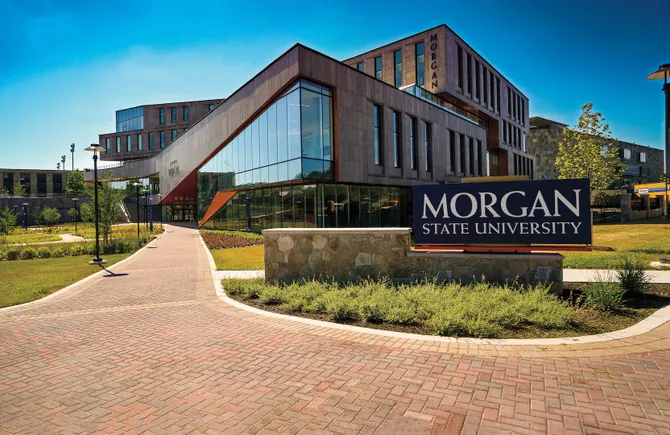
Murray noted that HBCUs typically use federal pandemic relief funds to forgive student debt and fees, such as graduation and senior fees, making it easier for students to graduate debt-free. New funding sources have also enabled some HBCUs to undertake major projects. For example, Morgan State University in Maryland used some of the new funds to create a community health center studying health inequities in Baltimore and surrounding areas. Dillard University in Louisiana used part of a large donation to launch a new branding campaign and competitive scholarship program. Norfolk State University used philanthropic funds to support students, faculty development, and innovation. Several HBCUs, including Prairie View A&M University and Virginia Union University, directed recent philanthropic and corporate donations to emergency aid programs, completion grants, and new programs in STEM, entrepreneurship, and health policy. Some HBCUs also used philanthropic grants to accelerate online learning platforms, purchase laptops and hotspots for students, and increase endowments.
Murray said these donations have helped UNCF work with its member institutions to prepare for long-term solvency. "We have been working to change the way HBCUs deliver education, not only now but in the future. I think in the coming decades, you will see the results of our current work."
More support still needed
Murray said that despite the influx of financial support for HBCUs, more is needed—whether from federal and state governments or from philanthropists. Strayhorn said HBCUs need regular, sustained capital and investment from a variety of groups such as banks, philanthropic organizations, community development corporations, and high-net-worth investors that support their missions and understand their students, stories, and values.
Bennett-Fairs said LeMoyne-Owen College still needs more federal funding to expand its footprint. Apart from a student residence hall opened in 2013, the college has not undertaken major construction projects in 40 years. "We want to build a new gymnasium with a health and wellness center, additional classrooms, and large multipurpose spaces," he said. "As we expand our campus services, we need space to grow."
Funding received by some institutions has helped HBCUs address a large backlog of capital repairs. However, Murray noted that many funding sources come with specific usage requirements. Dawn Alston, vice president for business and finance and chief financial officer at Spelman College, said in an email that Spelman needs more funding "to continue to reduce the financial burden on students so that we can become an institution that does not consider financial circumstances." The college also needs more resources to recruit and retain faculty, enhance and launch new academic programs, and support infrastructure and capital projects. Alston said funding received in recent years has allowed Spelman to lower tuition to 2017-2018 levels. However, the college faces ongoing financial pressure because its expense inflation exceeds income growth in its target demographic. Additional funding would allow the college to support programs that make it more affordable.
Strayhorn said despite these historic donations, the funding gap between HBCUs and predominantly white institutions "still exists and is relatively large." Pierce worries that the window of philanthropic giving that opened after the wave of protests following George Floyd's murder has closed somewhat. Murray said Black colleges and universities have been undervalued for more than 150 years. "Two or three years of strong funding cannot make up for centuries of underinvestment," he said. "We still need more donations and government support to reach what we have always strived for, and that is excellence."
