
The Rise of Tuition Reset: How Effective Are the Strategies?
In recent years, many private universities in the United States have adopted a "tuition reset" strategy, significantly lowering their published tuition prices to match the amounts students actually pay. Supporters argue that this can improve enrollment rates and fairness, but research indicates that its long-term effects are limited, and not all institutions can use it to reverse financial difficulties. Based on case studies of multiple institutions and expert analysis, this article evaluates the applicability and risks of this strategy.
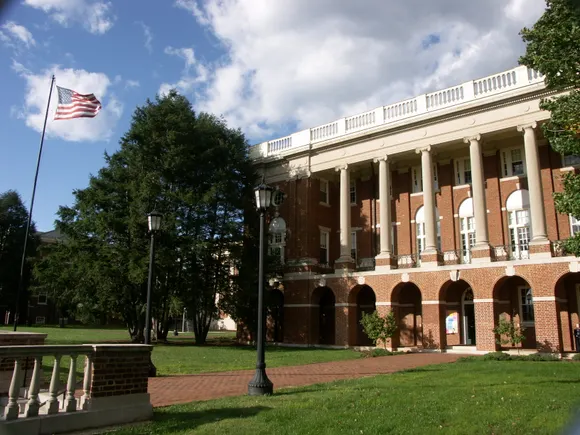
In 2015, Utica University, a private nonprofit university in New York State, announced it would reset its published tuition price. Then-President Laura Casamento said the discount rate for prospective freshmen had exceeded 62%. She noted that the sticker price of approximately $35,500 was widely considered unaffordable by target student groups, while the school also faced stagnant retention rates.
So Utica University took an approach that only a few colleges had attempted in the previous decade: it cut its published tuition by 42% to below $20,000, bringing it closer to what students actually paid after institutional scholarships. According to one higher education consultant, only a few dozen institutions had taken similar measures at the time.
However, as more colleges joined the tuition reset movement, questions arose about the effectiveness of the strategy. Some institutions saw surges in enrollment and applications shortly after implementation, but growth at many schools slowed in subsequent years, and the reset did not reverse financial difficulties at all institutions.
"For some schools, they may have already been too far gone," said Lucie Lapovsky, an economist and higher education consultant who has assisted multiple colleges with tuition resets. "Most private colleges in the U.S. are facing challenges right now, and it's not easy."
Utica University saw enrollment grow in the initial years after the reset, rising from 4,463 students in fall 2015 to 5,258 in fall 2017. According to federal data, the full-time student retention rate rose 6 percentage points over the same period, reaching 76%. Graduation rates have steadily climbed since the reset and now hover around 58%.
However, after the brief boost, Utica University's enrollment fell to 3,861 in fall 2022, below pre-reset levels. Casamento said this fall's numbers have rebounded: first-year enrollment is up 31% year-over-year, transfer students up 61%, and international students nearly quadrupled, "indicating the university's market presence and reputation are rising."
Since 2015, the momentum for tuition resets at private colleges has grown. This September, two private institutions in Iowa—Graceland University and Wartburg College—announced tuition cuts of approximately 39% and 45%, respectively. Other institutions, such as Lasell University in Massachusetts, Lenoir-Rhyne University in North Carolina, and Colby-Sawyer College in New Hampshire, have also recently slashed tuition significantly.
Why are colleges resetting tuition?
For decades, colleges competed for students by offering merit-based scholarships, creating a "high sticker price, high aid" model, Lapovsky noted. This has driven the average discount rate for first-year students at private colleges to about 56%. But students often don't learn the actual cost of attendance until after applying, completing financial aid forms, and receiving admission offers. Lapovsky said the net price at private colleges (published tuition minus aid) can be close to that of public institutions, but many prospective applicants mistakenly believe that only low-income students receive aid.
"Now there's almost no relationship between the total price and the net price, which causes many people to give up applying because they don't know the final cost," Lapovsky said. "Many private schools are therefore being ruled out of students' consideration sets."
For some private schools, the "high tuition, high aid" model is gradually falling out of favor. Lapovsky said many prospective students no longer equate higher tuition with better quality, and contrary to popular belief, most students care more about net price than scholarship amounts. Additionally, many colleges have faced enrollment declines in recent years. Liz Clark, vice president for policy and research at the National Association of College and University Business Officers (NACUBO), said via email that some member institutions are trying to stabilize or increase enrollment while addressing concerns about rising tuition. "For some colleges, a tuition reset may be a way to address this issue," Clark said.
Do tuition resets work?
According to Lapovsky, tuition resets truly began accelerating in 2018, when 13 colleges adopted the practice. The trajectories of these institutions varied. Sweet Briar College in Virginia, which implemented a reset just three years after narrowly avoiding closure, saw enrollment surge in subsequent years. However, Mills College in California merged with Northeastern University in Boston four years after its reset, due to years of financial difficulties.
Research shows mixed results from tuition resets. Lapovsky analyzed data from 30 institutions that reset tuition between 2013 and 2018 and found that nearly all saw increases in applications, and more than half saw enrollment gains. On average, these institutions saw applications grow 9.6%, first-year enrollment rise 2.5%, and transfer students increase 12.1% in the first year after the reset. But momentum faded over time: by the third year, applications grew only 6.5%, transfers 5.7%, while first-year enrollment declined 1.1% (all compared to the year before the tuition change).
Lapovsky said she has not yet analyzed data from institutions that reset tuition after 2018, because enrollment generally declined during the COVID-19 pandemic, and she is waiting for updated federal data. A separate study published in 2022 reached similar conclusions: after analyzing institutions that reset tuition between 2009 and 2019, researchers found these practices were not associated with long-term enrollment growth, though some evidence pointed to short-term gains. Additionally, net tuition revenue per student did not decline.
Which institutions are suited for tuition resets?
The administration at Bridgewater College in Virginia is confident in the reset strategy. This September, the small four-year private college lowered its published undergraduate tuition for the 2024-25 academic year to $15,000, a reduction of more than 60%, aiming to increase transparency about the actual cost of attendance. President David Bushman said the college has a healthy endowment (approximately $98 million in fiscal year 2022) and strong donor support, but it is not a wealthy institution.
Years ago, Bridgewater had rejected a tuition reset out of concern that lowering the sticker price would make the college seem less valuable. But Bushman noted that the high sticker price may have scared off the low-income students the college typically attracts. "Although we've long operated with a high-tuition, high-discount model, I think that model has stopped working for many prospective students," Bushman said. "For us, discouraging those students, or tacitly allowing that discouragement, is problematic from a mission standpoint."
Utica University's Casamento advised that college leaders should decide whether to reset tuition only after thorough research and assessment. She added that the practice should not be undertaken in isolation; it should be accompanied by reviewing and adjusting academic programs, strengthening marketing, and building partnerships to improve student success and meet workforce needs.
At Bridgewater, Bushman believes the move will help enhance the college's reputation, as the institution is more transparent and direct about costs, and may also reconnect with alumni and donors who were alienated by high tuition. The college also aims to lower barriers that might deter prospective applicants, many of whom are Pell Grant-eligible or first-generation students. Although the college is satisfied with its current enrollment of just over 1,400, Bushman sees room for growth. "I'm confident this will have a positive impact on the college's long-term financial health," Bushman said. "We will be more competitive."