
"Affirmative Action for the Wealthy": Why Early Decision Admissions Are Controversial
Early decision admissions policies at highly selective U.S. universities are facing questions of fairness. Data shows that students from affluent backgrounds apply early decision at significantly higher rates, and the share of early decision admits in total enrollment at some institutions continues to rise. Despite ongoing criticism, most universities still rely on early decision to secure their incoming classes. After the Supreme Court struck down race-conscious admissions in 2023, policy adjustments have not materialized on the scale expected, with Virginia Tech being a rare exception.
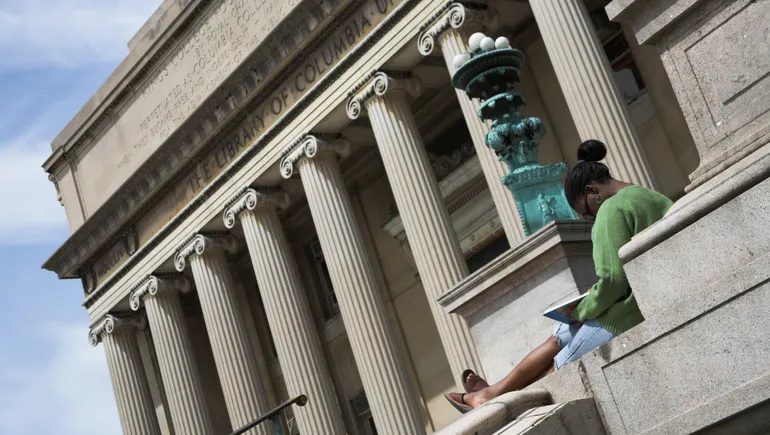
When deciding the composition of an incoming class, highly selective colleges have a variety of admissions tools at their disposal. However, many of these practices are facing accusations of exacerbating inequality in access to higher education.
Advocates for low-income students are calling for the elimination of early decision admissions policies, as well as the removal of preferences for children of alumni and donors. Early decision requires students to enroll if admitted, meaning they must commit to attending before seeing their financial aid package.
"This is really affirmative action for wealthy students," said Marcella Bombardieri, a senior fellow at the left-leaning think tank Center for American Progress. "You have to be confident that you can afford that college."
Nevertheless, few institutions have ended early decision programs—which allow colleges to lock in an incoming class and ensure students do not matriculate elsewhere.
Why early decision is under fire
According to a 2022 report by the progressive think tank Education Reform Now, an analysis of college applications submitted through the Common Application system in 2021 found that students from the wealthiest ZIP codes were twice as likely to apply through the early decision route as all other applicants. The Common Application allows students to submit applications to over 1,000 member colleges.
And this choice often affects admission odds. At Brown University, for example, only 4% of students who applied by the regular deadline in 2020 were admitted, while the admission rate for early decision applicants was 18%.
Some colleges fill a large portion of their incoming class through early decision, and at several institutions this share has risen significantly over the past few years. At Bates College in Maine, early decision admits made up 60% of first-year students in 2015, a figure that rose to 81% in 2020. Education Reform Now found that at other highly selective institutions such as Columbia University, Dartmouth College, Middlebury College, and Wesleyan University, early decision applicants accounted for at least half of the incoming class in those years. The share at these institutions increased from 2015 to 2020.
However, early decision policies affect only a small portion of potential college students in the United States. According to Education Reform Now, only about 12% of four-year institutions nationwide reported receiving early decision applications in 2020. Because the policy is most common at highly selective colleges and rarely used by public universities, the proportion of students affected is relatively small.
But education observers say the choices of highly selective colleges matter because they have a disproportionate influence on the upper echelons of American society. "They are training grounds for the elite," Bombardieri said.
Why colleges still stick with early decision
Criticism has not stopped many colleges from continuing to use and rely on early decision admissions policies. For administrators, the policy is convenient and provides a competitive advantage for the institution.
First, early decision boosts the yield rate—the proportion of admitted students who ultimately enroll. This makes it easier for admissions management teams to predict how many students will show up. "College applications used to send a very clear signal of where you were willing to go," said Evan Mandery, a professor at John Jay College of Criminal Justice and author of the book "Poison Ivy: How Elite Colleges Divide Us." He said that before the proliferation of digital tools and the Common Application, applying to college was more labor-intensive, and prospective applicants submitted fewer applications, prioritizing schools they truly desired. "Colleges are more anxious than ever to know whether students will enroll, and early decision is a simple way for them to achieve that."
Second, early decision policies give colleges the opportunity to recruit high-caliber students who are likely to be admitted to other institutions as well. Once admitted through early decision, the institution does not need to worry about losing them. Some students and families also prefer to apply early to bring the college application process to a close sooner.
In 2006, Harvard University, Princeton University, and the University of Virginia all announced the elimination of their early decision programs due to equity concerns, but reinstated them a few years later. In 2011, then-Princeton President Shirley Tilghman said the university had hoped other institutions would follow suit, but most did not, causing the Ivy League school to miss out on potential applicants.
"Highly selective colleges will continue to do this to remain competitive," said Jill Orcutt, global lead at AACRAO Consulting, an affiliate of the American Association of Collegiate Registrars and Admissions Officers. "But it disadvantages students with fewer resources or less access to information."
A changing landscape
After the U.S. Supreme Court struck down race-conscious admissions policies in June, higher education experts predicted that fewer colleges would adopt early decision. With institutions no longer able to consider race as a factor in admissions, experts expected highly selective universities to adjust their strategies to enroll a diverse class.
However, a reduction in early decision policies has largely not occurred—at least not yet. Nearly all institutions have so far maintained their early decision policies, although some say they are taking time to reconsider. Virginia Polytechnic Institute and State University (commonly known as Virginia Tech) is an exception.
In July, the university announced it would end its early decision policy and move up its early action deadline. Early action is a non-binding application option that allows applicants to learn earlier whether they have been admitted. Virginia Tech also announced the end of legacy admissions—a practice that gives an advantage to applicants who are relatives of alumni.
Juan Espinoza, the university's vice provost for enrollment management and director of undergraduate admissions, said ending early decision had little to do with the recent Supreme Court ruling. Espinoza said that out of approximately 47,000 applications each year, only about 3,500 were early decision applications. Yet this smaller applicant pool was used to fill about 20% of the incoming class, and these students typically came from much higher socioeconomic backgrounds than other applicants, indicating the program was inaccessible to most.
"This is an option that actually serves a very small segment of our overall applicant pool," Espinoza said. "How do we make the process more accessible and inclusive for all students, and streamline it for all students from an efficiency standpoint?" Espinoza said reviewing early decision applications in addition to early action and regular decision consumed significant time and resources.
He does not believe the decision will affect admissions. Although it is still early in the application cycle, as of early November, Virginia Tech's application volume had already surpassed the same period last year. "Every year we continue to review these processes, listen to student feedback, and do our best to create the best, most equitable, most transparent, and fairest process for applicants," Espinoza said.