
Where Is the Test-Optional Policy Headed? Elite Institutions' Return to Exam Requirements Sparks Industry Reflection
Earlier this year, elite institutions like Yale reinstated standardized test requirements, sparking discussions about the future of the test-optional movement. Supporters argue that tests help identify outstanding applicants from disadvantaged backgrounds, while opponents emphasize that optional policies can promote diversity. This article reviews both perspectives and the latest data.
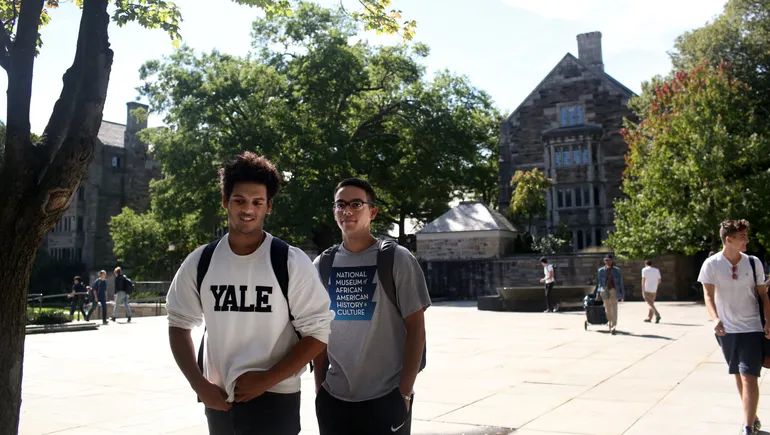
Earlier this year, Yale University joined several other Ivy League and highly selective institutions in dropping its test-optional admissions policy. Other prominent schools that recently reinstated SAT and ACT requirements include Brown University, Georgetown University, Dartmouth College, and the University of Texas at Austin. MIT reinstated its testing requirement in 2022.
These high-profile moves have raised questions about the future of the test-optional movement, which was widely adopted during the COVID-19 pandemic when students were unable to take in-person exams due to lockdown restrictions.
At the heart of the issue is whether test-optional policies truly help create a fairer college admissions landscape for students from racially, economically, and geographically underrepresented groups. Critics of standardized tests argue that testing requirements give affluent students who can afford expensive test prep and tutoring an advantage in the admissions process.
However, some university leaders now find that test-optional policies actually hurt disadvantaged applicants—a claim disputed by several advocates and experts who firmly believe the movement will continue to grow.
Brown, Dartmouth, and Yale are the exceptions, Bob Schaeffer, public education director at FairTest, said in an email. FairTest advocates for standardized testing reform. "Except for a small number of highly selective institutions, applicants face a system where ACT/SAT-optional policies are the new normal," Schaeffer said.
According to FairTest's latest statistics, more than 1,900 bachelor's degree-granting institutions have extended test-optional or test-free policies (meaning they do not accept test scores) through the fall 2025 application cycle. This includes selective institutions such as the University of Pennsylvania and Vanderbilt University. Additionally, Schaeffer said, at least 1,700 institutions have test-optional or test-free policies with no expiration date. "For the vast majority of schools and applicants, ACT/SAT scores will not be required for the foreseeable future," Schaeffer predicted.
Why are some universities abandoning the test-optional movement?
Yale did not fully reinstate its pre-2020 testing policy. The university again requires standardized test scores, but now accepts International Baccalaureate or Advanced Placement exam scores in place of the SAT or ACT. Standardized tests "used alone are imperfect and incomplete," Jeremiah Quinlan, Yale's dean of undergraduate admissions and financial aid, said in the university's February announcement. But he argued that tests help determine whether students are prepared for college-level academics, and that they are also valuable for students attending high schools with fewer academic resources and college preparatory courses.
He noted that when students do not submit scores, admissions officers place more weight on other application elements. These alternative elements, such as advanced coursework, are easily accessible in well-resourced schools, he said.
Other high-profile institutions have dropped test-optional policies for similar reasons. Just before Dartmouth announced in February that it would reinstate mandatory testing, a working group at the college submitted a report to the college's leadership claiming that test scores better help admissions officers identify "high-achieving but disadvantaged applicants." The report added that students from high schools with relatively low average SAT scores who performed better than their peers individually had a greater chance of being admitted. When test-optional policies were in place, these students were less likely to be identified and admitted. The report stated that under test-optional policies, "many high-achieving but disadvantaged applicants chose not to submit scores, even though doing so would have allowed admissions offices to identify them as students likely to succeed at Dartmouth and would have benefited their applications."
The move back toward test-optional policies may not be limited to highly selective institutions. According to a Kaplan survey released in February, among more than 200 test-optional schools, 15% said last year they were "considering or definitely would reinstate" testing requirements. The company's survey also found that 67% of those test-optional schools said submitting competitive test scores helped a student's application. Kaplan profits from students taking the SAT and ACT through its test prep services.
Other external researchers align with the views of Brown, Dartmouth, and Yale. A recent study by Opportunity Insights, a Harvard research organization, found that SAT and ACT scores "have significant predictive power for college academic success." The study examined students at all eight Ivy League colleges as well as Stanford, MIT, Duke, and the University of Chicago. The study found that students with higher test scores were more likely to earn higher GPAs in college, while high school GPA actually performed poorly in predicting college academic success. The study also found that students from different socioeconomic backgrounds with comparable standardized test scores earned similar grades in college. "We conclude that standardized test scores may be more valuable in the admissions process than previously understood in the literature, especially for highly selective colleges," the study noted.
David Deming, a Harvard economics professor and collaborator on the Opportunity Insights research, argued in a recent article in The Atlantic that test-optional admissions make "an already confusing college application process" even more complex—and complexity often hurts those who are disadvantaged. However, Deming argued that simplifying the application process would benefit more low-income students.
Defenses of test-optional policies
Not all researchers agree with the conclusion that testing requirements are helpful. An analysis by Jacob Vigdor, a professor of public policy and governance at the University of Washington, found that among the test-optional cohorts at Brown, Dartmouth, and Yale, the proportion of first-year students receiving need-based financial aid was actually higher. Vigdor said in an email that universities can recruit diverse and academically qualified classes with or without standardized tests. He asked: Should higher education institutions support a system that costs families collectively billions of dollars each year "to provide universities with information they don't really need"?
Earlier this year, the University of Connecticut extended its test-optional policy through fall 2026. In 2021 and 2022, compared to 2019 when such a policy was not yet in place, the number of first-year applicants from self-identified underrepresented racial groups grew by about a quarter. The university reported that this translated into enrollment gains for underrepresented student groups, including first-generation students and low-income students eligible for federal Pell Grants. The University of California system, after implementing a test-free policy in 2020, also reported in August record numbers of new students from racially underrepresented communities.
"Except for a small number of highly selective institutions, applicants face a system where ACT/SAT-optional policies have become the new normal."
— Bob Schaeffer, public education director at FairTest
The impact universities see when they drop ACT and SAT requirements varies by institution, David Hawkins, chief education and policy officer at the National Association for College Admission Counseling, said in an email. Some universities "have seen notable success," with increases in both applicant numbers and applicant diversity, Hawkins said. Others have seen more modest results, he added. "Overall, there does seem to be a positive effect in attracting applicants, including those from underrepresented backgrounds, because test-optional policies seem to remove a major barrier for many students," Hawkins said. More than 1,000 universities had test-optional policies before the pandemic, and "there may be even more that remain test-optional after the pandemic," Hawkins said. However, he added, there will be "some movement" back toward testing requirements.
Vigdor also does not believe all universities will follow the lead of these elite institutions. Like any barrier to college admission, when institutions remove test score requirements, they encourage more students to apply, Vigdor said. As more institutions face declining enrollment trends, they will face pressure to "maintain application volume at all costs," he said. This includes attracting all students, not just diverse student populations, he said. These pressures do not apply to the most prestigious institutions, Vigdor added.
Admissions reform still needs to move forward
Eliminating test score requirements is not a panacea for removing all barriers to admission, Schaeffer said. He suggested universities eliminate policies known to benefit affluent applicants, such as legacy admissions and early decision—the latter of which locks students into enrollment before they receive financial aid packages. Institutions can also more actively recruit students from historically underrepresented schools and regions, Schaeffer said.
When the University of Chicago announced its test-optional policy in 2018, it also rolled out a series of other measures aimed at recruiting first-generation, rural, low-income, middle-income, and other underrepresented students. This included increased financial aid, summer programs for prospective students, admissions workshops, professional development for rural school counselors, and mentorship programs. Through these changes, the university implemented "truly holistic admissions, evaluating based on a wide range of factors in each teenager's life experiences," Schaeffer said.
