
Sticker Shock: Inside the Complex World of College Tuition Pricing
Vanderbilt University's annual cost of attendance surpassing $100,000 has drawn attention, but most students actually pay a net tuition far below the sticker price. Based on federal data, NACUBO research, and interviews with multiple experts, this article reveals the prevalence of tuition discounting, sluggish growth in net tuition, the growing burden on low-income families, and the limited effectiveness of the "sticker price reset" strategy.
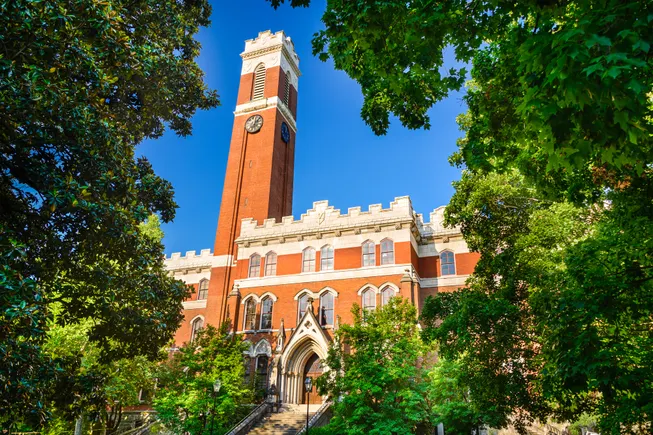
This spring, college tuition once again made headlines—Vanderbilt University's annual cost of attendance reached a staggering $100,000.
The largest component of this figure is Vanderbilt's sticker price. Federal data shows that in the just-ended academic year, its tuition was slightly below $64,000. This level already rivals the most expensive institutions, such as Columbia University's tuition of $69,045 for the 2023-24 academic year.
However, as many higher education insiders and observers know well, these tuition figures are incomplete at best and misleading at worst. Most students, especially those at private nonprofit institutions, receive substantial tuition discounts through various institutional aid. This makes the issue of price extremely complex.
"This is one of the few areas where 'what you pay doesn't equal the cost, and the cost doesn't equal what you're charged,'" said Emily Wadhwani, a senior director at Fitch Ratings. "It's quite opaque."
Many experts point out that the practice of inflating sticker prices has persisted for decades and now offers almost no benefit. It can mislead students and obscure discussions about the value of a college education; for institutions, in a highly competitive environment, tuition discounts erode revenue and financial health.
"It's not good for anyone. It's not good for students, and it's not good for institutions," said Phillip Levine, an economics professor at Wellesley College in Massachusetts. He is the author of "A Problem of Fit: How the Complexity of College Pricing Hurts Students—and Universities."
Levine added, "If you interview the leaders and institutions that are doing this, they'll tell you it doesn't make sense. But there's also no way to get rid of it."
"Ignore the Sticker Price"
Despite frequent headlines about rising sticker prices, net tuition—that is, tuition and fees after grants and scholarships—is under pressure amid fierce competition for students in the higher education sector.
According to Fitch's Wadhwani, net tuition and fees at the universities it rates rose by only 1.1% on average in fiscal year 2023. Fitch said in July that this increase was far too small to sustain profit margins and expects future growth to remain at 2% to 2.5% per year or lower.
A recent study by the National Association of College and University Business Officers (NACUBO) found that in the 2023-24 academic year, net tuition and fee revenue from first-time full-time undergraduates at four-year private nonprofit institutions rose by only 0.5% on average. But after adjusting for inflation, that revenue actually fell by 1%. This followed a "historic" 5.4% decline in inflation-adjusted revenue between the 2020-21 and 2021-22 academic years, according to NACUBO data.
Meanwhile, the tuition discount rate at private nonprofit institutions reached a new high of 56.1% in the 2023-24 academic year.
Tuition revenue has mostly trended downward over the past decade
Change in net tuition revenue at private nonprofit institutions over the past decade (inflation-adjusted)
These are just averages. The actual net tuition cost for students and their families depends largely on their economic background. As household income levels rise, net tuition costs also increase, because many colleges provide need-based aid to help diversify their student bodies.
According to Levine's recent research, for families earning $50,000 a year, net tuition at private universities rose 23.6% in inflation-adjusted terms between the 1995-96 and 2019-20 academic years, reaching $24,600. For these families, the gap between sticker price and actual cost in 2019-20 was $46,300.
For families earning $250,000 a year, net tuition at private universities rose 42.6% over the same period, reaching $52,900. Although higher-income families pay closer to the sticker price, according to Levine's analysis, there was still an $18,000 gap between sticker and net price in 2019-20. This gap actually widened over time—it was only $2,500 in 1995-96.
Private universities have much more room for discounts, as they can freely raise tuition to what the market will bear, while many public universities are constrained by state boards. However, public universities also frequently offer discounts. In the 2019-20 academic year, the gap between sticker price and actual cost for low-income students at public universities reached $15,100, compared to $3,900 for families earning $250,000.
Even with efforts to tailor prices based on need, low-income families still face rising college costs.
"The number that bothers me most is the rising cost for children from low-income families," Levine said. "If you earn $50,000 or less a year, you still need to come up with nearly $20,000, which is basically impossible."
Competitive Market and Complex Pricing
Overall, given the gap between sticker price and actual payment, as well as the differences in what various families pay, Levine believes that consumer media "every time they report that X school is raising tuition from $80,000 to $90,000" and imply "look, how expensive college is!" is a "huge disservice." He added, "Ignore the sticker price. It's a meaningless number that tells you nothing."
These differences between sticker and net prices add a layer of complexity for both students and colleges.
"Ignore the sticker price. It's a meaningless number that tells you nothing."
—Phillip Levine, Professor at Wellesley College
As Lucie Lapovsky, principal of Lapovsky Consulting, explained, boards typically set the sticker price—but control over net price may be indirect, as colleges adapt to market pressures.
"Schools that give out a lot of merit aid operate in a very competitive market," Lapovsky said. "They want to enroll a certain number of students with a certain academic level or meeting specific criteria, and they want to achieve a certain net tuition. Unfortunately, it's hard to control all these variables, or even many of them."
Trying to tailor aid—and thus tailor price—requires complex statistical analysis. Colleges often turn to outside firms to build so-called "leverage matrices" for admissions offices.
"It will tell you that a student with XYZ characteristics, if you give them X dollars in aid, might have a 10%, 20%, or 30% probability of enrolling," Lapovsky said.
Stacey Linderman, a consultant who works with NACUBO, noted that all these calculations and considerations are highly institution-specific. Pricing depends on factors such as the school's location, competitors, its own aspirations, and the job placement rates of its graduates.
"For some schools it's very complex, for others it's personalized," Linderman said. She added that for certain colleges, the current pricing system is serving the specific goals they are trying to achieve.
What such calculations cannot tell a college is whether students will actually accept their offers of admission. This is where all the efforts to carefully tailor prices, set net tuition levels, and plan a college's financial life can fall apart.
As Lapovsky pointed out, after aid offers and acceptance letters go out, the expected incoming class for the next year may fall short of targets.
"Many schools are forced to increase aid amounts," Lapovsky said. "Parents come back to negotiate, saying 'X school gave me this much, you only gave me that much.' Or (the college) just can't get enough deposits."
Colleges in this situation find themselves facing a dilemma: either increase enrollment by deepening discounts, or suffer the consequences of lower net tuition revenue per student.
Competition leads institutions to be "quite aggressive in pricing," Levine said, reflecting one of the fundamental characteristics of the market.
Discounting tuition to attract students, of course, carries financial and opportunity costs for colleges. According to NACUBO, most institutional aid comes from non-designated funds, such as general funds, unrestricted donations, and foregone revenue. About 30% of institutional aid is covered by a college's financial reserves.
'Psychological Strategy'
The widening gap between net tuition and sticker price raises the question: what purpose does the sticker price actually serve anymore?
Among the experts interviewed by Higher Ed Dive, the most common answer was: marketing.
"It's intentional. It's tied to perceived value," Fitch's Wadhwani said. "There are exceptions, of course, but every parent would rather say 'my child got a $40,000 scholarship at an $80,000 school' than just pay $40,000." She added, "There's a philosophy and psychological strategy at play here—it's really hard to untangle."
Others offered similar explanations.
"A high price sends a signal—it signals quality," Levine said. "People think, 'Wow, this good school charges a lot, but they gave me $10,000 in aid, so they must like me.' It really works."
"It's intentional. It's tied to perceived value."
—Emily Wadhwani, Senior Director at Fitch Ratings
James Dean Ward, head of policy and economic research at the nonprofit Ithaka S+R, described this as the "Chivas effect" and said this psychology is a "huge benefit of discounts on the back end" for colleges.
"Research shows that when students receive a presidential scholarship or a dean's scholarship, they feel happy and excited," Ward said. "This can be an important tool for admissions officers to attract these students to accept their offers."
At the same time, high sticker prices can also scare off some students from the start.
"Higher sticker prices can have different effects on different student groups," Ward said. "It may trigger 'sticker shock' among low-income students."
'Resets Are Not a Silver Bullet'
Despite the complexity of the pricing system, there is no simple way out. As Levine noted, a fairly direct but illegal solution would be for institutions to cooperate on pricing.
Elite universities did try this strategy in the past and faced antitrust lawsuits as a result. The U.S. Department of Justice reached consent decrees with the Ivy League schools in the 1990s, and more recently, top universities settled a price-fixing lawsuit with private plaintiffs.
A more legally sustainable strategy is the so-called tuition "reset," where a college adjusts its sticker price to a level closer to its net price. This typically means a significant reduction in the sticker price.
A 2023 paper co-authored by Ward and Daniel Corral, a higher education professor at the University of Toronto, found evidence that tuition resets can have some short-term effects. But they concluded there is little evidence that resets improve enrollment in the long run. Additionally, the researchers found no association between resets and net tuition revenue, and said their findings "call into question the effectiveness of this practice."
Ward explained in an interview that most of the price changes after a reset are offset by changes in institutional aid. "They're just moving the discounting practice from the back end to the front end," Ward said. "Resets are not a silver bullet for solving an institution's financial problems."
If high sticker prices and discounts are a form of marketing, then resets are also, in some cases, a form of marketing. Resets often generate significant media coverage. Levine said this could be one of the potential short-term benefits of the strategy—bringing positive attention to colleges that need more students to increase revenue.
"Institutions that do resets are not doing it for noble purposes," he said. "They reset because they're in trouble. They're looking for some savior, some rescue strategy to help them get out of a bind."
But among institutions that have tried resets, results vary, Ward noted.
"We found that the effects vary with the size of the reset, which is not surprising," he said. "Not only do students interpret the size of the reset differently, but it may also indicate that institutions are taking different actions. Cutting the sticker price by 5% is very different from cutting it by 50%."
Some studies have found that factors such as communication, timing, and board involvement are critical to the success of tuition resets.
Based on her experience working with institutions, Linderman said resets are most often successful at the program level. Based on the cost of delivering education, "the price of an engineering degree would be very different from a business degree, and very different from a liberal arts degree," Linderman said.
Just as sticker prices and discounts can have different effects on students from different socioeconomic groups, so too can resets—which at least provide more direct pricing information.
"We know that low-income students are generally more price-sensitive. They may face a higher degree of sticker shock."
—James Dean Ward, Head of Policy and Economic Research at Ithaka S+R
For example, Ward and Corral found that enrollment of Pell Grant-eligible students increased after tuition resets at private nonprofit universities. Ward said one possible reason is that these universities are trying to address affordability issues and help low-income students enroll.
"We know that low-income students are generally more price-sensitive," Ward said. "They may face a higher degree of sticker shock. So resets might help with that."
As for simply deepening tuition discounts, Lapovsky said this typically leads to lower enrollment. Colleges can control price and discounts on paper, but they cannot control demand for their educational product. And this raises issues beyond price.
"We have too many schools," Lapovsky said. "So they're all fighting for a shrinking pool of students."
