
How universities can support transgender students under Trump administration policies
The Trump administration quickly issued multiple executive orders and policy directives after taking office, attempting to revoke the civil rights of transgender and non-binary students and erase their identities, while targeting universities that support transgender inclusion. Despite risks to federal funding and Title IX investigations, legal and transgender rights experts say university leaders can still take various measures to protect these students, including providing gender-affirming care information, simplifying name change processes, strengthening mental health counseling services, and implementing gender-inclusive housing. Research shows that the mental health of transgender students varies significantly across campuses, and university policies may play a key role.
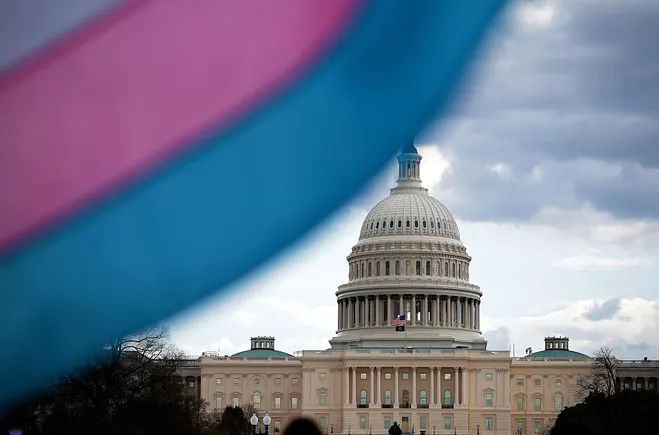
Shortly after President Donald Trump took office, he rolled out a series of executive orders and policy directives aimed at revoking the civil rights of transgender and nonbinary students and erasing their identities. The new administration also targeted colleges that support transgender inclusion. Despite the pressure, legal experts and transgender rights advocates point out that college leaders can still take steps to protect transgender and nonbinary students and create a welcoming campus environment for them. Such support is crucial for attracting these students to enroll and improving their mental health and campus well-being.
However, implementing affirming policies may face challenges, because under current policies, colleges could risk losing federal funding or facing Title IX investigations.
One of Trump's executive orders declared that the federal government would recognize only two sexes—male and female—and that the directive states sex cannot be changed. This policy contradicts scientific understanding. Another executive order (currently blocked by federal courts) withheld federal funding from medical institutions providing gender-affirming care, such as puberty blockers and hormone therapy, to transgender individuals under 19. Additionally, an additional order directed federal agencies to terminate "equity-related" grants to the maximum extent permitted by law.
The U.S. Department of Education issued guidance in late January advising educational institutions to follow the Title IX regulations of the previous Trump administration, after the Biden administration's version of the rules had been overturned. The Trump administration's letter stated that the Department of Education would enforce Title IX in accordance with Trump's executive orders, recognizing only two immutable sexes. This interpretation contrasts sharply with the Title IX rules under the Biden administration, which prohibited discrimination based on gender identity. The Biden administration also withdrew a proposed Title IX rule in December that would have prohibited blanket bans on transgender students participating on sports teams matching their gender identity.
Another executive order targeted a very small number of student athletes nationwide, threatening to withhold federal funding from colleges or K-12 schools that allow transgender women to compete on sports teams matching their gender identity. The NCAA has revised its policies to comply with the order.
The new administration has opened Title IX investigations into San Jose State University, the University of Pennsylvania, the Massachusetts Interscholastic Athletic Association, and other institutions that allow or have allowed transgender women to participate on teams matching their gender identity.
However, Elana Redfield, federal policy director at the Williams Institute at UCLA, said the enforceability of the Trump administration's recent executive orders is not yet determined, and that these orders are essentially "ideological policy statements." Jose Abrigo, a lawyer and HIV project director at Lambda Legal Defense and Education Fund, said colleges should at least not rush to implement "harmful and discriminatory policies" before required by law. These policies could be blocked or modified by courts, and early compliance could "unnecessarily harm students."
How colleges can protect transgender students
Experts say college leaders have multiple ways to affirm and protect transgender and nonbinary students. Higher education institutions are in the education business and should inform students about what gender-affirming care is available and how to access it, said Genny Beemyn, director of the Stonewall Center at the University of Massachusetts Amherst. They added that colleges should educate students about options for changing names and gender markers on legal documents, as well as their rights to use locker rooms or restrooms matching their gender identity nationwide and within their state.
Policies that allow students to easily change their names on campus can be effective, said Sarah Lipson, a public health professor at Boston University. These policies allow transgender students to avoid instructors using their "deadname" (a name no longer used) when entering a new classroom. But such policies should be flexible—for example, including the deadname in communications with family when a transgender student has not come out to them, Lipson said.
Colleges also need to provide support for transgender and nonbinary students through campus counseling centers, Beemyn said. Smaller colleges without counseling centers can refer students to external therapists who specialize in serving transgender or nonbinary individuals.
Gender-inclusive housing is also crucial for transgender students, Lipson said. Placing transgender students in single dorm rooms to avoid rooming with students of the same sex assigned at birth "is not inclusion." Lipson said: "It actually changes the campus environment for transgender students, telling them they must live alone to be part of the community."
In red states with transgender-affirming restrictions, public colleges have other options to support or recruit transgender and nonbinary students, Lipson said. For example, they can limit pronoun use on enrollment documents and switch to students' names. Colleges can also use plural or gender-neutral pronouns instead of "he or she" or "your son or daughter." Lipson said: "This requires going through a lot of materials, but the most important are student-facing recruitment materials, ensuring they don't unnecessarily reinforce the gender binary."
Abrigo said the most important thing colleges can do now is not erase transgender and nonbinary students. Instead, campus officials should acknowledge their existence, affirm their identities, and ensure they have access to the resources and support they need. Lipson said college leaders can simply send messages to students reminding them that transgender and nonbinary students matter, that they are part of the campus community, and letting them know the administration is aware of threats against them. Lipson said: "Some students we interviewed in red states really reflected this: 'We feel like people are protecting us as much as they can.'"
Non-affirming campuses can affect mental health
The impact of executive orders on students' mental health may vary depending on the student's stage of coming out, Beemyn said. Beemyn is conducting a study asking transgender students whether the national climate affects how openly they are willing to share their gender identity. Students in liberal states or progressive colleges—especially those with strong support networks—are less affected by national politics, Beemyn said. However, the national discourse has led some students to say they are less likely to come out to new acquaintances and want to reduce their visibility. Beemyn said: "If a person cannot be themselves and must hide their identity, it will negatively affect their well-being, sense of belonging, community, and self-worth—that is logically reasonable."
Mental health issues among transgender and nonbinary students occur at disproportionately high rates in higher education—but these rates can vary by campus, Lipson said. Boston University researchers analyzed national data from more than 11,000 transgender and nonbinary students collected from about 250 U.S. colleges between 2022 and 2024. Overall, the research shows only 16% of transgender and nonbinary students are "thriving" on campus. But Lipson said on some campuses this rate is much higher, reaching 50%. Rates of students experiencing depressive symptoms also varied by college, ranging from about 33% to over 90% of transgender and nonbinary students. Anxiety rates similarly varied widely, ranging from 28% to 82%. Lipson said researchers have not yet studied which institutional policies might lead to differences in mental health outcomes across campuses, but they plan to explore that next. Even so, researchers already know access to mental health care varies greatly. Lipson said on some campuses, only 30% of transgender students report having access to competent mental health care, while at other institutions it exceeds 80%. Lipson said: "All these outcomes—mental health, treatment use, and discrimination—vary greatly. This suggests college campuses play a role in explaining this variation."
Complying with anti-transgender laws
Many conservative states have enacted anti-transgender laws, including regulations banning transgender students from participating in sports or using locker rooms or restrooms matching their gender identity. Finding a balance between complying with anti-transgender policies and minimizing harm to transgender and nonbinary students can be challenging.
In February, new "biological male" and "biological female" restroom signs at the University of Cincinnati sparked student protests. The university said it was following an Ohio law that took effect on February 25, requiring schools to designate multi-person staff and student restrooms, locker rooms, changing rooms, and showers as restricted to students whose "biological sex" is male or female. The law requires "clear signage" to make these designations. But on February 26, university administrators apologized in a letter to students and said they would replace the signs, adding that using the term "biological" "was our mistake." Republican state Representative Adam Bird, a co-sponsor of the bill, reportedly said the term "biological" was not needed on signs to comply with the law.
Like state laws, colleges should treat Trump's executive orders as serious threats requiring a response to protect the institution, said Redfield of UCLA. Losing federal funding could have serious consequences, because higher education institutions provide a wealth of research and data collection on transgender experiences, she said. College leaders should also understand these threats are not driven by science but by ideology and prejudice against transgender and nonbinary individuals, Redfield said. Beemyn echoed these comments. These laws make "transgender and nonbinary students unable to live in ways that fit them. It is a real denial of their humanity," Beemyn said.
The University of Washington said it would not take any "preemptive action" until it receives further guidance from the Department of Education regarding the "Dear Colleague" letter on Title IX enforcement. The University of Washington said in a statement to Higher Ed Dive on February 25: "We are committed to providing an excellent and welcoming environment for all, and believe that broad perspectives and experiences enrich the educational experience for everyone." Redfield said if higher education institutions like the University of Washington want transgender and nonbinary students to enroll, they need to find ways to acknowledge their existence. She said: "They must clearly state that their intention is to create an environment where transgender and nonbinary students can thrive."
