
Texas A&M University Collaborates with Google on AI Training: A New Paradigm of AI Education in Higher Education
In early October, long lines formed on the Texas A&M University campus as hundreds of students and approximately 400 faculty and staff received AI tool training from Google employees. This is part of Google's three-year, $1 billion AI education program, with the Texas A&M University System being one of over 200 institutions participating. The article provides an in-depth analysis of the motivations behind this collaboration, the teaching value of AI tools, and concerns within the education community about AI's potential impact on cognitive abilities.
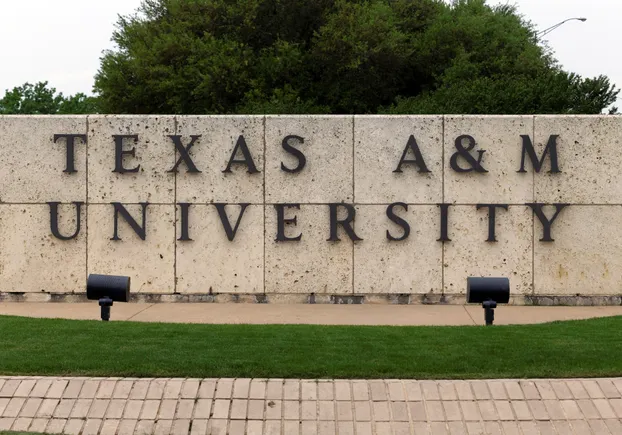
On an early October morning, a winding line stretched across the Academic Plaza at Texas A&M University, where students waited to receive free training from Google employees on how to use the company's AI tools, including the chatbot Gemini and the research assistant NotebookLM.
That same day, about 400 faculty members gathered in a campus building for more in-depth training from Google. Shonda Gibson, Chief Transformation Officer of the Texas A&M University System, explained that the training covered how to use AI tools in the classroom to improve teaching and learning, as well as how to guide students in using these tools effectively and ethically.
The day-long event was part of Google's three-year, $1 billionAI Education Support ProgramLaunched in August of this year, the program supports the tech giant'sAI Education Accelerator projectproviding free tools and training to higher education students and educators, and aims to build a community of institutions sharing best practices.
According to Lisa Gevelber, founder of Google's workforce development program Grow with Google, Texas A&M University is one of more than 200 higher education institutions that have signed up for Google's accelerator program. These include the University of Texas System, the University of North Carolina System, and large institutions such as the University of Pennsylvania, the University of Michigan, and the University of Virginia.
"Every student should have access to digital tools and the skills and training to lay the foundation for their success. This is our support for that commitment," Gevelber said.
The program comes as colleges and universities are racing to ensure students are prepared for a workforce increasingly influenced by AI.
"This is not just about using the tools," Gibson said. "We genuinely want students to have the best experience so that when they leave us to face whatever career lies ahead, they are fully prepared."
Alexa Joubin, director of the Digital Humanities Institute at George Washington University, noted that professors integrating AI into their courses should follow relevant guidance to ensure AI serves student learning.
Without such guidance, Joubin said, students might use AI as a shortcut, having it summarize information for them rather than actually reading the material and experiencing the learning process.
Meanwhile, recent research suggests AI may have adverse effects on students' skills and academic outcomes. A study released by MIT inJunefound that using AI tools to write essays may affect critical thinking skills and lead to a decline in cognitive performance.
During the four-month study period, participants who used AI tools to write essays performed worse than non-users at the "neural, linguistic, and behavioral levels." The study noted this raises concerns about the long-term educational impact of relying on the technology.
"Students are essentially outsourcing key cognitive tasks to AI," Joubin said.
The $1 billion program
Gibson said the Texas A&M University System joined Google's program because it believes Google is the only company providing assistance and guidance at this level.
Gibson also noted that Google tools, typically paid versions, are now free and available to students at the system's 12 institutions for the next two years.
Gevelber said Google's tools can act as personal tutors for students, helping them solve problems and learn material in a customized way. For example, Gemini has a guided learning feature that adapts to students' learning needs. Thisguided learning toolasks students probing, open-ended questions, stimulates discussion and deepens exploration of topics, while incorporating images, diagrams, videos, and interactive quizzes to aid learning.
Gevelber also mentioned that NotebookLM allows students to upload class notes or reading materials to generate personalized quizzes, study guides, summaries, and even AI podcasts that present information in an engaging way.
"I am deeply impressed by the amount of support Google is providing for this work," Gibson said. "They are taking a truly focused and strategic approach to supporting higher education and K-12 education."
Faculty and students at the Texas A&M University System also have access to theGoogle Career Certificatesprogram, which offers courses in AI literacy, AI prompts, and more, operated by Coursera.
The Career Certificates program is free for students at all institutions participating in Google's accelerator program. Gevelber explained that the program provides training for entry-level careers such as data entry, cybersecurity, data analysis, IT support, and project management. Since its launch in 2018, more than 1 million students have earned certificates.
Using AI with 'strategic intent'
Google's program is not the Texas A&M University System's first foray into AI initiatives. Gibson said system leadership has invested in AI training in recent years, partly because they believe these tools can help improve grades and reduce course dropout rates.
Through a partnership with the Association of College and University Educators, the system has conducted a five-year intensive faculty training program on how to effectively integrate AI into courses. Gibson also mentioned that seven universities within the system, through a separate initiative, offer AI training certificates to students on the Coursera platform as part of a two-year pilot program funded by the system.
Gibson said the universities aim to give students the opportunity to test and experiment, make mistakes, and learn how to use different technologies to prepare for the workforce. To that end, the system needs to train faculty and staff on how to use generative AI tools so they can thoughtfully embed AI into courses and academic programs.
"We have a responsibility to teach students to use AI ethically and effectively, and we must do so with a high degree of strategic intent," Gibson said.
Joubin, who also serves as an English professor at George Washington University, said professors should not shy away from AI but should intentionally regulate how students use the tools.
In fields like the humanities, where students need to pay special attention to wording, outsourcing cognitive tasks to AI can be particularly problematic. Joubin explained this is because the words people use to describe the world around them, such as a work of art, can influence how others perceive it.
"We have a responsibility to teach students to use AI ethically and effectively, and we must do so with a high degree of strategic intent."

Shonda Gibson
Chief Transformation Officer, Texas A&M University System
Joubin uses a custom, open-source AI program in her classroom that is based solely on her own lectures, publications, and materials. She said the technology is strictly tailored—not to help students write essays, but to help them think more deeply about vocabulary or topics.
For example, if a student asks a question, the tool responds with more questions. She also asks students to rewrite a viewpoint or sentence in as many different voices as possible, such as a lawyer, a businessperson, or a poet. Then she has students do the same task with AI to get even more examples of voices.
"We don't use AI for any task that requires accuracy, like information retrieval," Joubin said, but rather as a "thinking partner."
Joubin noted that in other disciplines like computer science, students can use AI to write code.AI tools like GitHub Copilotcan assist programmers.
But Joubin said having AI write code from scratch is "a complete waste of time" and does not replace students building domain expertise themselves. AI-generated code is often of poor quality, and the actual creation process can take longer and consume more resources.
"There are many ways to write code and perform tasks," Joubin said. "Those who think STEM fields need AI, who think they can perform well with AI assistance without this kind of critical thinking or reflection, are misguided."
Meanwhile, Gevelber said Google's guided learning tools are designed to help people challenge their thinking—offering different perspectives and expanding how they think about a particular issue.
At Texas A&M University, professors will adjust their AI policies based on different contexts—from prohibiting students from using tools in class, to allowing students to use them cautiously under guidance, to giving students full access after foundational instruction.
"It will vary by course type, course level, and what you want students to achieve," Gibson said. "But generative AI is something we must be open and transparent about. How do we want students to use it?"