
Congress gives green light to Education Department interagency agreements, but with reservations
The U.S. Congress passed the Department of Education's fiscal year 2026 budget without prohibiting interagency agreements, but a bipartisan statement strongly opposes transferring core programs to other federal agencies.
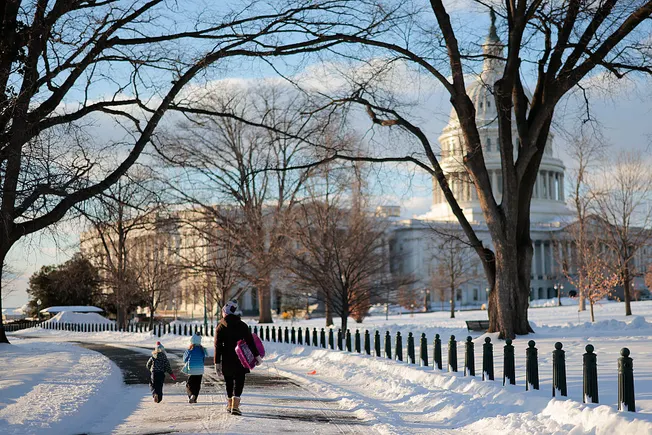
Earlier this month, the U.S. Congress passed the Department of Education's fiscal year 2026 budget. Many who criticized the Trump administration's efforts to dismantle the Department of Education had hoped that this appropriations bill would prohibit outsourcing certain education programs to other federal agencies.
However, the bill did not include such a prohibition. Although the appropriations law does not prohibit the Department of Education from entering into or executing interagency agreements with other federal agencies, the accompanying explanatory statement (though non-binding) strongly condemns and discourages moving key programs out of the Department of Education.
The bipartisan statement noted that the Department of Education lacks the authority to "transfer its essential responsibilities under numerous authorization and appropriation laws to other federal agencies." It also expressed concern that "dispersing responsibility for education programs across multiple agencies would lead to inefficiencies, additional costs to American taxpayers, and delays and administrative challenges when federal funds reach states, districts, and schools." The statement added that interagency agreements could "weaken federal support for protecting the rights of students, children, youth, and families under federal education laws."
The document requires the Department of Education and its partner federal agencies to brief Congress every two weeks on the progress of interagency agreements, including personnel transfers, implementation costs, and how agencies measure service delivery.
"I think the bottom line is that there was a lot of debate within Congress about whether to somehow halt these agreements, whether it was withdrawing some agreements that were in effect, prohibiting new ones, or other measures," said Julia Martin, director of policy and government affairs at The Bruman Group, an education law and consulting firm in Washington, D.C. "Ultimately, those who were deeply concerned about these agreements lost that negotiation."
The seemingly contradictory signals from Congress have added confusion to an already unfamiliar area of moving numerous core programs out of the Department of Education.
Federal education partnerships
As part of the "Returning Education to the States" initiative, the Department of Education under President Trump announced in November that it was developing interagency agreements with other federal agencies to support six programs. One agreement was with the U.S. Department of Labor to manage approximately $28 billion in K-12 program grants, involving low-income school districts, homeless youth, migrant students, academic support, after-school programs, impacted school districts, and other activities.
Under this interagency agreement, the Department of Education stated that the Department of Labor would play a greater role in managing these federal K-12 programs to ensure they better align with workforce and college programs, thereby improving student outcomes.
In another interagency agreement announced in November, the Department of Labor would coordinate approximately $3.1 billion in postsecondary education and workforce development programs, including activities under TRIO and GEAR UP.
On Monday, the Department of Education announced two more interagency agreements. The first was with the U.S. Department of State, involving reporting of foreign gifts and contracts by certain public and private higher education institutions under Section 117 of the Higher Education Act. The second was with the U.S. Department of Health and Human Services, involving family engagement and school support, including programs such as school emergency response to violence, national activities for school safety, full-service community schools, and statewide family engagement centers.
Earlier last year, the Department of Education reached an interagency agreement with the Department of Labor on the day-to-day management of career and technical education programs. As of January, the Department of Education's Office of Career, Technical, and Adult Education had processed nearly 1,627 payment requests from 51 states and territories, totaling $575 million, and had enrolled all grantees in the Department of Labor's grant management and payment system, according to a fact sheet on the Department of Education and Department of Labor's elementary and secondary interagency agreement.
Multiple interagency agreements give the Department of Education responsibility for budget, policy, hiring, and overall program accountability, while other agencies handle grant management, technical assistance, and other services. Since last year, the Department of Education has announced nine cooperative agreements with other agencies.
"We will continue to achieve success through these partnerships, further solidifying the proof of concept for interagency agreements—that these agreements provide the same protections, higher-quality outcomes, and even more benefits for students, grantees, and other education stakeholders," said Savannah Newhouse, press secretary for the Department of Education, in a February 13 email.
The Department of Education did not provide a status update on potential interagency agreements with other federal agencies that could involve outsourcing oversight of special education programs, federal student aid services, or civil rights investigations.
"Having it both ways"
Interagency agreements, memoranda of understanding, and joint task forces between federal agencies are not uncommon, and have been used by both Republican and Democratic presidential administrations. The Department of Education has previously entered into interagency agreements with other federal government agencies for specific research, technology, or other projects. These agreements typically receive broad support because they aim to achieve coordination of specific projects between two or more agencies through shared funding and programs.
Education policy experts say the breadth of outsourcing in the recent spate of interagency agreements is more unusual. Supporters say the cross-agency management transfers are necessary to downsize the 46-year-old Department of Education, whose budget has increased over the years while reading and math scores have declined in recent years. In March of last year, President Trump signed an executive order directing U.S. Secretary of Education Linda McMahon to "take all necessary steps to facilitate the closure of the Department of Education."
Trump cannot unilaterally close the department without congressional approval. The expansion of the Department of Education's interagency agreements, along with Congress's FY2026 appropriations law and statement, is raising a surge of constitutional, organizational, and legal questions about the department's statutory duties and limits.
A February 4 report by the Congressional Research Service on the Department of Education's interagency agreements noted that the Economy Act does not authorize "the transfer of statutory functions." The department also "may not disregard" statutory mandates. But CRS also said it is "unclear" whether the Department of Education's interagency agreements constitute a transfer of statutory functions under its authority and under the Economy Act, which the department cites as the basis for entering into such contracts. The report said the determination may depend on the specific tasks performed by the partner agencies and the tasks retained by the department.
Researchers, education policy experts, and advocacy organizations say there are many unknowns about the Department of Education's strategy to reduce its federal footprint through interagency agreements. Neal McCluskey, director of the Center for Educational Freedom at the Cato Institute, said the abolition of the Department of Education should be achieved through an act of Congress. Currently, several proposals are before Congress to reduce or eliminate the agency's activities, and similar proposals have appeared in past congressional sessions.
McCluskey said the language in the FY2026 appropriations regarding the Department of Education's interagency agreements seems to indicate that Congress "wants to have it both ways," meaning lawmakers do not really like the approach but are temporarily allowing these agreements to move forward. "While I think there may be a reasonable argument that the president has the authority to enter into these interagency agreements, this is problematic and not an ideal way to abolish the Department of Education," he said. "I think Congress needs to do this."
Court questions
McCluskey and other education policy experts and researchers say the validity of the Department of Education's interagency agreements may be resolved through the court system. "We are essentially in uncharted territory with these interagency agreements," McCluskey said.
An ongoing lawsuit against the Department of Education's downsizing was amended in November to include opposition to the agency's interagency agreements. The lawsuit claims these agreements are illegal and harmful to K-12 and higher education systems. The updated complaint in Somerville v. Trump was filed by a broad coalition of school districts, employee unions, and disability rights organizations. The case has been consolidated with New York v. McMahon, brought by multiple states, districts, and teacher unions against the Department of Education. The case is ongoing.
Additionally, several Democratic Senate leaders are asking the U.S. Government Accountability Office to investigate the Department of Education's current and any future interagency agreements. "We are deeply concerned that the administration's decision to implement CTE and adult education grant programs in this manner has delayed critical funding that millions of students and schools rely on, created administrative inefficiencies, increased costs of program administration, and harmed the quality of technical assistance provided to states and grantees," the senators wrote in a February 19 letter to the GAO.
During a Washington, D.C. discussion coordinated by House Democrats on February 11, Ashley Harrington, senior policy advisor at the NAACP Legal Defense Fund, said that while all federal agencies provide important services, "no agency is adequately prepared to take on the vast portfolio of programs that these interagency agreements are stripping from the Department of Education. These agencies are already understaffed." Harrington added that if the interagency agreements are implemented, the Department of Labor would allocate more education funding than labor program funding. "These changes will not help schools, districts, families, or states," she said. "At best, these changes will only add more layers of bureaucracy and more red tape between schools and the federal funding that Congress has promised."
In July of last year, about a dozen former federal special education leaders from both Republican and Democratic presidential administrations jointly wrote to Congress, urging that special education oversight remain within the Department of Education. Stephanie Smith Lee, co-director of policy and advocacy at the National Down Syndrome Congress and a former OSEP director during the George W. Bush administration, was a signatory to the letter. In a February 17 email to K-12 Dive, Lee said: "Dispersing education programs across different agencies is creating confusion, undermining collaboration among programs, and putting the rights and opportunities of millions of students—especially students with disabilities—at risk."
As for what happens next, Martin, the policy and government affairs director at The Bruman Group, said, "This is a developing issue." Martin said the potential changes under the interagency agreements make it difficult for states and districts to prepare because there are still many unknowns. "Frankly, the department hasn't provided many details either," she said. "They are still figuring this all out—we've been told to keep watching."
Anna Merod contributed to this article.