
Harris Secures Democratic Presidential Nomination, HBCUs See Historic Spotlight
Vice President Kamala Harris, an HBCU alumna, securing the Democratic presidential nomination has sparked pride and anticipation at historically Black colleges and universities. Experts believe this could enhance HBCUs' social visibility, donations, and policy support, but also faces practical challenges.
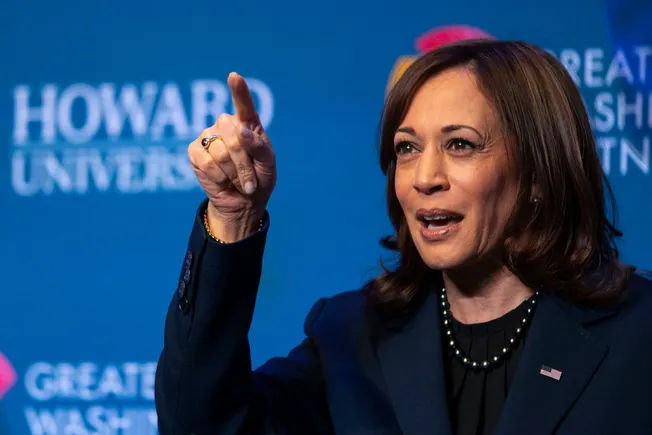
At Texas Southern University, a historically Black university (HBCU) in Houston, Vice President Kamala Harris's nomination as the Democratic presidential candidate has stirred "pride and momentum" on campus, according to sociology professor Carla Braley. In an email, Braley said seeing Harris—an HBCU graduate—"on the brink of making history" as she runs to become the first female U.S. president has sparked widespread discussions on campus about leadership and pursuing ambitious goals.
"Faculty and students view Vice President Harris as a role model who embodies the success and leadership qualities the university hopes to instill," Braley said.
Harris, a Howard University alumna, is among numerous national public officials who graduated from HBCUs, including former Homeland Security Secretary Jeh Johnson, former Surgeon General David Satcher, and former Supreme Court Justice Thurgood Marshall. But as the first HBCU alumna to lead a major party's presidential ticket, "she is breaking the glass ceiling," said Terrell Strayhorn, director of the HBCU Research Center at Virginia Union University.
HBCU leaders and experts say her nomination is shining a spotlight on the role HBCUs play in cultivating future leaders, raising the visibility of these institutions among prospective students, donors, and employers.
"The U.S. presidency is the biggest 'bully pulpit' in the world, with the brightest lights," said Lodriguez Murray, senior vice president of public policy and government affairs at UNCF (United Negro College Fund). "If this HBCU graduate can ascend to that position, it will not only illuminate Howard University but also the roughly 100 accredited historically Black colleges across the nation."
A lasting legacy
Strayhorn noted that some evidence suggests Harris's nomination has already brought increased awareness, visibility, and interest in HBCUs. The HBCU Research Center observed a surge in HBCU-related hashtags, posts, and comments on social media within a week of her campaign announcement.
"Donors may feel a stronger sense of pride and responsibility, which could lead to more active philanthropic efforts."
— Carla Braley, sociology professor at Texas Southern University
Harris's nomination "sends a powerful message to prospective students," said Harry Williams, president and CEO of the Thurgood Marshall College Fund. He emphasized that it demonstrates HBCU students can "achieve their dreams and create impact in their communities."
The nomination also helps quell a long-standing question: Are HBCUs still necessary?
"Throughout my life, we've told students and young people that you can be anything you want to be, even President of the United States," Murray said. "And the fact that the Vice President was shaped by a historically Black university—not an Ivy League school—I think truly brings that promise to life."
Neither Harris nor her running mate, Minnesota Governor Tim Walz, attended Ivy League institutions for their undergraduate or graduate studies. In contrast, Republican candidate and former President Donald Trump initially attended Fordham University before transferring to the University of Pennsylvania (an Ivy League school) for business school. His running mate, Ohio Senator J.D. Vance, first attended Ohio State University before entering Yale Law School (also Ivy League).
HBCU advocates and experts are optimistic that Harris's nomination will prove historically Black colleges are no less capable than other institutions in terms of student success. Murray said this could help persuade philanthropic donors to believe in the value of these institutions.
This will continue the philanthropic momentum HBCUs gained after the murder of George FloydPhilanthropic momentum. Floyd, a Black man, died at the hands of a white police officer in 2020, sparking nationwide unrest. Braley expects Harris's nomination to reignite enthusiasm among Texas Southern University donors—especially alumni and supporters.
"Donors may feel a stronger sense of pride and responsibility, which could lead to more active philanthropic efforts," Braley said.
Williams also believes Harris's nomination could help HBCU graduates become more competitive in the workplace after graduation. He noted that by demonstrating the exceptional preparation of HBCU graduates in professional settings, she is helping dispel biases and misconceptions about HBCU alumni, thereby enhancing employer recognition of the value of an HBCU education.
Murray said that after seeing Harris's nomination, employers may realize there is "no gap" between these colleges and predominantly white institutions, prompting them to consider HBCU students and graduates in hiring. Braley agreed: "Employers may become more aware of the diverse talent pool and solid educational foundation that HBCUs provide."
Funding and policy potential
Experts believe that if an HBCU alumna occupies the White House, it could prioritize new funding and policies beneficial to these institutions that have long been underfunded. According to a White HouseMay press release, the Biden administration (with Harris as Vice President) said it has provided "historic" and "record" federal funding and investments to HBCUs.
Lawmakers provided nearly $4 billion to HBCUs through COVID-19 relief and the American Rescue Plan. Between fiscal years 2021 and 2023, the Department of Education also allocated $2.6 billion to HBCUs for institutional capacity building. The Biden administration additionally provided nearly $950 million to these institutions to enhance research capabilities. Furthermore, the Biden administration forgave over $1.6 billion in capital financing debt for HBCUs—funding that originated from thesecond COVID-19 relief package。
signed by former President Trump in December 2020.Murray noted that Trump also spoke about the need to support HBCUs in unprecedented ways during his first term, and the Biden administration continued that precedent by prioritizing additional funding in its budget. The Trump administration also allocated $85 million to HBCUs through theFUTURE Actin fiscal years 2020 and 2021, and provided $1 billion in emergency aid to HBCUs and minority-serving institutions through the CARES Act.Emergency aid.
Williams said he has worked closely with the Biden administration on key issues facing HBCUs, such as increasing funding and improving student aid programs. But he also noted that HBCU advocates still need to prove to Congress and potentially a Harris administration that HBCUs are worthy of investment. Such investments include better integrating HBCUs into the federal research and development system, which would require significant federal investment in these institutions' research infrastructure.
Murray said UNCF hopes candidates will prioritize more funding for HBCU infrastructure or double Pell Grants to prevent students from taking on debt. President Joe Biden has proposeddoubling Pell Grants, but his latest budget proposal delays implementation until 2029.
Murray said he is not yet certain whether a Harris presidency would necessarily drive more HBCU funding and better policies. Harris's campaign is still young, and so far it has focused more on her personal qualities as a candidate rather than being issue-driven. Strayhorn added that Harris's ability to advance such policies will depend largely on broader political factors, such as competing government priorities and whether she can secure sufficient support in Congress. But Strayhorn believes that if a president has personal experience with HBCUs, it could increase the likelihood of federal funding and supportive policies coming to fruition.
